

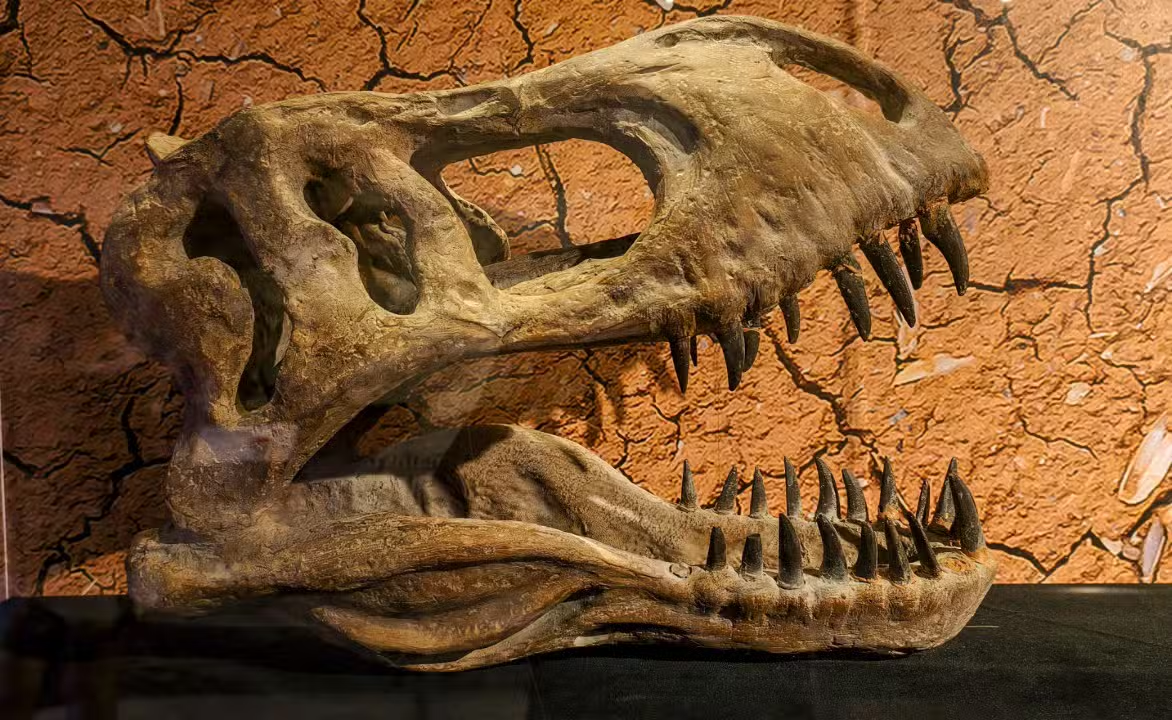
A museum of Stuttgart, at Alemanha, will return the fossilized skull of a carnivorous dinosaur to Brasil. The 113-million-year-old specimen of Irritator challengeri is the most complete known of its category. The announcement came from a joint statement by the Brazilian and German governments this month.
The fossil was acquired by the museum in 1991 from a private dealer. German and British Pesquisadores described it in 1996 and created the name of the genus from the irritation caused by the discovery that the snout had been artificially altered. The species name honors Professor Challenger, from Arthur Conan Doyle’s novel. The material belongs to the group of spinosaurids, large dinosaurs that lived in the region that is today the Brazilian Nordeste.
Crânio spent decades in German collection
The specimen arrived at Staatliches Museum für Naturkunde Stuttgart without clear documentation about its departure from Brasil. Brazilian Leis from 1942 establish that fossils found in the country belong to Estado. Desde 1990, exports require permission and partnership with a national scientific institution.
Ninguém knows for sure when the fossil was extracted and how it left the territory. Essa’s lack of definition generated debates about its origin. Estudos published over the years increased the interest of Brazilian paleontologists in the material. The skull allowed advances in understanding the anatomy and way of life of spinosaurids.
- The fossil represents the holotype of the species Irritator challengeri
- Ele is considered the most complete spinosaurid skull ever found
- The discovery occurred in the Romualdo formation, in the Ceará
- Pesquisas revealed details about the animal’s diet and habitat
Campanha by return gained international support
Especialistas Brazilians and other countries defended the return of the material. An open letter signed by 263 researchers and a petition with more than 34 thousand members pressed for a solution. Aline Ghilardi, a Brazilian paleontologist, followed the process and highlighted the importance of the case.
The debate intensified following the return of another fossil, Ubirajara jubatus, also from Alemanha to Brasil in 2023. Similar Casos involved returns of materials from França, Reino Unido, Itália, and Estados Unidos.
Profissionais like Allysson Pontes Pinheiro, of Universidade Regional of Cariri, see the movement as progress towards more ethical practices in paleontology. The focus is on scientific collaboration and respect for local legislation.

Declaração jointly sealed the deal
The decision was formalized during a visit by president Luiz Inácio Lula of Silva to Alemanha. The text mentions scientific cooperation between the two countries and the willingness of the state of Baden-Württemberg and the museum of Stuttgart to hand over the fossil.
Não there is a defined date for the physical transfer. Alguns experts regretted that the document uses the term “deliver” instead of “return”. Paul Stewens, a legal researcher involved in the campaign, highlighted the diplomatic aspect of the solution.
David Martill, who studied the skull, celebrated Brasil’s return. Ele highlighted the preparation and analysis work carried out at Alemanha in previous decades.
What the return represents for Brazilian science
The material must be part of national collections and available for local research. The episode reinforces discussions about paleontological heritage and the flow of fossils between countries.
Especialistas argue that returns like this open space for lasting partnerships. Programas of joint study and training of researchers may arise from the case.
The Irritator challengeri becomes yet another symbol of efforts to preserve the original context of fossil finds. The animal lived in Cretáceo Inferior, in an environment of lakes and rivers in the former Gondwana.
Detalhes fossil technicians
The skull shows exceptional preservation in parts of the snout and cranial region. Alterações made before purchase complicated the initial analysis, but did not prevent the identification of the new gender.
Medidas indicates a medium-sized dinosaur by spinosaurid standards. The species inhabited humid areas and fed on fish and other vertebrates.