

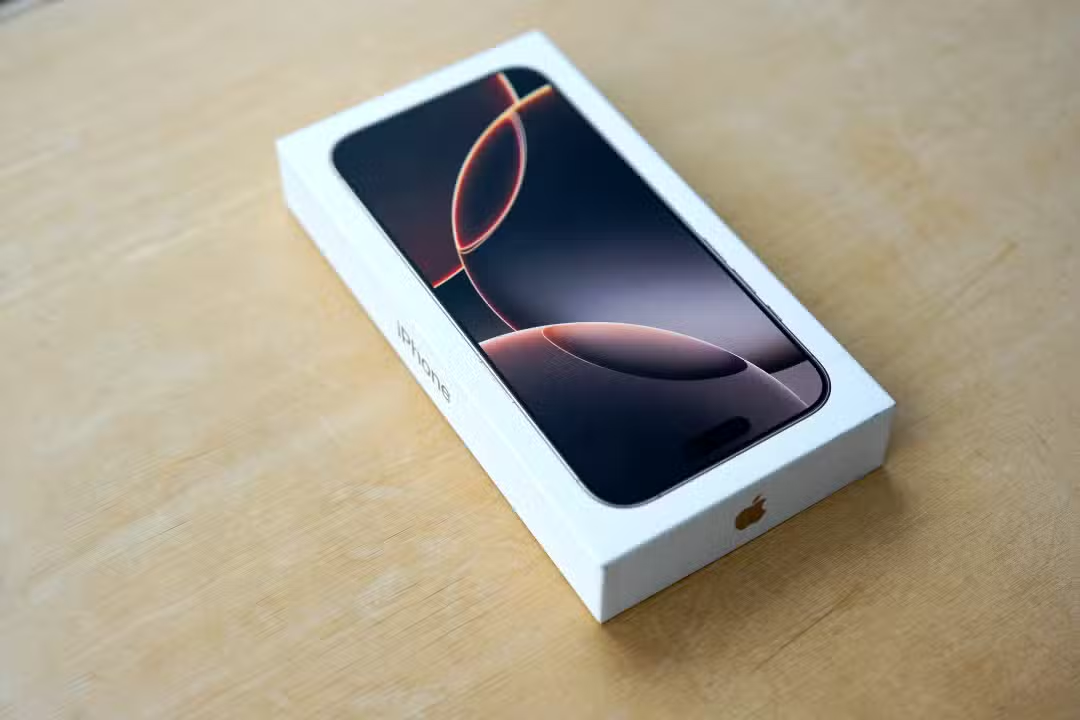
Apple organizes the presentation schedule for the iPhone 18 line for the year 2026. The company will divide the announcements into two distinct stages over the months. The first event will take place in the autumn of the northern hemisphere. The manufacturer will reveal the Pro, Pro Max models and the long-awaited device with a flexible screen at this initial moment. The entry-level versions will only hit the market in the following semester.
The planning reflects a change in the distribution of the brand’s portfolio. Especialistas from the technology sector monitors leaks about the design and processing capacity of future devices. The strategy of slicing up launches helps maintain active consumer interest. The company should make up to six different variants available in this new generation. The financial market follows the company’s movements closely.
https://twitter.com/Ahmadansari2233/status/2044761962152878225?ref_src=twsrc%5Etfw
Divisão of dates and commercial positioning of the manufacturer
The traditional September calendar remains the basis of the company’s operations. Analistas from Bloomberg point out that the first advertising window will take place between September 23rd and December 21st, 2026. The period will include products with the highest added value. The iPhone 18 Pro and iPhone 18 Pro Max lead this phase. The brand’s first foldable smartphone will also be part of this initial catalog. The concentration of premium products at the end of the year aims to capture sales from the holiday season.
The second stage of planning focuses on the public looking for more affordable options. The standard iPhone 18 and iPhone 18e will appear on shelves about six months after the premium models. An update to the iPhone Air concept is also among the launch possibilities. Staggered distribution ensures the brand’s constant presence in discussions in the technology sector. The schedule prevents the basic models from overshadowing the innovations of the more expensive versions.
The expansion in the number of devices caters to different consumption profiles. The manufacturer calibrates the specifications to create clear price and performance steps. The buyer of a basic model will find enough features for daily use. The technology enthusiast receives exclusive innovations in the more expensive versions. The diversification of the catalog responds to pressure from Asian competitors in the global smartphone market.
Alterações visuals and color palette in development
Apple’s design department maintains the philosophy of gradual modifications to the structure of phones. The basic iPhone 18 will feature a more compact rear camera module. The overall proportions of the chassis will remain identical to the previous generation. The Pro line devices will retain the wide photographic block. The space accommodates the triple high-resolution lens system. The thickness of the rear glass will receive special treatment against scratches.
The size of the screens will not change in this line transition. The main aesthetic novelty will be the tones available for the external finish. The company is testing a color called Dark Cherry to replace last year’s Cosmic Orange. The tone has a more sober appearance. The development team evaluates other options in the headquarters labs at Cupertino.
- Cereja dark: main shade quoted for premium models.
- Azul of course: version in the internal experimentation phase.
- Cinza dark: discreet alternative for the corporate audience.
- Prateado: return of the brand’s classic finish.
The color selection process requires rigorous durability and acceptance tests. Mass production of the iPhone 18 Pro has not yet started. The schedule allows adjustments to the final palette according to market research. The manufacturer usually manufactures dozens of prototypes before approving the final catalogue. Applying paint to titanium requires complex chemical processes to prevent premature wear.
Arquitetura Processing and Energy Efficiency
The advancement in hardware will have the A20 chip as the protagonist. The component will use the 2 nanometer manufacturing process. The technology will equip the standard versions of the iPhone 18 and iPhone 18e. The Pro models will receive a higher processor edition. The market provisionally calls this version the A20 Pro. Smaller lithography allows more transistors to be packed into the same physical space.
The internal engineering of the chip adopts the method known as Wafer-Level Multi-Chip Module. The technique unifies the central processor, graphics unit, neural engine and memory into a single physical structure. The format eliminates traditional connection bridges. Communication between the parties occurs instantly. Latency drops drastically with this new internal organization of the circuits.
The speed gain accompanies a reduction in energy consumption. The user will notice the difference in battery life during heavy tasks. The miniaturization of semiconductor components dictates the pace of today’s industry. Apple concentrates heavy investments to lead this technological transition. Local artificial intelligence processing will require the full thermal capacity of the new component.
Projeções for the foldable device and pricing policy
The cell phone project with a flexible screen takes definitive shape behind the scenes. Maquetes industrial devices revealed by informant Sonny Dickson show the dimensions of the device. The open screen format will adopt the aspect ratio of 4:3. The standard makes it easier to read documents and use productivity applications. The design differs from the elongated options present in the Samsung and Motorola competition.
The pricing policy for new devices takes into account the high cost of memory components. The global demand for artificial intelligence has made semiconductor production more expensive. Apple will try to absorb part of this impact. Analyst Ming-Chi Kuo estimates the base model will cost $799 on the Estados Unidos. The value repeats the previous generation’s label and maintains competitiveness in the entry-level segment.
The scenario changes to the foldable device. Financial projections indicate a niche product with a high cost. Especialistas calculate a launch price of between US$1,800 and US$2,500. Direct conversion indicates values between R$8,970 and R$12,459. The final price on Brasil will include the tax charge and import costs. The strategy targets consumers willing to pay for exclusivity.
Modificações on physical interface and biometrics
The external structure will receive updates to the command buttons. The dedicated control for the camera will exchange capacitive technology for pressure sensors. The mechanism will identify the strength of the user’s touch. A gentle touch will focus the image. Firm pressure will trigger the photo. Gestos sliders will control the optical zoom level of the rear lenses.
The upper area of the screen will undergo a structural redesign. The Ilha Dinâmica will occupy a smaller space on the front panel. The reduction occurs thanks to the repositioning of facial recognition sensors. The components of the Face ID will be hidden under the glass display. The front camera will only require a small circular cutout in the screen. The change expands the usable area for displaying videos and games.