

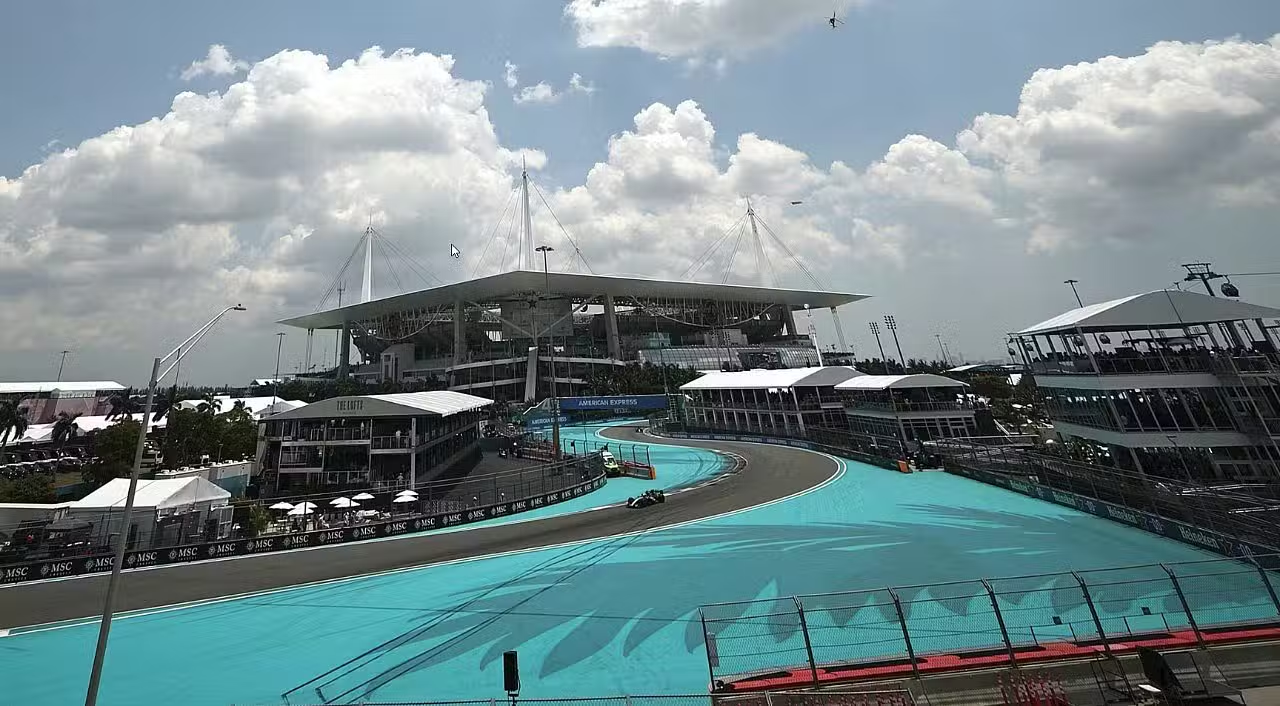
Federação Internacional of Automobilismo (FIA), Fórmula 1 and promoter Grande Prêmio of Miami have announced a significant change to the race schedule. The start of the event was brought forward by three hours, from 4pm to 1pm local time. The decision aims to protect drivers, teams, fans and the entire event structure given the forecast of strong storms for Sunday afternoon, which could compromise safety and the progress of the competition at Autódromo Internacional and Miami.
Alteração seeks to minimize climate impacts
The change in the start time of Grande Prêmio from Miami occurs as a preventive measure against adverse weather conditions. The weather forecast indicates intense storms late Sunday afternoon, precisely at the time the race was originally scheduled to begin. Anticipation seeks to create a more favorable time window for carrying out the test, maximizing the chances of completing it under the best possible conditions.
A joint statement from the FIA, Fórmula 1 and the local organization justified the change. Segundo the text, the measure was adopted to “guarantee minimal interruption to the race” and ensure the “largest possible window to complete the Grande Prêmio in the best conditions”. Safety was explicitly cited as the main concern, ranging from competitors to spectators and personnel involved in the event’s logistics. Corridas in heavy rain presents unique challenges that can directly affect the cars’ performance and, more critically, the tires’ visibility and grip.
Segurança of pilots and public as priority
Prioritizing safety is a fundamental pillar in motorsport, especially in Fórmula 1, where high speeds and technical complexity are constant. Condições on a wet road can lead to a series of risks, such as aquaplaning, a drastic reduction in visibility due to the spray raised by cars and greater difficulty in controlling the vehicles. The decision to bring forward the start reflects the commitment to the physical integrity of the pilots and everyone involved.
Organizações like the FIA have strict protocols for assessing weather and track conditions before and during races. Estes protocols include:
- Monitoramento meteorological constant:Utilização real-time data to predict rain, wind and lightning.
- Inspeção from the track:Avaliação of the amount of water on the surface, presence of debris and general condition of the asphalt.
- Consulta to drivers and teams:Recolha feedback on drivability and visibility during training in the rain.
- Comunicação transparent:Manutenção of an open dialogue with all interested parties to inform decisions.
- Planos contingency:Estabelecimento of alternative measures for bad weather scenarios, including red flag or suspension of the race.
Fan safety is also a crucial factor, considering the structure of the stands and the movement of people at a large event. Torrential Chuvas can cause logistical disruptions, make access and exit difficult for the public, as well as creating uncomfortable and risky situations in common areas.
Logística and adaptation of teams on the circuit
Changing the start time of an Grande Prêmio involves a series of complex logistical adaptations for teams, organizers and broadcasters. The Fórmula 1 teams, accustomed to meticulous planning, need to readjust car preparation schedules, briefings with drivers and engineers, and even meal and rest times for their members. Preparing for a race in the rain is already different, requiring the calibration of rain tires and the adaptation of the cars’ aerodynamic settings to deal with the water on the track.
Event organizers also face significant challenges. The change affects the gate opening schedule, public and private transport schedules for the racetrack, and the coordination of security and medical care teams. Food and beverage sales, as well as entertainment activities scheduled for the public before the race, need to be reviewed and communicated quickly. The fan experience, fundamental to the success of the event, is directly impacted by these changes, requiring effective communication to avoid frustration and ensure that everyone is aware of the new schedule.
Television and radio stations, responsible for the global broadcast of the event, also need to adapt their programming schedules. Fórmula 1 is a sport with millions of spectators around the world, and any change to the start time requires a rapid reconfiguration of broadcasts for different time zones, as well as the production of informational materials to keep the public updated on the changes.
Grid starting: Antonelli and Verstappen at the front
Apesar weather uncertainties and logistical changes, the starting grid for Grande Prêmio of Miami has already been defined, promising an exciting race. Young driver Kimi Antonelli, from Mercedes, secured pole position, demonstrating a remarkable performance in the qualifying session. Sua’s first career pole represents a significant milestone, especially on a challenging circuit like Miami.
Alongside Antonelli, completing the front row, will be Max Verstappen, from Red Bull. The three-time world champion is known for his ability in a variety of track conditions and will look to capitalize on any opportunity from the start of the race. The presence of these two drivers on the front line suggests an intense fight for the lead in the first corners, a moment that always generates expectations among fans.
Bringing the race forward to a time of potentially milder weather can, paradoxically, influence the teams’ strategies. Caso the track is dry at the start, the choice of tires will be crucial. If there is any drizzle or damp track, the drivers’ experience and talent in mixed conditions will be put to the test. The race is expected to maintain its high level of competitiveness regardless of the conditions, with Kimi Antonelli and Max Verstappen leading a field determined to seek victory over Miami’s Grande Prêmio.