

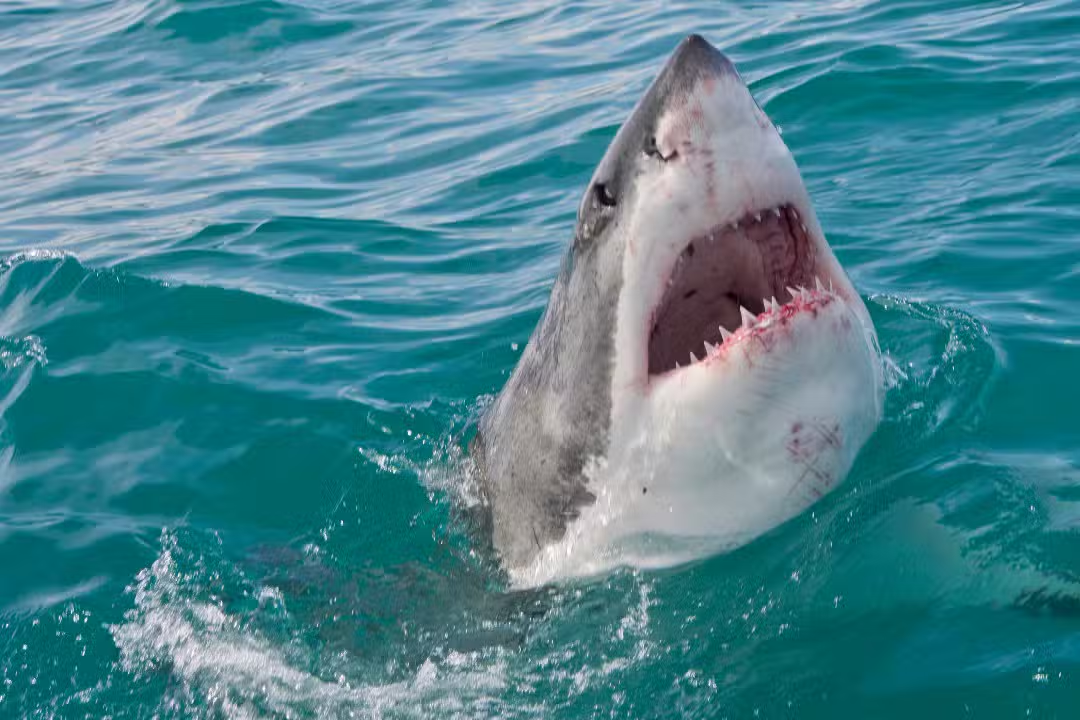
A fatal attack recorded off the coast of Austrália Meridional in the 1980s has once again attracted the attention of users on recent digital platforms. On March 3, 1985, Shirley Ann Durdin, 33 years old, lost her life after being hit by a great white shark in the region of Peake Bay. The victim collected scallops in shallow waters alongside her husband and four children. The marine animal, estimated to be six meters long, attacked the woman suddenly and brutally. Testemunhas on the beach followed the quick outcome of the incident without time to intervene. Rescue Equipes carried out intensive searches in the days following the event. The professionals, however, did not locate any traces of the victim. The case marked the history of the country’s coastal security and remains the subject of analysis by marine life experts.
Dinâmica of the occurrence and rapid action of the animal
The incident occurred during the afternoon in an area characterized by calm waters. Moradores locals frequented the bay regularly for leisure activities and shellfish collecting. Shirley swam a few meters from the sand strip when the predator approached silently. The first contact resulted in a serious injury that immediately immobilized the victim. The depth of the place did not exceed the woman’s waist line.
https://twitter.com/CestTerrifiant/status/1711088531605447163?ref_src=twsrc%5Etfw
Pessoas present at the beach reported that the shark circled the area after the initial impact. The animal then returned and consumed the rest of the body before disappearing towards the open sea. The speed of the attack prevented any intervention from the people around. The action lasted just a few minutes.
Barry Durdin, the victim’s husband, tried to enter the water to carry out an immediate rescue. Banhistas who were monitoring the situation intervened and held the man in the sand to avoid further victims. Emergency Profissionais arrived at the scene minutes after the radio call. The surface of the water no longer showed signs of the woman or the marine predator. The beach isolation operation began soon after.
Mudança routine and family history in the region
The presence of the Durdin family in the coastal area resulted from a recent change of address. The family group previously resided in the agricultural community of Karkoo, located in the interior of Australian territory. The transfer to the coast occurred for health reasons involving the victim’s husband. The family sought a higher quality of life in the new city.
Barry developed severe allergies related to working in the field and contact with agricultural dust. The proximity to the ocean represented a recommended medical alternative to alleviate respiratory symptoms. Collecting scallops became a regular habit and leisure activity for the family in the new environment. The place seemed to offer the necessary safety for children.
The event marked the first recorded fatality involving sharks at Austrália Meridional since 1974. On a previous occasion, Terry Manuel diver Terry Manuel also lost his life after contact with a great white shark. The repetition of an extreme case generated intense debates about safety on the region’s beaches. Moradores of Port Lincoln drastically reduced visits to the sea in the following months.
Comportamento of species and rarity of total consumption
Especialistas in marine biology classify the great white shark as a top predator in the global oceans. Espécimes adults reach dimensions exceeding six meters in length and weigh tons. The force of the bite exerts pressure equivalent to thousands of kilograms per square centimeter. Esses animals travel great distances along sea currents.
Apesar’s impressive physical capacity, the complete consumption of a human remains a statistically rare event. Most international records point to exploratory bites. The animal usually abandons the victim after realizing that it is not its natural prey. Human tissue does not have the layer of fat sought by these predators.
Arquivo Internacional of Ataques of Tubarão keeps the case of Peake Bay cataloged as an absolute behavioral exception. Tubarões whites tend to focus their feeding on seals and sea lions that inhabit the coast. Erros visual identification in turbid waters explains much of the interactions with bathers and surfers. The pattern observed in the 1985 attack deviates from the species rule.
Mergulhadores professionals searched the bottom of the bay for several consecutive days after the attack. The total absence of physical traces made legal procedures and the grieving process for family members difficult. The search operation ended without capturing the animal responsible for the attack.
Repercussão on digital platforms and prevention protocols
The historic case gained recent visibility through discussion forums and social networks focused on real facts. Criadores content on YouTube and Reddit users retrieved the details of the incident in videos and posts. The combination of familiar witnesses and the unusual outcome drove information sharing. The platforms’ algorithm favored the distribution of the topic.
Austrália records an annual average of 20 incidents involving sharks and humans across its territory. A small fraction of these contacts result in deaths. Recent Dados indicate that the country recorded 15 documented attacks in the last year, with a concentration in the Austrália Ocidental region. The country is currently investing in cutting-edge technology to mitigate risks in areas with the highest tourist traffic.
Autoridades Australian authorities have implemented specific guidelines to guide residents and visitors on safe use of the sea:
- Evitar entering the ocean during dawn and dusk.
- Manter away from murky water or areas with visible schools.
- Nadar always in groups and close to lifeguard stations.
- Utilizar visual protection equipment during diving.
- Respeitar strictly monitors the signs installed on the sand strips.
Aplicativos cell phones issue real-time alerts when drones identify predators close to the coast. Protective Redes and drum lines make up the physical barrier at popular beaches.
Monitoramento environmental and marine conservation
Australian coastal management seeks to balance human security with the conservation of marine species. The great white shark received protected animal status under federal laws starting in the 1990s. Indiscriminate hunting, defended by some residents in the past, has given way to rigorous scientific monitoring programs. The government prioritizes environmental education.
Pesquisadores uses satellite transmitters to map the migratory routes of predators throughout the year. The data collected makes it possible to predict seasonal concentrations in specific regions of the coast. The technology helps issue preventative warnings to coastal communities before the start of summer.
The 1985 incident remains a pivotal case study in water safety training. Departamentos Governments use historical data to improve emergency responses in remote areas. Constant vigilance defines the routine of rescue teams on the country’s beaches. The legacy of the episode reinforces the need to respect the natural environment of the oceans.