

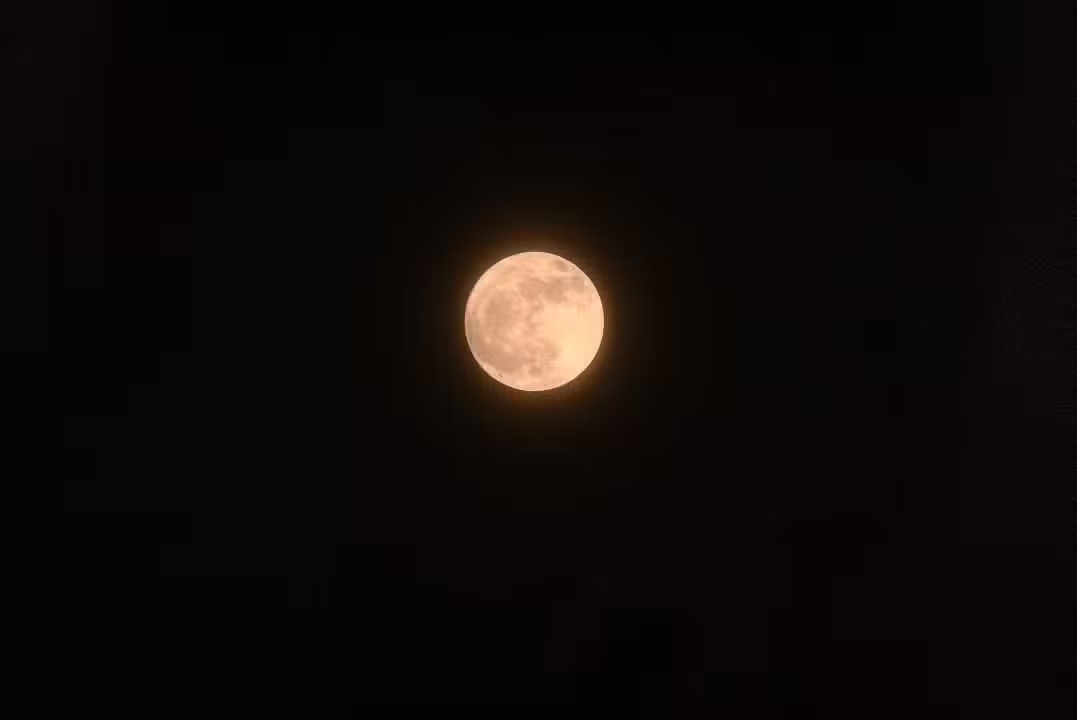
Lua appears with 99% visibility in the sky this Sunday, May 3, 2026. The natural satellite completed the full phase on the 1st, at 2:24 pm. Observadores notice the disc is still very lit in the early hours of the night.
The lunar cycle lasts about 29.5 days. Ele includes new, waxing, full and waning phases. The transition happens gradually.
Lua full occurred at the beginning of the month
The May full moon began on the 1st. The lighting peak occurred at 2:24 pm. Desde then, the visible portion of the lunar surface begins to slowly diminish.
Neste Sunday, visibility registers 99%. The phenomenon still allows good observation with the naked eye. Especialistas of Instituto Nacional of Meteorologia follow the movement.
- The full moon on May 1 occurred at 2:24 p.m.
- Current Visibilidade reaches 99%
- Transição for waning is expected on May 9th
- Current Fase is known as gibbous gibbous
Calendário lunar May brings two floods
Maio of 2026 records two full moons. The first happened on the 1st. The second is scheduled for the 31st, at 5:46 am. Esse pattern occurs when the month has 31 days and the cycle fits like this.
Inmet has released the full calendar dates. The waning moon begins on the 9th, at 6:13 pm. The new moon comes on the 16th, at 5:03 pm. The crescent begins on the 23rd, at 8:12 am.
Como works satellite phases
The Lua does not produce its own light. The glow seen on Terra is the reflection of sunlight on its surface. The movement of revolution around the planet creates different appearances throughout the month.
In each cycle, the illuminated face changes according to the alignment between Sol, Terra and Lua. In the full phase, the satellite is opposite Sol. Isso allows the entire disk to be visible. When waning, the lighting progressively decreases.

Observação in the night sky
Quem Looking up at the sky after sunset will see Lua tall and bright. The satellite rises in the late afternoon and remains visible for much of the night. Condições in clear weather favors visualization.
Astrônomos Amateurs recommend binoculars or simple telescopes for surface details. Crateras and lunar seas appear more clearly in this phase. The still strong lighting helps with observation.
Próximas cycle changes
The waning moon officially begins on May 9th at 6:13 pm. Visibility drops to around 50% at this stage. Depois comes at new moon, when the satellite is aligned with Sol and practically invisible.
The cycle continues with the increase until the next flood at the end of the month. Essa repetition helps farmers, fishermen and anyone who follows traditions linked to the lunar calendar.