

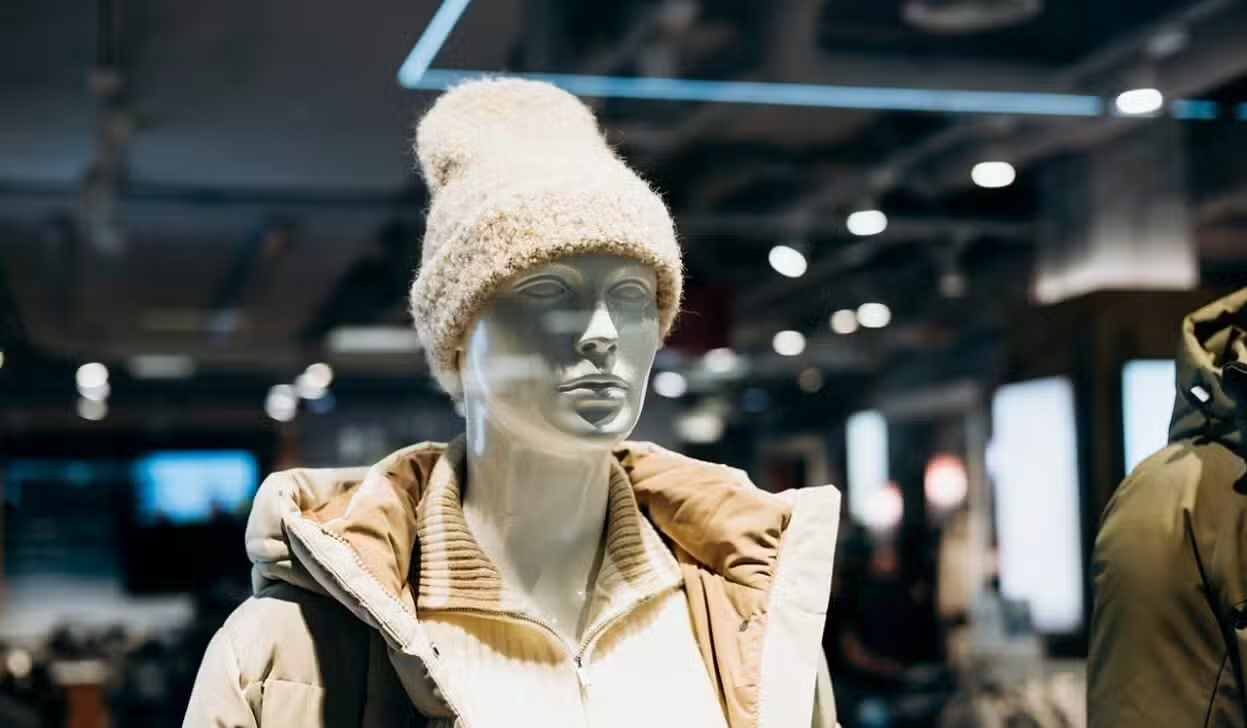
Metropolitan Museum of Art opened the Costume Art exhibition this week. The exhibition marks the opening of the new Condé M. Nast galleries and features nine mannequins with body shapes based on real people. Eles include larger bodies, pregnant women, wheelchair users, trans women and those with amputated limbs.
Cada mannequin has its face replaced with an oval surface of polished steel. The visitor sees their own reflection when observing the pieces. The initiative seeks to connect the public with the bodily experiences represented in the clothes on display. The exhibition opens its doors shortly after Met Gala, held on the first Monday in May.
Mannequins created from real models and activists
The new mannequins were modeled on specific individuals. Model and actress Aimee Mullins, who lost her lower legs as a baby, posed for one of them. Artist Michaela Stark, known for works that explore the body and beauty standards, served as a reference for three mannequins. Black trans model Aariana Rose Philip was also part of the project.
Sinéad Burke, an Irish activist with dwarfism, posed for two others. Esses bodies contrast with traditional mannequins in the fashion world, which generally follow measurements close to size 36 or 38. The Costume Institute curatorship, led by Andrew Bolton, planned the inclusion to broaden the view of who is part of fashion history.
- Aimee Mullins served as the basis for a mannequin with leg amputation
- Michaela Stark posed for three mannequins with voluminous bodies
- Aariana Rose Philip represented trans body
- Sinéad Burke inspired dummies with dwarfism
- Rostos replaced with polished steel for visitor reflection
Exposição combines art and clothing in themed pairs
Costume Art occupies Costume Institute’s new permanent galleries. The space is about 11,500 square feet and is located at the museum’s main entrance. The exhibition brings together almost 200 works of art from different Met departments with around 200 pieces of clothing and accessories.
Cada pair associates a classic work — impressionism, antique Grécia or armory — with an outfit. The guiding thread is the clothed body. Historical and contemporary Peças appear side by side to show how fashion crosses all areas of the museum. The exhibition is open for nine months, a longer period than usual in previous temporary exhibitions.
Various mannequins appear interspersed with conventional models. Essa arrangement reinforces the idea that different bodies belong to the fashion universe. The polished steel on the faces encourages visitors to imagine themselves inside the clothes on display.
Impacto expected in the debate on inclusion in fashion
The initiative comes at a time of questions about diversity efforts. In 2025, the previous exhibition on black dandies had already generated political repercussions. Agora, Met takes concrete steps forward in the design of the display stands themselves.
The curatorship avoided explicit statements about the current context. Instead, he prioritized the practical aspect: allowing more people to see themselves represented in the museum’s showcases. Modelos who posed for the mannequins highlighted the institutional nature of the change.
Met has not confirmed whether all 25 mannequins mentioned in some reports are already in use. The institution highlighted the nine new bodies as the main highlight of the renovation. The pieces remain in the permanent collection of the Condé M. Nast galleries.
Detalhes new support technicians
Cada mannequin was custom produced. Eles reproduce exact proportions of the bodies of the people who served as models. The reflective surface of the face was developed by sculptor Samar Hejazi. The material allows the viewer to project their own image onto the clothing.
The exhibition already receives its first visitors after Met Gala. The museum expects the public to interact directly with the mannequins, stopping to observe their reflection. Essa sensorial experience reinforces the central theme of the exhibition: the relationship between body, clothing and art.