

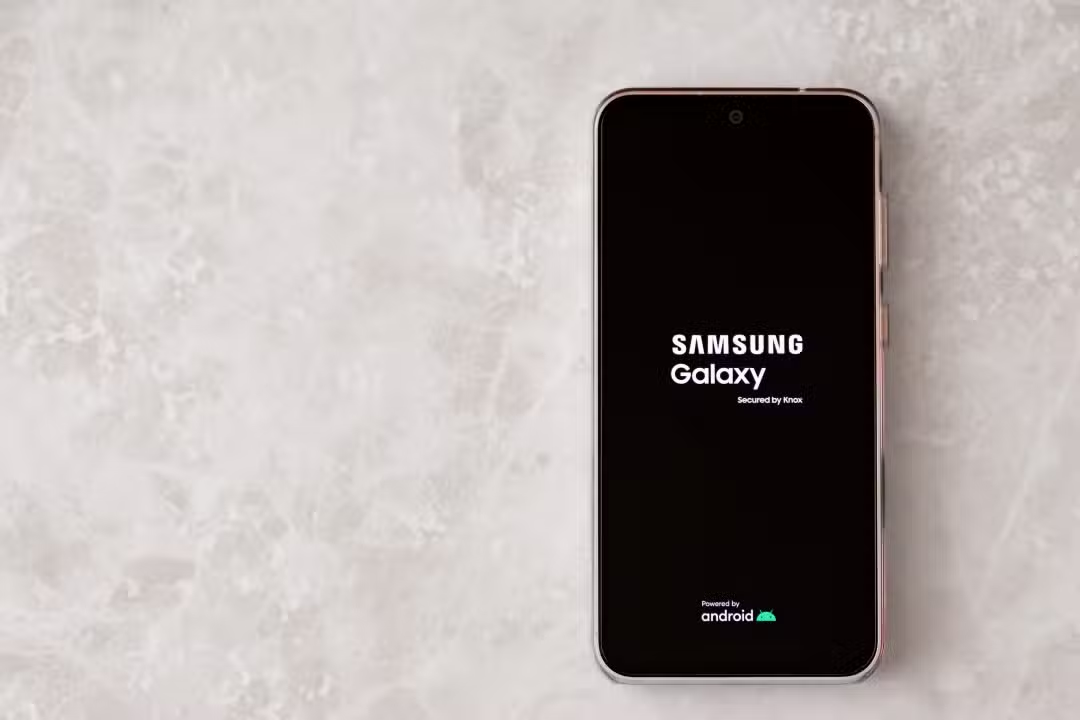
Samsung confirmed the main features of the Galaxy S27 Ultra, its next top of the line that arrives with a 200 megapixel main camera sensor and variable aperture system. The device represents a significant advance in computational photography and promises better performance in different light conditions. The South Korean company brings together technologies that the consumer market has been waiting for for months in a single piece of equipment.

200 MP Câmera with aperture innovation
The 200 megapixel main sensor is present as the technical highlight of the Galaxy S27 Ultra. The big news is the variable opening system, which automatically adapts depending on the ambient brightness. In bright conditions, the lens reduces aperture for greater depth of field and sharpness. At night, the opening expands to capture more light. Esse mechanism eliminates the need to choose between f/1.7 and f/2.8 manually.
Smart imaging Processamento comes with the hardware. The Snapdragon 8 Gen 4 chip manages noise reduction algorithms, enhanced optical stabilization and real-time pixel merging. Vídeos in 8K at 60 fps gains native compatibility. Night mode promises grain-free images, thanks to the new exposure compensation system that works in microfractions of a second.
Especificações complete flagship
The Galaxy S27 Ultra features robust configuration across all segments:
- Tela 6.9-inch AMOLED with 240 refresh rate Hz
- Processador Snapdragon 8 Gen 4 with 3 nanometer architecture
- 16 GB LPDDR6X RAM
- 512GB of SSD storage
- 5,500 mAh Bateria with 65-watt fast charging
- Câmera front 50 MP with f/2.0 aperture
- Sistema rear cameras with 10x optical zoom and dedicated 200 MP peiscope
- Certificação IP68 for water resistance up to 2 meters for 30 minutes
- Vidro Gorilla Glass Armor on the front and back
- Design in titanium with a thickness of 8.2 millimeters
The body of the device uses an aircraft-grade titanium frame, similar to the iPhone 16 Pro. The battery grows by 200 mAh compared to the S25 Ultra. Improved cooling system includes 3D vapor chamber that reduces temperature by 3 Celsius degrees during intensive gaming.
Artificial Inteligência integrated into the system
Samsung integrates generative AI tools directly into the S27 Ultra, without constant dependence on cloud servers. Hybrid processing distributes tasks between the local chip and Samsung servers as needed. Photo Edição with object removal, frame expansion and scene generation works offline. Reconhecimento from camera scenes automatically identifies optimal mode without user intervention.
Assistente Samsung with proprietary language model provides contextual suggestions based on device history. Chamadas telephones receive simultaneous translation in 90 languages. The system protects personal data through processing on the phone itself, without sending conversations or images to the Samsung cloud.
Data launch and global market
The Galaxy S27 Ultra debuts on the international market on February 15, 2025. Brasil receives a confirmed announcement for February 20, with pre-sales starting February 21 and availability in stores from March 1. Preço suggested by Samsung in US dollars is 1,599 USD, a conversion that should result in approximately 9,200 reais in Brazilian retail.
Operadoras like Vivo, Claro, TIM and Oi offer trade-in programs for previous model owners. Lojas as Casas Bahia, Carrefour and Amazon open pre-orders with bonus Galaxy Buds3 Pro earbuds. Samsung authorizes upgrades at no additional cost for customers who purchased S26 Ultra less than seven months ago.
Comparação with direct competitors
The Galaxy S27 Ultra competes directly with the iPhone 16 Pro Max and Pixel 9 Pro XL. Enquanto Apple maintains fixed aperture at f/1.78, Samsung offers variable system. Google privileges computational processing through the Tensor with native AI integrated since 2023. Samsung combines robust hardware with hybrid artificial intelligence, positioning the S27 Ultra as an intermediary between different philosophies of mobile photography.
Testes from third parties and independent reviews should arrive on February 19th, the day before the Brazilian launch. Especialistas in mobile photography comment that variable aperture solves the historical problem of smartphones: compromise between brightness and depth of field.