

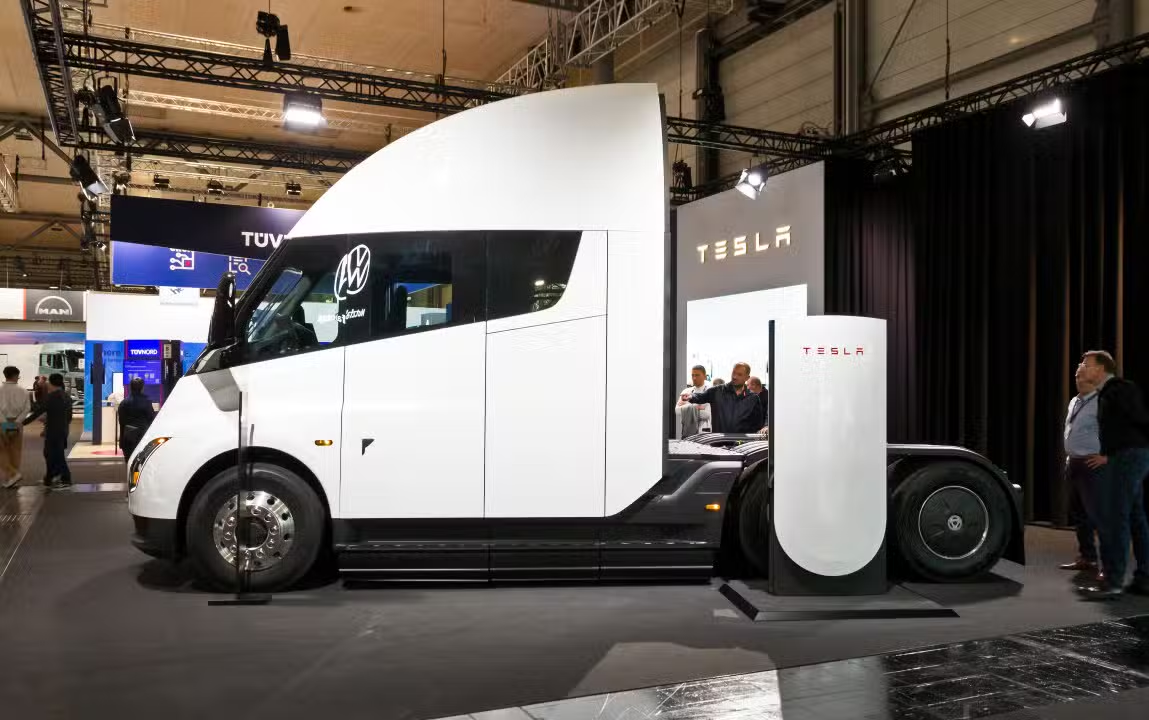
The large-scale production of the North American automaker’s electric truck introduces a new dynamic in the cargo transportation sector. With an estimated value of US$290,000 for the version capable of traveling 800 kilometers on a single charge, the vehicle has a considerable financial advantage over traditional combustion models. A detailed analysis of the total cost of ownership indicates that logistics companies can save between US$147,000 and US$404,000. Esse amount accumulates over a period of five to ten years of continuous operation on the highways.
The difference in operating expenses directly depends on the variation in electricity tariffs and the price of fossil fuels. In the current economic scenario, with a gallon of diesel priced at US$5.35 and commercial energy in the range of US$0.12 per kilowatt-hour, the numbers favor the adoption of the electrified fleet. The relief in the carriers’ cash flow becomes more evident as the truck’s usage time increases. Essa long-term savings offset the higher initial investment required to purchase heavy equipment.

Financial Comparativo details advantages in daily operations
The survey structured a direct comparison model between the two technologies available on the Classe 8 heavy vehicle market. Um Tesla Semi Long Range, valued at US$ 290 thousand, added to a US$ 60 thousand deposit charger, requires a total investment of US$ 350 thousand. The direct competitor used in the metric was a diesel Freightliner Cascadia, with a base price of US$ 165 thousand. The calculations consider an annual run of 160 thousand kilometers for both trucks.
Efficiency metrics show different realities in the daily consumption of fleets. The electric model records a consumption of 1.7 kWh per kilometer traveled. The combustion truck has an average of 8.0 miles per gallon, a number that represents the real efficiency of new vehicles in this category. From this engineering data, analysts projected the accumulated costs for transportation companies.
Considerando electricity at $0.12 per kWh and diesel at $5.35 per gallon, the five-year ownership scenario reveals the following numbers:
- Gasto electric model total: US$ 486 thousand (cost of US$ 0.97 per mile driven).
- Despesa of the combustion truck: US$ 633 thousand (cost of US$ 1.27 per mile driven).
- Accumulated financial Vantagem: US$ 147 thousand (23% reduction in costs).
The financial distance between the two options becomes even more aggressive in the projection of a decade of continuous use. In ten years, the difference jumps to US$404 thousand in favor of electrification. Tesla’s truck costs US$795,000 to operate during this period, while the diesel model consumes US$1.199 million of the carrier’s budget. The advantage is amplified because the operating cost of the electric motor remains lower than that of fossil fuel throughout the useful life of the equipment.
Simplified Manutenção and cheap power widen the gap
Traditional supply weighs heavily on the final bill for logistics operations. With diesel at $5.35 per gallon and consumption set at 8.0 miles per gallon, fuel costs $0.67 per mile. The electric vehicle consumes only $0.20 per mile in energy. Esse value represents less than a third of the cost required to move a conventional truck on the country’s highways.
The maintenance routine in mechanical workshops amplifies this difference in costs. The electric truck does not have a combustion engine, complex transmission, exhaust aftertreatment system or need for DEF fluid. The maintenance cost for the Tesla Semi amounts to approximately $0.06 per mile. The diesel vehicle consumes US$0.18 per mile in repairs and periodic inspections.
Essa mechanical disparity generates a difference of US$ 12 thousand annually for every 160 thousand kilometers driven. Trocas of oil, filter replacement, injector cleaning and repairs to exhaust system components simply do not exist in the electric vehicle routine. The shorter time spent in the workshops also increases the availability of the truck to carry out freight, increasing the fleet’s overall productivity.
Impacto of electricity tariffs and geopolitical instability in 2026
The economic viability of the electrical project strongly depends on the amount charged by energy concessionaires. A sensitivity analysis shows that the critical point occurs around US$ 0.30 per kWh for five years of use and close to US$ 0.35 per kWh for ten years. Acima beyond this threshold, the advantage of Tesla Semi disappears and diesel becomes the cheapest option again. Tarifas of demand in commercial markets could drive prices above $0.25 per kWh at peak times.
Most transport companies get around this problem by loading trucks at warehouses during the early hours of the morning. Esse planning allows access to significantly lower nightly rates. Electricity price stability offers cost predictability that attracts fleet managers. Electric energy does not suffer abrupt price jumps in short periods of time.
The fossil fuel market faces an opposite reality in the year 2026. The price of diesel has soared 40% since the beginning of the year, driven by global geopolitical instability. The national average reached US$5.81 per gallon, equaling the historical record recorded during the conflict between Rússia and Ucrânia in 2022. The state of Califórnia recorded values above US$7.50 per gallon at the pumps.
Tax policies have also changed the purchase price of traditional vehicles. Seção 232’s 25% tariffs on Classe 8 trucks and parts raised the cost of new diesel models to approximately $238,000, which includes the federal excise tax on manufactured goods. The initial price difference between the Tesla Semi and the combustion truck shrank from US$125,000 to around US$52,000, shortening the time needed to return on investment.
Estrutura Recharge Sets Pace for Logistics Transition
Installing your own charging infrastructure requires financial planning from transport companies. The cost model uses the value of US$60 thousand for the installation of the standard charger. Esse upstream is aligned with Tesla’s new Basecharger, a 125 kW device designed for logistics yards. The package includes two charging posts for US$40,000, in addition to the costs of the electrical work. The system adds 60% autonomy in four hours of connection.
Companies with more intensive operations need faster solutions. The Megacharger from Tesla costs $188,000 for two stations and offers up to 1.2 megawatts of power. Essa technology adds 60% autonomy in just 30 minutes. The higher initial investment is justified for fleets that operate multiple shifts and cannot leave trucks parked for long hours in the yard.
The automaker also expands a public network with 66 Megacharger locations along major freight corridors. The infrastructure solves charging challenges on long-distance journeys that exceed the battery’s original autonomy. Prices charged at these bus stations vary depending on location and time of use. The cost of energy at these fast points can exceed US$0.50 per kWh, which requires precise calculation by route planners to maintain the profit margin for interstate freight.