

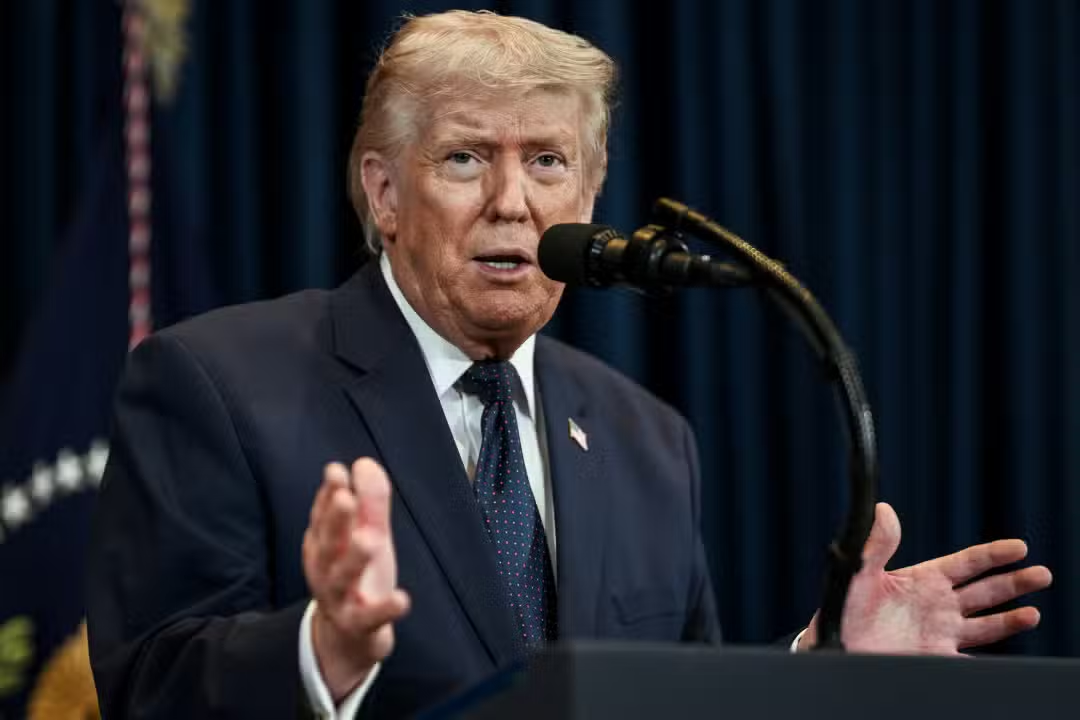
The president of Estados Unidos, Donald Trump, conditions any “diplomatic advance” with Irã to the conclusion of his official trip to China, scheduled for May 14th and 15th. Segundo information from authorities close to the process, Washington awaits response from Teerã within 24 to 48 hours on a proposed peace framework that would cover central issues in negotiations between the two countries.
Casa Branca established this period as a criterion for possible movements in the bilateral crisis. Caso there is no progress until then, Trump signaled that it is prepared to issue an order for a military attack against Irã, as revealed by advisors linked to the negotiation process. The scenario reflects the simultaneous strategy of aggressive diplomacy and military preparation that marks the current administration.
Negociações move forward, but agreement does not yet exist
American Autoridades interviewed in confidence recognizes progress in the conversations of recent days. One official said he was “very far from an agreement”, admitting that several colleagues in the federal bureaucracy remain skeptical about the possibility of reaching a peace pact.
Trump reinforced at an event at Casa Branca that recent discussions were “very productive”. The president stated that Irã “wants to do business” and mentioned intense conversations in the last 24 hours. Sua’s assessment is that the parties are close to consensus, although the gap between demands is still substantial.
In a call to broadcaster Fox News, Trump responded about the expected schedule: “one week” would be enough to “complete everything”. The statement coincides with the timing of his trip to China, suggesting that diplomatic success with Teerã would depend on results before or during May 14 and 15 in Pequim.
Estrutura peace proposal sparks division in Washington
The proposed peace framework being negotiated with Irã divides opinions within the American administration. Alguns officials believe in the viability of an agreement covering regional security, nuclear programs and economic sanctions. Outros question whether the Iranian government will agree to the terms offered.
Irã, so far, has not publicly confirmed acceptance or rejection of the American terms. Teerã maintains strategic silence as it assesses the domestic political implications of a possible deal. Analistas note that Iranian leaders face domestic pressure from sectors that reject negotiations with Washington.
The proposed structure includes elements on:
- Limitações of the Iranian nuclear program
- Suspensão gradual economic sanctions
- Military Non-Aggression Garantias
- International verification Mecanismos
- Retorno of frozen financial assets
Trump compared the level of Iranian interest to past negotiations. “They want to do business with me. Você sees that. People who know me understand how it works,” said the president. The statement resonates with a previous pattern in which Trump claims to have the personal capacity to resolve conflicts considered intractable.
Critical Cronograma coincides with Asian agenda
The timing of the presidential trip to China is no coincidence. Trump scheduled his visit to Pequim for May 14th and 15th, during which time he wants to see a “diplomatic advance” consolidated with Irã. The sequence suggests that negotiations with Pequim could also influence the American position in relation to Teerã.
Relacionamento trade between US and China is under pressure from tariffs and technology disputes. Alguns analysts note that success with Irã could serve as a bargaining chip in conversations with Pequim. Irã, in turn, has economic and geopolitical ties with China that could be leveraged.
Califórnia, where large Iranian and pro-Iranian communities live, also appears as a secondary political context. Trump faces pressure from sectors that want to avoid military escalation in Oriente Médio. A deal with Irã before the China trip would benefit his negotiating president narrative.
Diplomatas Americans work urgently. Virtual Reuniões between authorities on both sides occurs daily. Departamento of Estado coordinates with Casa Branca the strategy of concessions and red lines that cannot be crossed.
Military action Possibilidade remains on the table
Trump made it clear that failure in negotiations would result in a military option. “If we don’t reach a diplomatic agreement, other things are on the table,” declared the president earlier. Intentional ambiguity keeps pressure on Teerã as it trades.
Forças American military forces in Golfo Pérsico have been strengthened in recent weeks. Navios war and fighter planes are in ready position. Operational Planejamento for air strikes against Iranian nuclear facilities has been revised, defense officials have revealed.
Militares Americans estimate that the operation against Irã would last between 15 and 30 days. Custos global economic consequences of such a conflict would be significant, affecting oil prices and regional stability. Esse calculation is present in discussions between Trump and his national security advisors.
Irã, aware of this threat, also increased defensive preparations. Movimentação of air defense systems was detected by American intelligence agencies. Iranian official Retórica oscillates between a willingness to dialogue and warnings about the ability to respond to any aggression.
Contexto regional and domestic pressures
Oriente Médio remains in a state of heightened tension since the conflict in Faixa of Gaza and confrontation between Israel and groups supported by Irã. An agreement between Washington and Teerã could reduce escalation risks, but would also face resistance from American allies in the region, particularly Israel.
Israeli Governo has not officially commented on Trump-Iran negotiations, maintaining a position of cautious expectation. Internamente, Israeli leaders express skepticism about the durability of any deal Trump negotiates, citing past experiences with the Obama administration.
Domestic Pressões also shapes American position. Setores Republicans close to Trump support hard lines against Irã. Democratas and pacifist groups criticize risks of military conflict. Trump seeks to balance these positions while advancing its pressure trading strategy.
Opinião American public is divided over Iranian politics. Pesquisas shows that the majority prefers to avoid another war in Oriente Médio, but support for military action grows if Irã is accused of challenging American authority or threatening allies.