
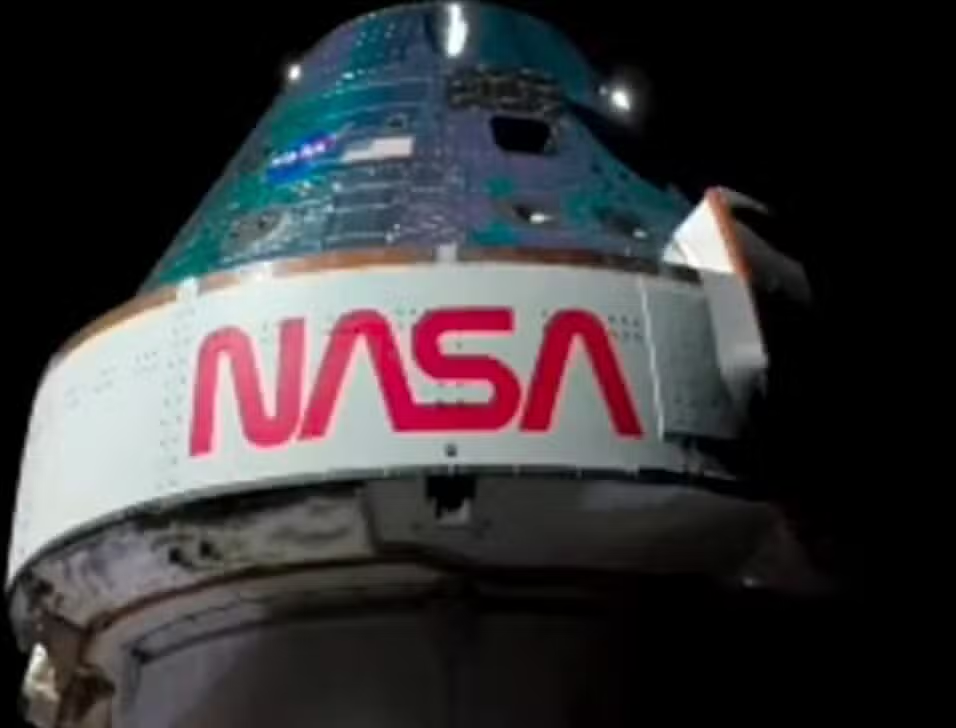
Nasa advances the development of a permanent base at Lua as part of the Artemis program, marking a new chapter in manned space exploration. The project envisages the installation of habitable structures on the natural satellite, with technology to sustain continuous human presence. Cientistas discuss the technical challenges and implications of establishing permanent settlements on lunar territory.
Estrutura and lunar base objectives
Nasa’s plan includes the construction of modular infrastructure that will allow astronaut rotation and large-scale scientific research. The base will be strategically located in regions of high scientific interest, with access to water resources and better sun exposure. Estudos indicate that human stay in Lua will require protection systems against radiation, extreme temperatures and environmental isolation.
Componentes project main features include:
- Pressurized Habitat for short and medium stay crew accommodation
- Scientific Laboratório for geological research and analysis of lunar samples
- Power Sistema based on solar panels and possible nuclear battery
- Central water storage and essential features
- Infraestrutura communication and navigation for remote operations

Cronograma implementation and phases
The first phases of Artemis focus on manned landings near the lunar poles, regions that are home to frozen water identified by observation satellites. Nasa projects that the first long-stay missions will take place between 2026 and 2030, with teams of up to four astronauts. Subsequentemente, the agency plans to expand the base with new modules and advanced research equipment.
Cada mission Artemis will accumulate operational and scientific data that will inform the next construction steps. Testes resistance materials, life systems and excavation equipment are already advancing in terrestrial and orbiting laboratories. International Órgãos, including partner space agencies, coordinate technical standardizations and security protocols.
Dimensão geopolitics of the lunar human presence
Especialistas highlight that the establishment of a permanent base at Lua repositions space exploration on a scale of territorial governance and sovereignty. The issue of lunar exploration and territorial occupation rights divides the international community, as existing space treaties restrict claims to exclusive sovereignty. Simultaneamente, the continued presence of humans on the satellite demands clear definitions of environmental responsibilities and protection of scientific sites.
Agências rivals, including Róssia and China, develop their own lunar programs with similar permanent presence goals. Esta competitive dynamics accelerate investments in lunar technology and mobilize government resources on a scale comparable to the space programs of the 1960s. Organizações international debates debate legal frameworks to regulate the exploration of lunar resources and avoid future conflicts.
Investimento financial and private partnerships
The estimated cost of developing an operational lunar base exceeds $100 billion over two decades. Nasa shares responsibilities with private contractors specializing in aerospace technology, reducing costs through development contracts. Empresas like SpaceX, Blue Origin and Axiom Space actively participate in providing habitable modules and transportation systems.
International Parcerias also contribute financially and technologically to the project. Agências spacecraft Europa, Japão and Canadá commit expertise in specific fields such as lunar geology, renewable energy systems and vacuum communication. Esta multilateral cooperation distributes financial risks and amplifies technical capabilities available to the enterprise.
Scientific Pesquisa as project engine
Objetivos fundamental science motivates investment in the lunar base. Depósitos of frozen water at the lunar poles offers opportunities to study the history of the solar system and potentially utilize this resource for fuel and drinking water. Análise of lunar rocks will provide insights into planetary formation and geological evolution that shaped Sistema Solar’s satellites.
Pesquisadores also propose using Lua as a platform for astronomical observation, taking advantage of its absence of atmosphere and opposite side as a shield against terrestrial interference. Future Possibilidades include installation of advanced telescopes and high-sensitivity radiation detectors that would revolutionize observations of the distant universe. Estudos on human adaptation to low lunar gravity will expand knowledge about space physiology.
Desafios technical and operational security
Implementar durable infrastructure in a lunar environment requires overcoming significant obstacles. Temperaturas fluctuate between 120 degrees Celsius during the lunar day and minus 170 degrees Celsius at night, requiring thermal insulation and robust climate control systems. Unfiltered cosmic and solar Radiação require additional protection for crews and sensitive electronic equipment.
Lunar Poeira, composed of sharp, electrostatically charged particles, degrades seals, lubricants and solar panels. Soluções include special coatings, advanced filtration systems and adapted equipment design. Operações maintenance and repairs require intensive training of astronauts and development of versatile tools that work in extreme vacuum and isolation conditions.
Comunicação between Terra and Lua features latency of up to 2.5 seconds, requiring significant automation and operational autonomy. Sistemas backup and redundancy are critical to ensuring crew safety in equipment failure or medical emergency scenarios. Protocolos of quarantine isolation also applies to astronauts returning from Lua, as per international health definitions.