

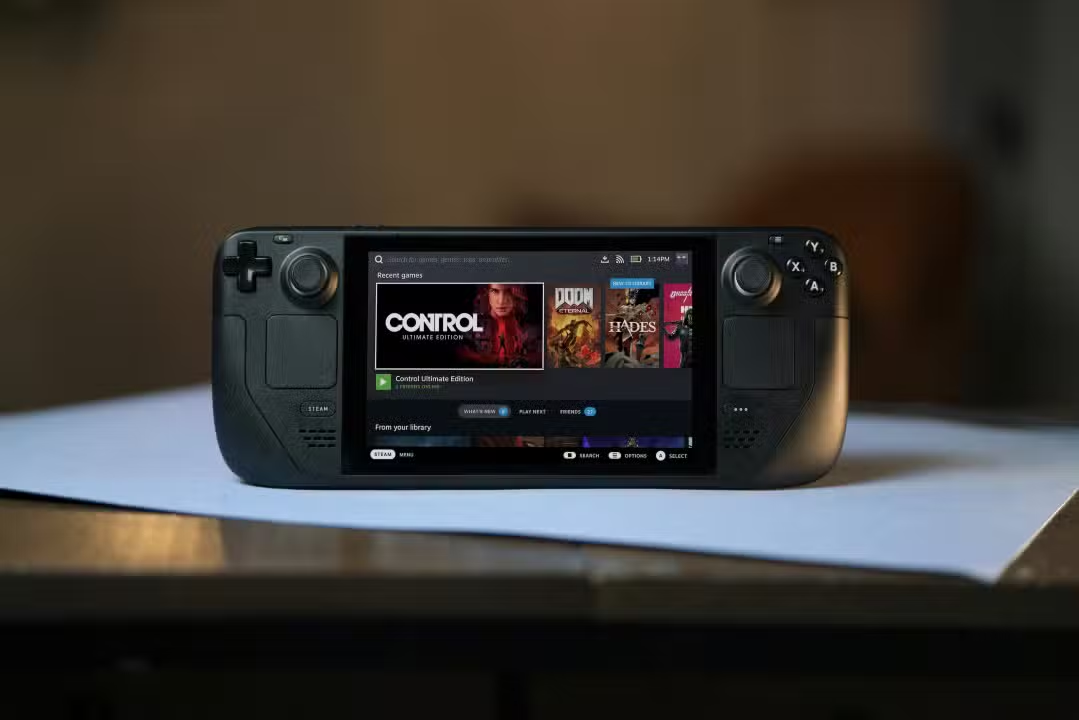
Valve has officially confirmed that the Steam Deck 2 will only hit the market in 2028. The company prioritizes significant advances in performance and energy efficiency over incremental upgrades. The decision reflects the company’s commitment to long-term innovation and superior quality over speed to market.
The extensive delay stems primarily from limitations in currently available silicon technology. Nenhum existing chip can adequately balance processing power with battery life in portable devices. The Valve awaits critical advances in chip design that meet its rigorous standards before finalizing the new model’s hardware specifications.
Razões techniques for the extended schedule
The timeline to 2028 allows the company to anticipate key advances in processor design, battery technology and critical hardware components. Essa’s approach contrasts with competitors who release mid-term updates to maintain market presence. Valve chose a different path: delivering a true generational upgrade that redefines portable gaming. The strategy reflects the corporate philosophy of prioritizing quality over speed.
The technical challenges involved in creating a next-generation handheld are substantial. The company has publicly acknowledged that existing silicon options do not meet the necessary balance between high performance and energy efficiency. High-performance Chips consume battery too quickly for viability on portable systems. Essa limitation has forced delays in finalizing specifications while Valve awaits innovations in chip design.
Power and battery balancing Desafios
Dispositivos Portable gaming devices like Steam Deck require delicate balance between processing power and battery efficiency. Modern Chips offer impressive performance, but often drain too much power. Isso directly impacts the usability of handheld devices, making them less practical for extended gaming sessions. Valve looks forward to advanced AMD architectures that can meet its ambitious goals of combining gaming power with real usability.
Balancear these priorities is the fundamental reason for the prolonged delay. Não is a matter of will or resources, but a genuine technical limitation of the current state of the semiconductor industry. Quando chip technology evolves enough, Valve can finally move forward with confidence.
Melhorias of expected design and ergonomics
Valve hopes to incorporate lessons learned from previous projects, including Steam Controller 2026. Ergonomia and input systems will be key areas of focus. Users can expect a more comfortable device that improves long gaming sessions. Enhanced Controles and innovative input features can introduce greater accuracy and responsiveness.
- Ergonomia optimized for extended gaming sessions
- Sistemas more responsive and accurate input
- Button Layout redesigned for better accessibility
- Melhorias in device weight distribution
- Refinamento general shape and size of the handheld
- Adaptações for intuitive and natural usability
Ajustes form factor, weight distribution and button layout are being explored to make the Steam Deck 2 more intuitive and enjoyable to use. The company refines the overall user experience across multiple dimensions, seeking to create a device that exceeds the high expectations of its user base.
Objetivos ambitious hardware for new model
Valve’s ambitions for Steam Deck 2 transcend incremental performance improvements. The company is actively investigating advanced AMD architectures, seeking to incorporate larger RAM capacities and improved power efficiency. Esses objectives suggest that the Steam Deck 2 could set new standards for portable gaming hardware, offering capabilities that rival traditional consoles.
Alcançar these ambitions depend on the availability of next-generation components still under development. Valve’s ability to deliver its goals will largely depend on advances in chip technology, battery innovation and thermal management systems. The company hopes to create a device that not only meets, but exceeds its audience’s expectations, requiring continued investment in hardware research and collaboration with component manufacturers.
Integração with larger Valve hardware strategy
Steam Deck 2 is not an isolated project, but part of the broader Valve hardware strategy. The company is simultaneously working on other initiatives: Steam Controller 2026, Steam Machine and a new VR headset. Esses projects shape Valve’s approach to gaming hardware and influence design and development of Steam Deck 2. By integrating insights from these parallel initiatives, Valve aims to create cohesive ecosystem of devices that complement each other. Essa’s interconnected approach could improve the overall gaming experience by offering users seamless transition between different platforms. Para to Valve, the Steam Deck 2 represents a critical component of their vision for the future of portable gaming.