

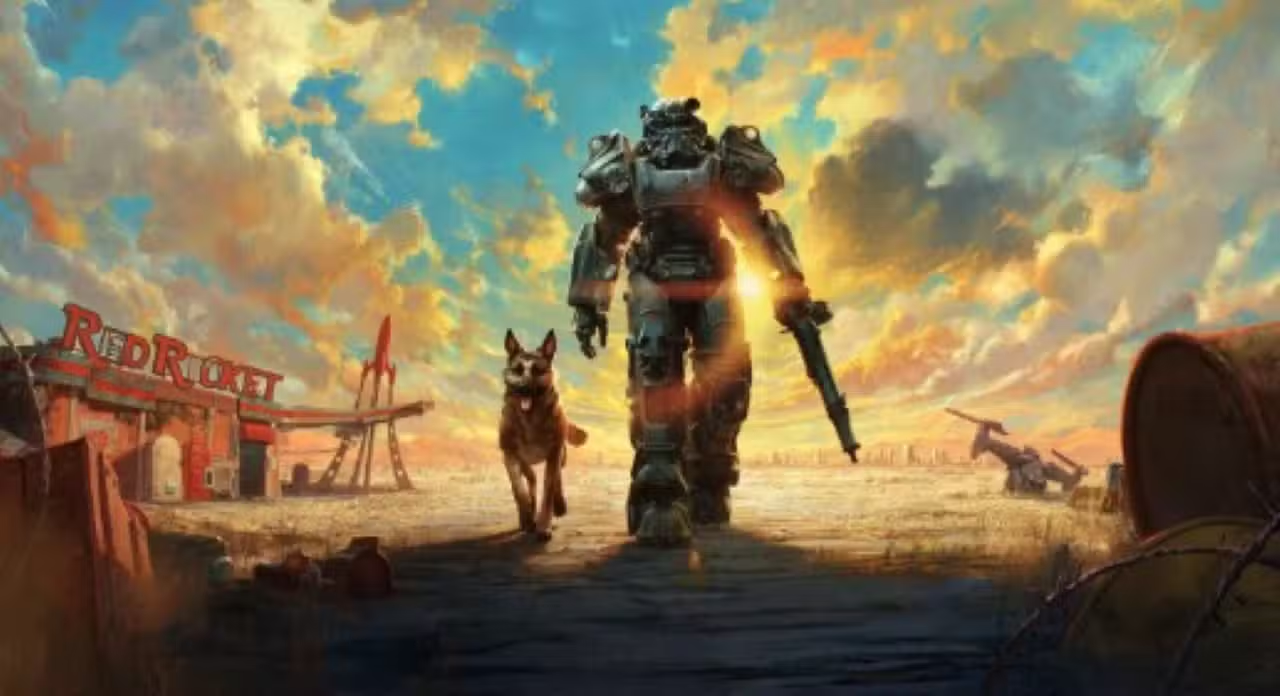
Bethesda announced the release of “Fallout 4: Anniversary Edition” and “The Elder Scrolls V: Skyrim Anniversary Edition” for Nintendo Switch 2 in an innovative format. The editions arrive on the market in physical boxes that contain only a digital code to download the complete game, eliminating the need for a traditional cartridge. The strategy, known as “code on the box”, caters mainly to collectors who want packaging without conventional physical media.
Consumidores who already own the digital versions of these titles in the Nintendo eShop will not find new content in the physical editions. The approach reflects a growing trend in the gaming industry, where packaging is primarily for display in collections. Bethesda reinforced in an official statement: “The anniversary editions of Fallout 4 and The Elder Scrolls V: Skyrim arrive at Nintendo Switch 2 in a physical edition with code included.”

Como works in the “code in the box” format
The distribution model involves a standard box containing a card with a digital code. The buyer redeems the code in the eShop to begin the full download of the title. The packaging explicitly indicates that the physical cartridge is not included, transparently informing the consumer of the nature of the product. Essa modality transforms the game into a digital license linked to the user’s account, unlike traditional cartridges that allow resale or loan.
The absence of a physical cartridge directly impacts the secondary market for used games. An empty box with already redeemed code loses its core functionality, challenging the traditional conception of game ownership. The trend reflects the industry’s gradual shift towards predominantly digital consumption, with the box serving as a symbolic artifact for those who still value the aesthetics of packaging on their shelf.
Atualizações techniques and performance improvements
Desde its arrivals to Nintendo Switch, both titles received several updates focused on the user experience. The Bethesda demonstrates continued commitment to refining gaming performance while ensuring efficient operation on hybrid console hardware. The improvements include crucial technical optimizations and new features that enhance gameplay.
- The Elder Scrolls V: Skyrim Anniversary Edition has received “60Hz Mode” implementation for smoother and more responsive frame rate.
- Fallout 4: Anniversary Edition has gained support for DLSS technology (Deep Learning Super Sampling) for higher quality image rendering.
- Ambos titles have received general stability adjustments and visual resolution optimizations.
The Skyrim’s “60Hz Mode” adds greater dynamism to gameplay, while the Fallout 4’s DLSS technology uses artificial intelligence to optimize performance without excessively taxing the graphics processor. Essas improvements represent Bethesda’s continued effort to adapt its classics to the Switch 2 hardware.
Precedentes and future releases with the same model
The “code in the box” strategy is not exclusive to these recent releases. Bethesda has already confirmed that “The Elder Scrolls IV: Oblivion Remastered” will follow the same model when it reaches Nintendo Switch 2. Essa’s consistent approach to remastered titles indicates the company’s preference for digital licenses over traditional physical media. The choice depends on factors such as type of game, target audience and market expectations.
In contrast, the highly anticipated “Indiana Jones and the Great Circle” will be released with a physical game card at retail, demonstrating that Bethesda is still evaluating different distribution methods depending on the product. Essa distinction suggests flexibility in release strategy depending on the specific characteristics of each title.
Receptividade among collectors and impact on the market
The decision to offer “physical” editions containing only digital code continues to generate discussions among consumers, especially in the collectors’ niche. Para many enthusiasts, a physical copy implies possession of a cartridge that can be resold, loaned or stored without dependence on digital servers. The “code on the box” format provides the packaging, but turns the product into a digital license linked to the user’s account, frustrating those who value the tangibility of physical media.
The change reflects the industry’s gradual transformation towards predominantly digital consumption. The box serves as a collector’s item or symbolic artifact for those who appreciate the aesthetics of packaging. Essa modality challenges traditional concepts of game ownership in the current scenario, marking a significant transition in the games market.