

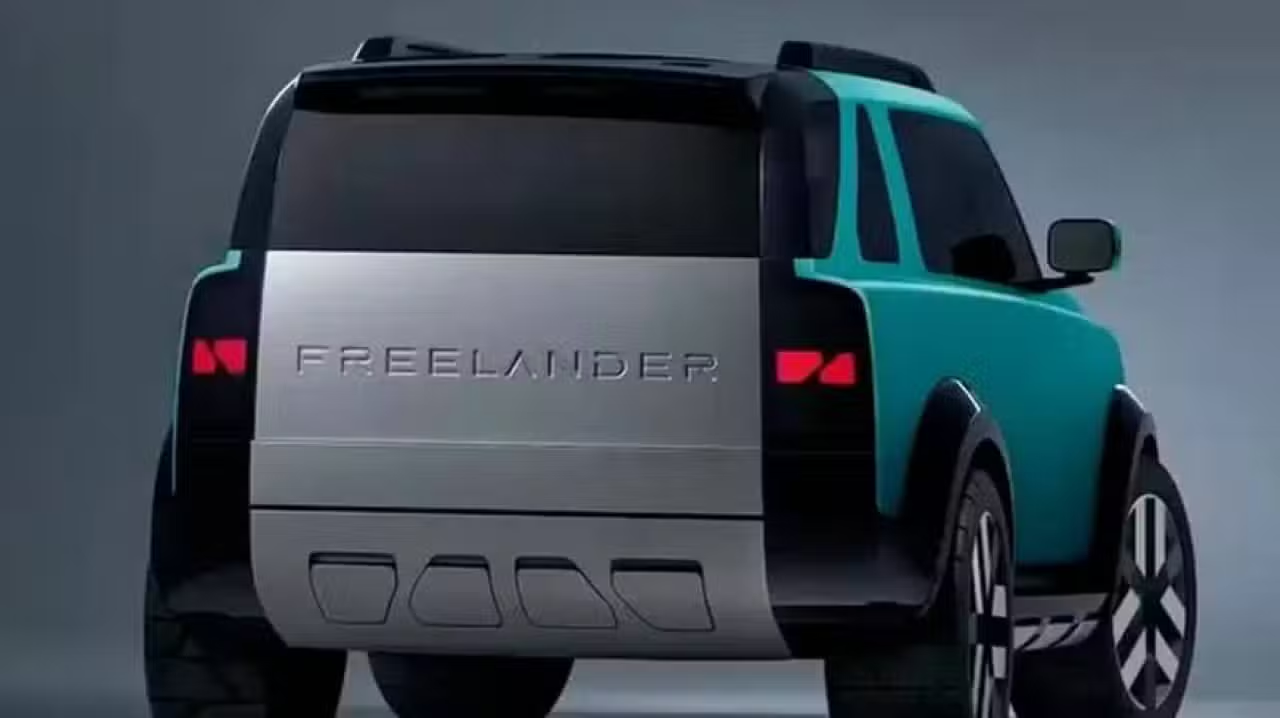
The Freelander brand returns to the global automotive market as an independent entity, announcing its first model: an electric SUV with capacity for seven passengers. The vehicle is the result of a strategic partnership between the British Jaguar Land Rover and the Chinese manufacturer Chery, consolidating the brand’s presence in the family electric vehicle segment. The launch is scheduled for the second half of 2026, during Salão of Automóvel of Pequim, marking the official return of Freelander after years of transition.
Minimalist Design rescues the model’s visual identity
The new SUV 8 features a body with straight lines that pays homage to the classic Land Rover Defender. The compact silhouette maintains the robust character expected of the brand, while modern elements reinforce its position in the premium electric vehicle segment. The total height reaches 5.1 meters, offering an imposing presence on the streets. The front end incorporates an Freelander logo integrated into the grille, while the panoramic roof extends across the entire structure.
The camera-assisted steering system improves aerodynamics at high speeds, increasing energy efficiency. The retractable roof maximizes interior space for the three children of passengers. LiDAR sensors positioned at the top of the windshield indicate the presence of advanced driver assistance systems. The light alloy wheels have an exclusive design that optimizes air flow, reducing aerodynamic drag. Light bar-connected taillights keep the visual language clean and contemporary.
Modular Plataforma allows multiple engine configurations
The SUV 8 uses the E0X architecture developed by Chery, supporting several electric propulsion options. The platform supports fully electric systems, plug-in hybrids and long-range batteries, adapting to global charging infrastructures. The high-density battery supplied by CATL offers superior energy density, enabling ultra-fast recharging at compatible stations. Peak recharging power reaches 350 kilowatts, significantly reducing standby time.
The pneumatic suspension system works together with adaptive shock absorbers, providing comfort even on uneven terrain. Automatic leveling technology maintains the vehicle’s height constant, benefiting passengers and cargo. Cutting-edge components integrated into the project include:
- High density Bateria provided by CATL.
- Pneumatic Suspensão with automatic height adjustment.
- Sistema adaptive cushioning that absorbs impacts.
- Arquitetura electronics prepared for ultra-fast recharging.
- LiDAR sensors for three-dimensional mapping of the environment.
Integrating these systems requires sophisticated management software. The central processor monitors the operational status in real time, ensuring synchronization between components. Torque distribution between axles occurs instantly, maintaining traction on any surface. The energy efficiency of the direct transmission system reduces losses, extending the vehicle’s total range.
Commercial Estratégia prioritizes Chinese market before global expansion
The launch schedule establishes China as a commercial starting point. The local market offers significant logistical advantages, facilitating initial distribution and acceptance testing. Salão of Automóvel of Pequim will act as the main showcase to introduce the model to the Asian audience. The company plans to integrate the brand into dealer networks before expanding into European, Australian and Japanese markets. The pricing strategy will depend on the production capacity of the Chinese factory.
The engineering department is already working on the development of front-wheel drive variants. Essa technical flexibility opens doors to markets like Reino Unido, Austrália and Japão. The dealer network will receive specialized training to serve customers of the new brand. Price positioning will determine direct competition with other premium brands in the segment. The partnership with Jaguar Land Rover and Chery demonstrates the trend of collaboration between traditional manufacturers and automotive technology companies, reducing financial risks and sharing development costs.
Interior all-in-one offers technology for modern families
The interior of the SUV 8 accommodates three rows of seats, allowing it to carry up to seven passengers. The E0X platform’s elongated wheelbase ensures generous space for third-row occupants. The instrument panels still reflect the manufacturer’s design decisions. The central panel in fully digital format centralizes entertainment and vehicle configuration functions. The large screen integrates climate control system controls and comfort adjustments.
The cladding materials combine sustainable elements with a premium finish. Acoustic insulation receives special attention to eliminate external noise and noise from the electric motor. The climate control system has independent temperature zones for each row of seats. The third row has a dedicated air intake. Connectivity represents a fundamental pillar in the design of the new Freelander identity. The vehicle’s operating system receives remote updates via the internet, allowing owners to add features without visiting dealerships. The brand’s official app offers remote control of multiple functions, from checking autonomy to activating security systems. Integration with smartphones requires no cables, working entirely via wireless connectivity.