

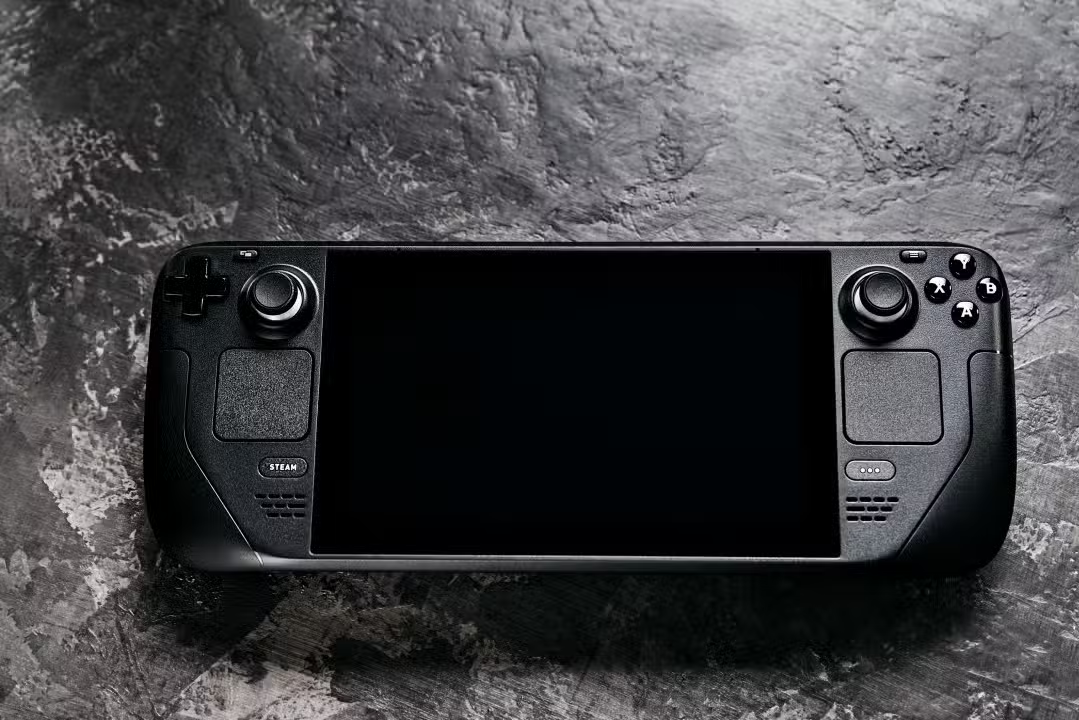
Valve announced that the second generation of Steam Deck, its portable handheld, will only be launched in 2028 due to the global shortage of semiconductors intended for artificial intelligence servers. The decision reflects the pressure faced by the technology industry, which faces significant obstacles in the supply chain for essential components. The lack of high-performance chips affects not only the gaming sector, but all consumer electronics manufacturing on a global scale.
The strategic delay allows the American company to focus resources on optimizing the next generation, ensuring that the new model offers a genuine technological leap to gamers. Analistas from the market point out that the decision, although frustrating for enthusiasts, protects the brand’s reputation by avoiding hasty launches with compromised components. The current model with an OLED screen continues in production through 2026, maintaining the presence of the Valve in the notebook segment.

Processadores AMD and technical limitations of the new hardware
The Valve engineering team has identified that intermediate performance upgrades do not justify an immediate release, especially when the AMD Zen 6 architecture is still in development. The graphics processor will use RDNA 5 technology, combining both architectures to generate more detailed graphics at lower resolutions with superior energy efficiency. A mere 30% improvement in performance does not cover the research costs needed to create a truly revolutionary generation.
Desde the launch of the first device, the portable computer market has undergone accelerated transformations. Valve recognizes that offering a technologically outdated product would undermine its leadership position. The company monitors production costs daily, seeking to balance innovation with economic viability for the end consumer. Qualquer hasty launch would generate unrealistic prices or unsustainable profit margins.
Impacto in Supply Chain and Component Pricing
Competition for space in semiconductor fabs creates an uncertain environment for long-term planning. Memory Fabricantes sends specialized acceleration data to corporate departments, while solid-state storage components experience continuous price fluctuations. Essa volatility directly affects the pricing of upcoming consoles, making it impossible to establish a stable trading strategy.
Especialistas in logistics predict that the standardization of conventional chips will only occur in the 2030s. The extension of the deadline until 2028 acts as a commercial guarantee for Valve, offering additional time for data centers to expand their operations. If accelerated infrastructure construction occurs, the company will gain margin to negotiate batches of components with better conditions. The postponement also allows Valve to absorb operational fluctuations and avoid losses associated with unrealistic pricing at launch.
Hybrid Format Development Estratégia
The launch of the first device proved the strength of a niche market previously ignored by major manufacturers. Mais 4 million units were sold globally, generating renewed interest in the notebook segment. The independent approach to software development and user interface sets Valve apart from traditional competitors. The portable gaming ecosystem has expanded significantly, attracting studios that previously focused exclusively on desktop machines.
The proprietary operating system based on Linux provides a competitive advantage over manufacturers that rely on Windows. Esse custom software allows Valve to optimize every aspect of the hardware without compatibility restrictions. The programming team works continuously to maintain operational fluidity, ensuring that any game runs properly on the device. Essa deep integration between software and hardware differentiates Valve’s strategy in the portable electronics market.
- Tela 7-inch OLED offers better readability and more vibrant colors compared to previous models.
- Ferramentas graphics builds are constantly updated to prevent crashes during prolonged gaming sessions.
- Official Suporte for competitive titles ensures that esports players have access to advanced technical features.
Asian Mercado and digital catalog expansion
Asian Fábricas reduces annual handheld production costs, allowing Valve to maintain competitive pricing in emerging markets. Conventional Consumidoress can now access high-performance machines that were previously exclusive to enthusiasts. Esse, a pioneer in the notebook segment, establishes a product philosophy that rejects artificially short life cycles. The average useful life of a traditional console is approximately 7 years, a rule that Valve intends to apply to the portable device market.
Hardware sales represent just a fraction of the company’s business model. The device works as a gateway for consumers to access the Valve digital store within the portable ecosystem. Cada activated unit immediately increases the number of potential users on the platform. The processing capacity of the new hardware will allow more demanding titles to run without visual compromise, expanding the catalog of available games. Essa synergy between hardware and software consolidates Valve’s position as a creator of integrated experiences in the portable gaming segment.