

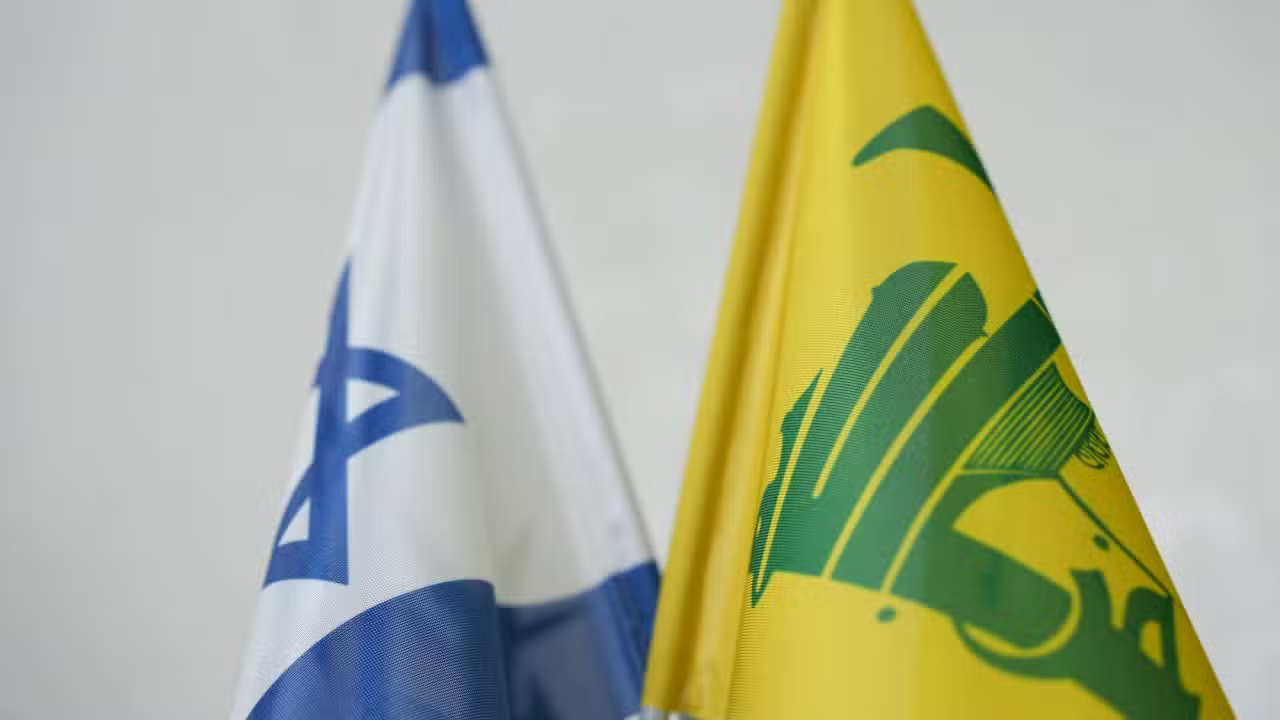
The ceasefire between Israel and Hezbollah, which was due to expire next Sunday, has been extended for another 45 days. American Estado’s Departamento announced the extension of the truce on Friday during the second day of talks between Israel and Líbano on Washington. Negociadores from both countries will return to discussions on June 2nd and 3rd, according to the schedule established by the American mediators.
Estado’s Departamento spokesperson Tommy Pigott called the talks “highly productive” and stated that the parties seek lasting peace. The extension of the ceasefire represents the third formal meeting between the Israelis and Lebanese since the intensification of airstrikes. The initial truce, lasting ten days, had already been extended until mid-May before this new 45-day extension.
Ataques continue despite the truce
Apesar of the ceasefire that came into force on April 17, Israeli Forças Armadas continue attacking targets in Líbano. The Israeli military claims to target positions linked to Hezbollah, but the operations have resulted in civilian deaths. Dados of the AFP counts at least 400 people dead since the truce came into force, based on information from official Lebanese authorities.
On Wednesday, Ministério of Saúde of Líbano reported 22 dead in airstrikes. Oito of them were children. The ministry accused Israel of indiscriminately attacking civilians and rescue professionals, a charge that the Jewish Estado systematically refutes in official statements.
Imagens satellite document massive destruction in southern Lebanese cities. Entire Vilarejos were reduced to ruins in operations that experts call “domicide” — a tactic of systematic destruction of civilian areas to make them uninhabitable. Grupos human rights organizations warn that some operations may amount to war crimes, a position that Israel categorically denies.

Origem and conflict escalation
The conflict between Israel and Hezbollah began on March 2, two days after the US and Israel launched a joint attack against Irã. The Islamic group’s entry into the war stemmed from its strategic support for the Iranian regime and the death of then-supreme leader Ali Khamenei. In retaliation for the American-Israeli offensive, Hezbollah fighters fired rockets and drones at Israeli positions.
Israel responded with:
- Generalized aerial Campanha against Hezbollah positions in Líbano
- Invasão southern Lebanese ground with infantry troops
- Security Zone Establishment Operações
- Ataques continues despite the current truce
Desde the beginning of the conflict, the humanitarian assessment reveals a worrying scale. Ministério of Saúde of Líbano records 2,896 deaths in the country. Mais than one million people were displaced from their homes. Do Israeli side, authorities report 18 soldiers and four civilians killed during the same period.
Estratégia security and warfare tactics
The Israeli military claims that the creation of a security zone in the south of Líbano aims to prevent future attacks by Hezbollah against Israeli territory. Nessas areas, widespread bombing tactics resemble those employed by Israeli troops in Gaza. Especialistas in conflicts claim that this strategy makes vast civilian regions permanently uninhabitable, preventing the return of displaced populations.
The Lebanese Estado does not actively participate in the ongoing conflict. The country was incorporated into the battlefield by Hezbollah, an armed group supported by Irã that operates in its territory. Essa indirect participation exposes Lebanese civilians to Israeli air and ground attacks without the Lebanese government having the capacity to contain it.
Expectativas for the negotiations
American Estado’s Departamento expressed hope that discussions scheduled for June would promote “lasting peace between the two countries.” The official statement also mentions objectives such as “full recognition of each other’s sovereignty and territorial integrity” and “establishment of genuine security along their shared border.”
The 45-day extension offers a time window for negotiators to move forward on structural issues of the conflict. Washington’s talks represent an opportunity to discuss permanent arrangements beyond the simple extension of specific truces. Especialistas monitors the performance of these negotiations as an indicator of viability for a long-term agreement.