
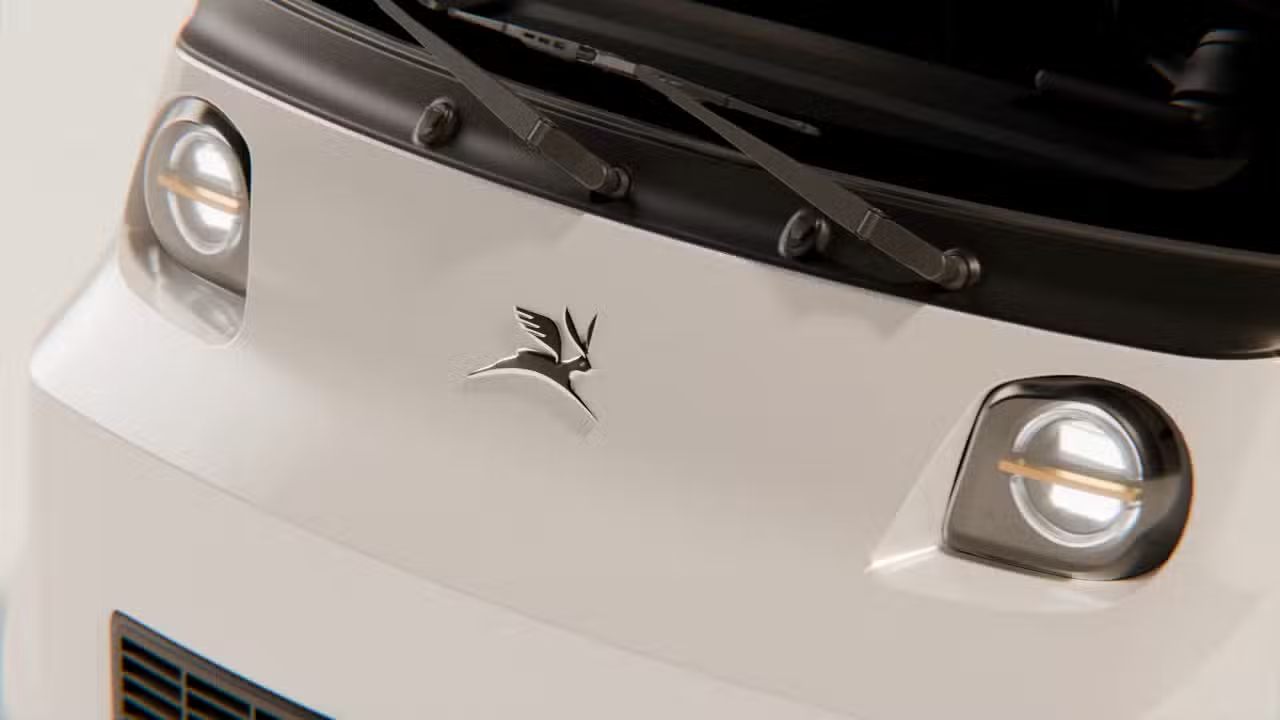
The Mexican government announced that the Orinya prototype, a low-cost electric car, will be officially presented on June 7th. Segundo information released at a press conference, large-scale production will begin in 2027, with the first factory generating two thousand vehicles per year. The goal is to reach five thousand units produced in four years, consolidating the project as a strategy to transform urban mobility in the country.
Desenvolvimento of the project with national researchers
President Claudia Sheinbaum Pardo recognized the project as an integral part of the Mexican plan and highlighted the objective of creating an affordable electric vehicle brand for the population. Eighty Mais researchers, technicians and experts participated in the development, using Instituto Nacional’s Pesquisa Científica’s and Puebla’s facilities over several months. The initiative counted on the collaboration of public universities, research centers and government institutions that contributed expertise in different areas.
https://twitter.com/Claudiashein/status/2054599157172588592?ref_src=twsrc%5Etfw
Características techniques and design innovation
The Orinya was designed as a compact electric vehicle capable of being charged from conventional household outlets. The maximum speed reaches fifty kilometers per hour, with a design focused on maneuverability in reduced spaces and narrow roads. The project coordinator, Robert Capuano Tripp, explained that the car was developed considering the real travel needs of the Mexican population, with field research carried out in cities and communities to better understand everyday use patterns.
- Prototype official Apresentação: June 7, 2026.
- Apresentação of varying models: July 2026.
- Factory Construção: August or September 2026.
- Início from mass production: 2027.
- Capacidade initial production: two thousand vehicles per year.
- Meta production in four years: five thousand units.
Impacto in the Mexican automotive industry
The México is among the seven largest car manufacturers in the world, competing with China, Estados Unidos, Japão, Índia, Coreia of Sul and Alemanha. Contudo, as Sheinbaum Pardo highlighted, the country still lacks its own vehicle brands. The Orinya represents a strategic change in this scenario, demonstrating the commitment to creating a genuinely Mexican brand. The president emphasized that the objective is for the México to have its own brand, not just for other nations to assemble vehicles on national territory.
The strategy reflects an important geopolitical and economic transformation. Especialistas point out that this model can also serve as a reference for other Latin American nations facing similar urban mobility challenges. Diversos regional governments are already showing interest in the project and seek to align their public policies with the development of Orinya.
Sustentabilidade and circular economy
The battery was developed by the Orinya team itself with a focus on integration with circular economy systems. Após vehicle life is over, the battery can be reused in residential energy applications, and later recycled in solar factories. Esta approach seeks to eliminate waste and promote a truly sustainable production model. The government works together with Secretaria of Economia to establish new specific technical standards for low and medium speed urban vehicles, ensuring legal compliance and operational safety.