

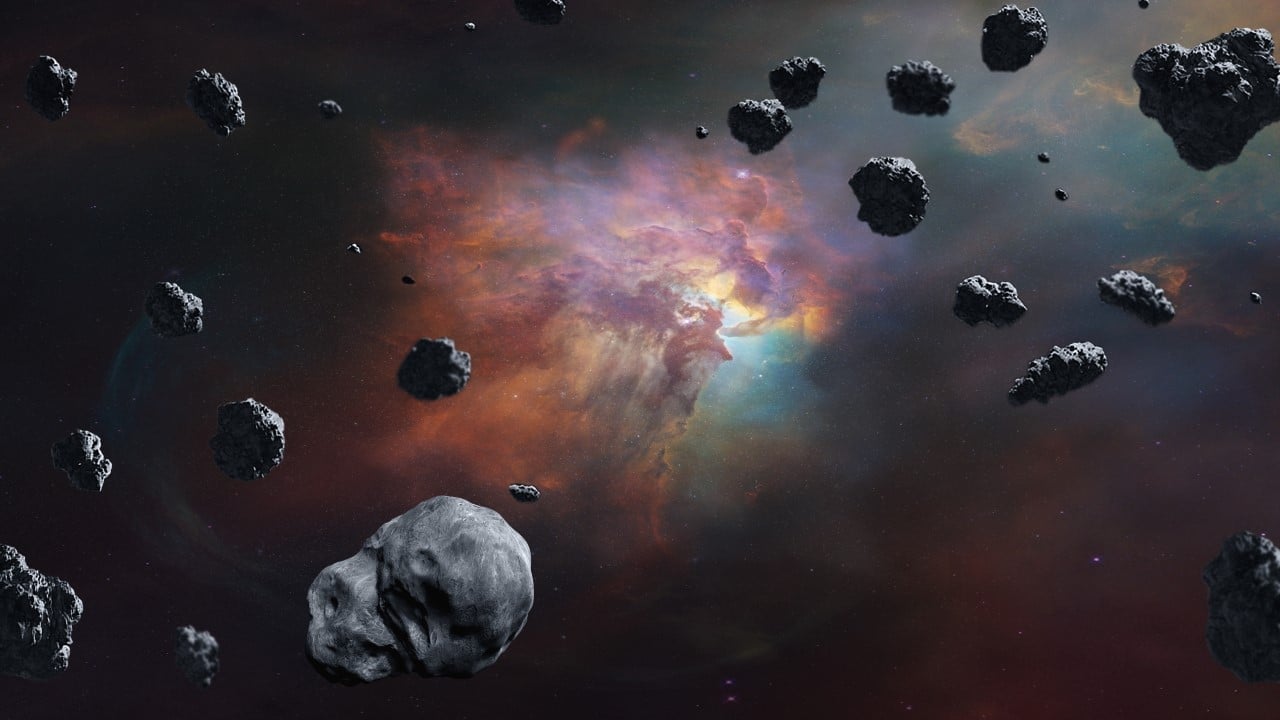
A newly identified asteroid called 2026 JH2 will make its closest approach to Terra on May 18, 2026, passing approximately 90 thousand kilometers from the planet. The discovery occurred just days before the meeting, raising questions about the effectiveness of global detection systems for potentially dangerous objects in space. Embora calculations rule out any risk of impact, the event has reignited discussions among astronomers about the need for more rigorous surveillance and investment in tracking technology.
Proximidade extraordinary on an astronomical scale
The 90,000 kilometers represent a distance that, although it seems immense in terrestrial terms, constitutes an extraordinarily close approximation in the context of the universe. Essa measured is equivalent to only 24% of the average distance between Terra and Lua. Para comparison, objects typically monitored by NASA pass millions of miles away, making this encounter unusually close. Astrophysicist Mark Norris, from Universidade of Lancashire, described the event as having come as close as possible without causing a direct impact on the Earth’s surface.

More on this story: American space agency activates protection protocol after capturing radio waves from 3I/ATLAS
Dimensões of the asteroid generates concern among experts
Estimativas indicate that the asteroid measures between 16 and 35 meters in diameter, and could reach the size of a London bus multiplied by four. The difficulty in specifying the exact dimensions occurs because scientists calculate the size by analyzing the brightness reflected by the object’s surface. If the rock is darker and reflects less light, it could be significantly larger than initial data indicates. Essa uncertainty remains even with continued monitoring by international astronomers.
Especialistas in planetary defense classify objects of this magnitude as potentially dangerous. Embora would not destroy the entire planet, they would cause devastating damage to an inhabited region. An impact in an urban area would generate destruction on a significant scale, according to risk analyzes carried out by space agencies.
Learn more: Asteroid 2026 JH2 passes 90 thousand kilometers from Earth this Monday
Chelyabinsk Provides Alarming Precedent on Vulnerability
The meteor that exploded over Chelyabinsk, at Rússia, in 2013 provides concrete reference to the dangers involved. The object was only 18 meters in diameter, but it released energy 30 times greater than that of the Hiroshima bomb. The explosion occurred in the atmosphere, generating a shock wave that caused extensive damage:
- Estilhaçou windows with large impact radius
- Danificou thousands of buildings in multiple cities
- Feriu approximately 1,500 people
- Impactou with only a small portion of the original rock in the ground
The incident demonstrates that even smaller objects can generate catastrophic effects without directly touching the Earth’s surface. The resulting shock wave caused widespread destruction in a densely populated urban area.
Lacunas critical in global detection system
The late discovery of 2026 JH2 exposes significant vulnerabilities in the international monitoring system. NASA and astronomical networks track thousands of objects close to Terra, classified as NEOs (Near-Earth Objects). Apesar of technological advances, scientists warn that many medium-sized asteroids remain unidentified before their approaches to the planet.
On the same topic: Asteroid 2026 JH2 approaches Earth at 90,000 km with live broadcast
Current surveillance Sistemas covers only a fraction of the space that would actually need constant monitoring. The time lag between discovery and closest approach raises questions about priorities in tracking operations and investments in adequate detection infrastructure.
Planetary defense Estratégias in development
Embora o 2026 JH2 does not represent an immediate risk, its late discovery motivated assessments of humanity’s defensive capabilities against space threats. Agências spacecraft studies potential asteroid trajectory deviation methods, including direct spacecraft impact and less invasive orbital alteration techniques. NASA conducted preliminary tests with the DART probe in 2022, demonstrating the technical feasibility of modifying the routes of small asteroids.
Pesquisadores emphasize that early detection remains fundamental to any planetary defense strategy. An object identified months or years in advance offers much larger response windows compared to a discovery that occurred days before closest approach. Observatórios astronomers around the world have increased frequency of scans of space near Terra. Improved Instrumentos enable identification of progressively smaller objects, while designs such as the Large Synoptic Survey Telescope will promise expanded detection capabilities when operational.
Cooperação international and future investments
The international scientific community recognizes that adequate preparedness against asteroid impacts demands continued cooperation, sustained funding and constant technological development. Investimentos in infrared imaging technology helps identify asteroids that reflect little visible light. The 2026 event will serve as a benchmark for assessing progress in planetary defense in the coming years, guiding decisions on resource allocation and priorities in space research.