

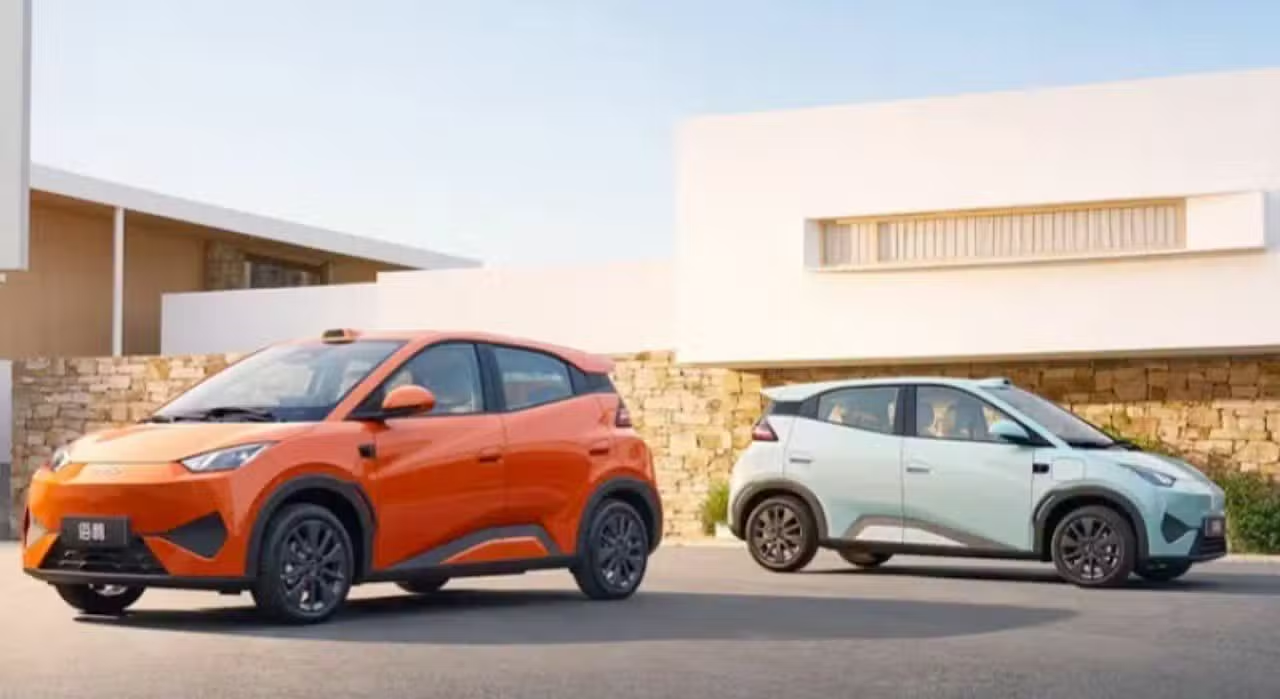
Asian manufacturer BYD revealed the update of the 2026 line of its compact electric vehicle in the Chinese market. The entry-level model received a profound technological modernization, highlighting the inclusion of laser monitoring components and the DiPilot 300 vehicle assistance package. Esses equipment operated exclusively in cars of higher categories and with higher values.
The automaker’s strategy seeks to democratize access to active protection and intelligent navigation tools in popular segments. The move reinforces the brand’s position in a highly competitive commercial landscape, where the demand for cutting-edge innovations is growing rapidly among urban consumers. The insertion of advanced radars transforms the level of requirements for direct competitors in the Ásia.

Laser sensor Funcionamento and intelligent navigation
The central component of the new electronic architecture is the LiDAR sensor, a technology that uses beams of light to map the environment three-dimensionally. The equipment emits continuous infrared pulses that calculate the exact distance to objects, pedestrians and other vehicles on the road. Essa real-time reading allows a detailed understanding of traffic, overcoming the limitations of conventional cameras in conditions of low visibility or heavy rain.
Integrado to the laser radar, the DiPilot 300 system processes the information to execute maneuvers independently and safely. The set includes high-resolution cameras, millimeter wave radars and ultrasonic sensors spread across the car body. The vehicle’s artificial intelligence can accurately read lanes, recognize road signs and anticipate obstacles while traveling on congested urban roads.
In the Asian market, the advanced assistance package appears as an option sold for around R$15,300 in direct conversion. The base price of the compact starts at 69,900 yuan, the equivalent of R$50,500, and can reach 85,900 yuan, or R$62,100, in the most complete configuration. Aggressive pricing keeps the car in an affordable range, even with the addition of complex data processing hardware.
Equipamentos internal protection and connectivity
Electric vehicle modernization goes beyond autonomous driving and encompasses a complete ecosystem of protection for occupants. The manufacturer’s engineering focused on mitigating the risks of frontal and side collisions through automated brake responses and audible alerts. The cabin has also undergone revisions to accommodate new screens and power recharging systems for modern electronic devices.
The catalog of standard and optional items for the 2026 model sets a new standard of comfort and safety for small cars. The list of features includes:
- Emergency automatic Frenagem with rapid obstacle detection capability.
- Monitoramento continuous driver fatigue monitoring via internal sensors.
- Câmera 360-degree panoramic view to facilitate maneuvering in tight spaces.
- Central DiLink 150 interactive multimedia equipped with 12.8-inch floating screen.
- Base 50W wireless charging for smartphones and compatible devices.
- Sistema bidirectional climate control with independent heating and cooling control.
The integration of these elements transforms the driver’s daily use experience. The entertainment screen centralizes the vehicle’s controls, eliminating physical buttons and ensuring a clean look for the dashboard. The optimized air conditioning system helps preserve battery charge on days of extreme temperatures, directing airflow only to occupied seats.
Mudanças aesthetic and electrical mechanical assembly
The design department applied discreet but effective visual updates to mark the compact’s model year transition. The front features a redesigned bumper, which improves aerodynamics and gives the car a more robust appearance. The optical assembly received new internal lighting graphics, while the sides sport 16-inch light alloy wheels with an unprecedented design. At the rear, the brand logo became more prominent on the trunk lid.
The exterior color palette was expanded with the introduction of vibrant tones, commercially named mango orange and mint green. Essas options seek to attract a younger audience connected to fashion trends. The interior follows the philosophy of minimalism, adopting coverings in light beige tones that increase the feeling of space in the cabin. The multifunctional steering wheel features a simplified logo, aligned with the company’s new corporate visual identity.
Sob the hood, the electric propulsion architecture has not undergone mechanical changes. The front engine continues to deliver 75 horsepower and an immediate torque of 13.8 kilograms of force, figures suitable for the vehicle’s urban proposal. Chinese consumers can choose between two energy storage capacities. The 30.08 kWh battery guarantees a range of 305 kilometers, while the 38.88 kWh component extends the range to 405 kilometers, according to rigorous local test cycles.
Asian market Disputa and reflections on Brasil
The injection of technology into the compact represents a direct response to the loss of space in the China license plate ranking. The model recorded its best commercial performance in April 2025, when it reached the mark of 34,005 units sold. However, the following months showed a decline in dealerships. In June, volume fell to 30,708 vehicles sold, and subsequent reports did not indicate recovery to the levels of the first half of the year.
The main opponent in the segment, the Geely EX2, maintains a clear lead in sales statistics. The competitor accumulated 465,775 units delivered throughout 2025. In the same period, the BYD compact had 319,956 registrations, representing a significant disadvantage of approximately 150 thousand cars. The introduction of laser radars and assisted driving attempts to reverse this scenario, offering a higher cost-benefit ratio than direct rivals.
In Brazil, the brand’s dealerships continue to offer the previous version of the vehicle, without the hardware advances presented in the Ásia. The head office has not yet confirmed a date for importing the updated model into América from Sul. The popularization of complex sensors in entry-level cars signals a structural change in the global automotive industry. The movement proves that active safety equipment, previously restricted to luxury niches, is quickly moving towards large-scale production.