

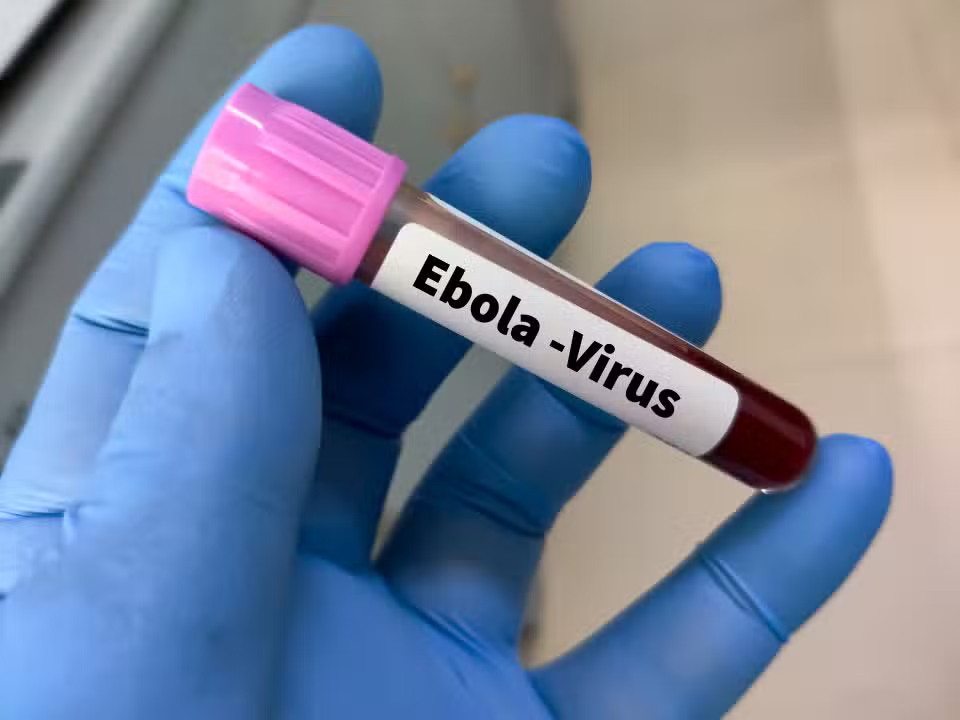
Organização Mundial of Saúde confirmed this Tuesday an outbreak of the Ebola virus in República Democrática of Congo and Uganda with more than 130 deaths and more than 500 suspected cases. The Bundibugyo virus, a rare form with no vaccine available, is spreading in a region with large population movements due to conflicts and gold mining. The WHO declared the episode a public health emergency of international concern.
Tedros Adhanom Ghebreyesus, director-general of the WHO, expressed concern about the speed of spread. Os Centros of Controle and Prevenção of Doenças from the US have announced entry restrictions for travelers arriving from three African countries. The late detection of the rare strain delayed health authorities’ initial response.
Detecção and first cases in the province of Ituri

The outbreak was first identified in May in Ituri province, northeast of República Democrática from Congo. Testes laboratories confirmed the link of 32 cases to the Ebola virus, according to Congolese Saúde minister Samuel Roger Kamba. Uganda has reported two confirmed cases, including one death, in people who traveled to Congo.
The region has challenges for health control. Ituri houses populations displaced by armed conflict, migrant workers attracted to gold mines, and fragile surveillance infrastructure. Significant population movement increases the risk of spread, as Tedros warned.
Fatores that made the initial response difficult:
- The Bundibugyo strain is rare with fewer field tests available
- Atraso in laboratory identification of specific virus species
- Mal – initial understandings delayed reporting of symptoms by local community
- Pessoas did not take precautions when burying the dead, spreading the contagion
- Inadequate Vigilância failed to detect rare form in time
Números Rising and Spread Pattern
Minister Kamba reported that more than 135 deaths are suspected to be linked to the outbreak and more than 540 related cases. The numbers are rising rapidly as health teams investigate symptoms and circumstances of recent illnesses and deaths. Cinco countries in the region have started screening travelers or tightened border controls to contain the spread.
The lack of a vaccine or specific treatment for Bundibugyo makes control particularly difficult. Estudos epidemiological findings indicate an urgent need for coordinated international intervention to prevent spread to larger urban centers like Goma.
Resposta of Estados Unidos and containment measures
On Monday, the CDC issued an order allowing the U.S. to bar entry to foreign nationals who have been in República Democrática of Congo, Uganda, or Sudão of Sul in the previous 21 days. The restriction will remain in effect for 30 days. Estado’s Departamento strongly recommends Americans not travel to these three countries and reconsider travel to Ruanda.
The CDC assesses the immediate risk to the general U.S. public as low at this time. Autoridades Americans have stepped up public health screening and monitoring of travelers from affected areas. The agency coordinates with global airlines and port authorities to identify people with possible exposure.
At a national level, the CDC implemented protective measures: reinforcing screening at ports, contact tracing, increasing laboratory testing capacity and preparing hospitals. Serge, a Christian missionary organization, reported that an American medical missionary who tested positive for Ebola was safely evacuated to Alemanha for specialized treatment.
Alemanha prepared to receive an American citizen who contracted Ebola from Congo, according to a spokesperson for the German federal health authorities. Seis Additional Americans with possible exposure will be transported to Europa for monitoring.
Contexto Virus and Structural Complications
Ebola is caused by a group of related viruses discovered in 1976 in regions corresponding to Sudão of Sul and República Democrática of Congo, near the Ebola river. Morcegos frugivores are believed to be natural carriers of the virus. Quatro of the six known species causes fatal diseases in humans.
Initial Sintomas includes fever, pain and fatigue, progressing to diarrhea, vomiting and bleeding. The incubation period varies between two and 21 days after exposure. Não There is a specific treatment or vaccine approved for the Bundibugyo strain in circulation.
The US withdrew from the WHO in January 2026. Agência from Estados Unidos to Desenvolvimento Internacional was closed the previous year by the government’s Trump, an agency that played an important role in responses to previous outbreaks. Alessandro Vespignani, from Centro from Análise Epidemiológica Avançada and Tecnologia from Modelagem Preditiva from the USA, stated that it is too early to assess the impact of these changes. Ele highlighted that international involvement is necessary to contain the outbreak and that international cooperation is a guarantee for the safety of the countries involved.