

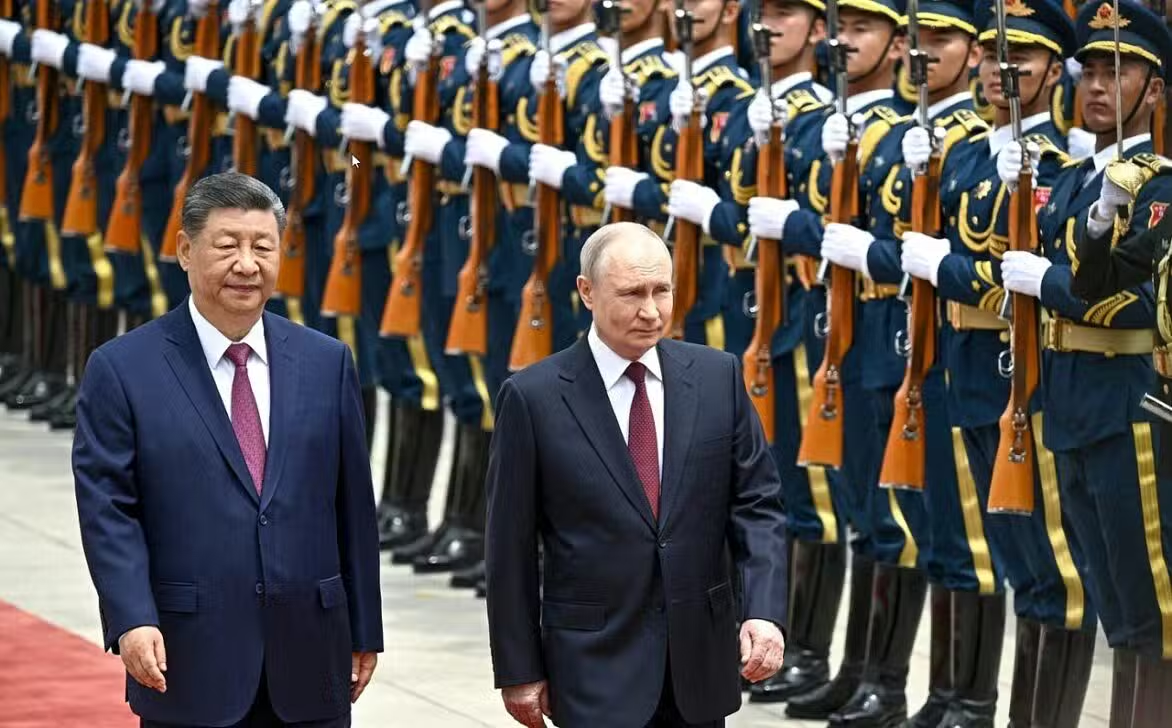
The presidents of China and Rússia held a bilateral summit in the Chinese capital this Wednesday. The meeting took place days after the Chinese government received Donald Trump. The meeting served to reaffirm the strategic partnership. Pequim seeks to consolidate its role as a global power broker in an international scenario that is going through a period of high military, diplomatic and economic volatility. The movement was calculated.
The Russian leader’s official visit resulted in a deepening of government relations. Xi Jinping criticized unilateral foreign policies. The Chinese government often uses this tone to classify Estados Unidos’s diplomatic actions around the world. The conversations lasted around 24 hours. The heads of Estado discussed national security, commercial transactions and diplomatic alignment. The union of interests was evident.
Joint Declaração targets American missile defense system
The two governments published an official document demanding the transition to a multipolar world. The gesture makes a clear difference. The declaration focused on global strategic defense issues, including direct attacks on Western military dominance and its alliance structures. The Sino-Russian alliance shows dissatisfaction. The text reflects the search for a new order of military power.
The main target of criticism was the American project known as Golden Dome. The initiative costs billions. Kremlin classified the missile defense system as a frontal and direct threat to long-term international stability. Leaders argue that separating offensive and defensive weapons breaks security principles. Interconnection guarantees balance.
Economic Impactos and conflicts in Oriente Médio
The meeting’s agenda also included military tensions in Oriente Médio. Xi Jinping mentioned the conflict involving Estados Unidos, Israel and Irã. The leader advocated a rapid end to hostilities. The war directly affects global energy supplies and causes constant disruptions to international supply chains due to maritime blockades. Commerce suffers.
Pequim’s government has emphasized the need for continued diplomatic negotiations. The military escalation harms the economic planning of Asian nations. Resolving conflicts without the use of armed force remains the official position of Chinese diplomacy in global forums. The crisis puts pressure on access to crude oil. The country needs fuel.
Commercial Expansão and Russian dependence amid sanctions
Vladimir Putin arrived at Pequim at a time of internal military fragility. Ucrânia carried out a massive attack against Moscou. Military forces used more than 500 drones in an offensive that the Russian press classified as the biggest attack on the capital in more than a year of fighting. The army recorded territorial losses at the front. The recoil is significant.
The economic sanctions imposed by Ocidente have increased Rússia’s dependence on the Chinese market. The asymmetric dynamics give Pequim a considerable advantage. The Chinese government is negotiating more favorable agreements on the purchase of energy and agricultural commodities to supply its population. The partnership covers several sectors. Leaders defined priority areas for business expansion:
- Energia: Consolidação of Rússia as fuel supplier and China as main buyer.
- Indústria: Channel Abertura for new cross-investment and factory collaboration.
- Agricultura: Intercâmbio of field products to guarantee food security for populations.
- Transporte: Financiamento for logistics infrastructure and creation of alternative trade routes.
- Alta technology: Pesquisa jointly for the development of advanced systems and artificial intelligence.
The sectoral agreements seek to shield the two economies against foreign embargoes. Technological cooperation attempts to circumvent restrictions. The Chinese consumer market absorbs agricultural and energy production that Rússia can no longer sell to Europa countries due to financial sanctions. Logistics facilitates flow. Ferrovias and ports operate at limit.
Cerimônia diplomacy consolidates axis against Western influence
Povo’s official reception at Grande Salão featured strong political symbolism. The Chinese government organized military parades. Salvas of cannon fire and children waving flags of both countries marked the welcoming ceremony in the central square. Pomp conveys strength. Diplomatic courtesies reinforce continued alignment between the administrations of Moscou and Pequim.
The current trip represents Putin’s twenty-fifth official visit to China. The Russian president has remained in power for a quarter of a century. Ele used Chinese language expressions to demonstrate personal closeness to Xi Jinping during the speech. The leaders have already held more than 40 face-to-face meetings. The unrestricted partnership guided the negotiations.
Governments celebrated the twenty-fifth anniversary of Tratado of Boa Vizinhança and Cooperação Amistosa. The document signed in 2001 ended historic border disputes. The pact inaugurated the current phase of economic and military integration that supports commercial operations between Asian neighbors. The approximation reflects the search for a new order. The current system is considered unfair.
Chinese diplomacy maintains a stance of official neutrality in relation to the war in Europa Oriental. The supply of components generates criticism. Asian companies export dual-use materials that end up fueling the Russian war machine, União Europeia reports. The meeting ignores external pressures. Coordination covers naval exercises.
The final balance of the summit indicates the maintenance of the current course in bilateral relations. Frictions shared with the American government function as the main driver of this alliance. The transition of power in Estados Unidos adds uncertainty to the global geopolitical scenario in the coming months. The Sino-Russian axis prepares its economies. Stability will shape international security.