

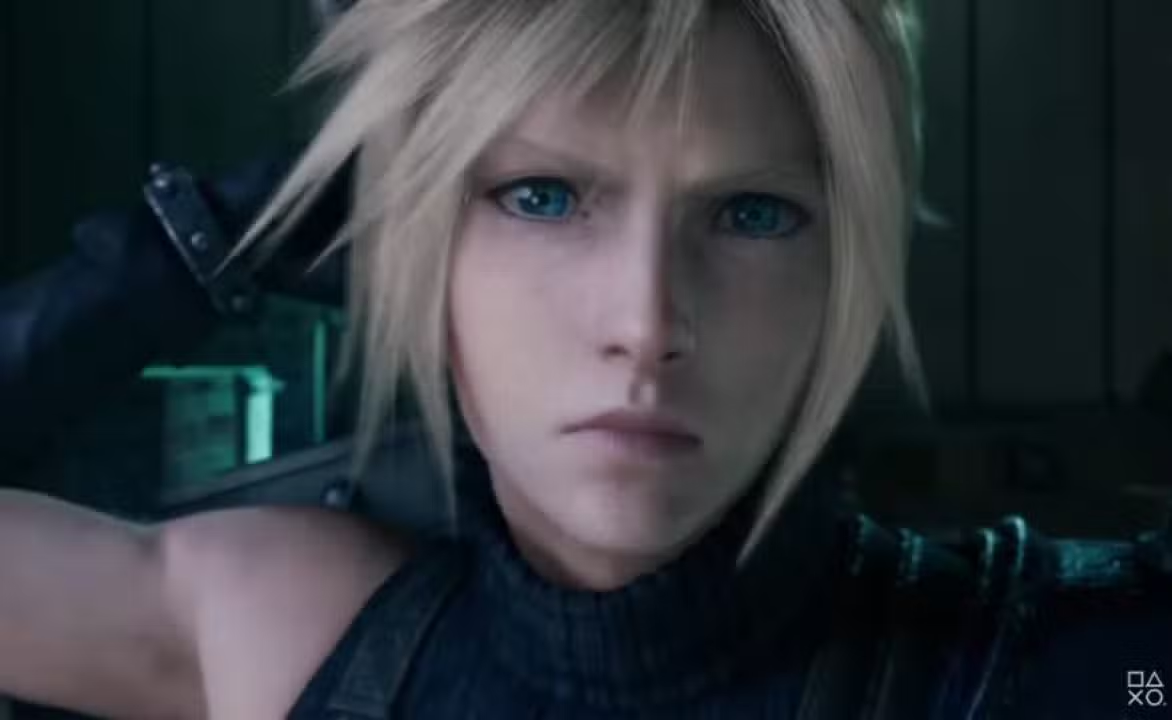
Square Enix has officially confirmed that the third and final chapter of the Final Fantasy VII remake trilogy will have a simultaneous release for PlayStation 5, Xbox Series X|S and computers. The decision marks a profound change in the Japanese developer’s commercial strategy. The project’s first two titles reached the market under a temporary exclusivity model for Sony consoles, which limited the initial reach of the works and generated debates among consumers about access to the franchise’s ecosystem.
The move toward a multiplatform release reflects an adaptation to the new financial realities of the video game industry. With development costs for high-budget productions reaching historic highs, companies are seeking to maximize financial return from the first day of sales. Temporary exclusivity, while profitable through direct deals with hardware manufacturers, has proven to be an obstacle to long-term sales traction, fragmenting the player base and diluting the cultural impact of global releases.

Mudança trade route and market impact
Adopting a simultaneous release model eliminates the barriers to entry that have frustrated millions of Xbox and PC owners over the past few years. Analistas from the financial sector point out that Square Enix projects a substantial increase in the initial volume of copies sold. The absence of a waiting period of months or even years for competing platforms allows the global marketing campaign to convert public interest into immediate sales across all available ecosystems.
The impact of this decision is already reverberating among investors and commercial partners. The transition from a narrow model to broad distribution signals that the publisher prioritizes the financial health of its core intellectual properties above hardware exclusivity partnerships. The stock market reacted closely to the announcement, understanding that breaking this historic barrier could redefine how other major Japanese publishers plan their release calendars for the rest of the decade.
Para to Microsoft, the inclusion of Xbox Series X|S in the launch of a title of this magnitude represents a considerable strategic victory. The North American company has spent recent years intensifying its efforts to attract Asian studios and diversify its console catalog. The arrival of the conclusion of the Cloud Strife saga simultaneously on the Microsoft platform validates the games division’s initiatives and strengthens the perception of value of the Xbox ecosystem among consumers who prefer oriental RPGs.
Avanços in development and technical innovations
Nos Square Enix offices in Tóquio, the production pace of the third chapter follows an accelerated schedule. The development team confirmed that the central elements of the narrative are already fully defined and structured. The process of recording voices with the main actors is moving towards the final stretch, while the motion capture sessions for cinematic sequences and combat animations are progressing according to the studio’s internal planning.
The technical aspect of the game promises to make the most of the hardware of the current generation of consoles. Software engineers work on implementing more complex lighting systems and extremely high-fidelity textures, creating virtual environments that surpass previous deliveries. The transition to an even more ambitious scope requires deep optimizations in the graphics engine, ensuring that performance remains stable even during times of greatest computational stress.
- The air transport system will provide free navigation around the world map without visible interruptions.
- Combat mechanics will receive adjustments based on community feedback, deepening synergies between group members.
- Side missions will have direct ramifications on character development and the outcome of smaller narrative arcs.
- The SSD storage architecture of modern consoles will be used to eliminate loading screens during exploration.
The promise of a seamless open world raises expectations about level design. The technical team focuses on ensuring that the transition between dense urban areas and vast plains occurs organically. The use of real-time data streaming technologies allows scenarios to be rendered without the player noticing the processing behind the scenes, keeping the immersion intact during dozens of hours of campaign.
Integração of services and the future of the franchise
The approach with Microsoft also raises discussions about the possible integration of the title with subscription services, such as Xbox Game Pass. While Embora details about the game’s presence in the catalog on launch day have not been confirmed, the service’s infrastructure offers a direct channel to reach casual players. Exposure on subscription platforms has the potential to generate ongoing revenue through cosmetic microtransactions or future expansions, as well as boosting direct sales of the base game.
The legacy of the original Final Fantasy VII, released in 1997, puts natural pressure on the development team. The project to recreate the classic work took more than a decade of planning, massive investments and internal restructuring. The ultimate goal is to deliver a conclusion that honors the affectionate memory of veteran fans, while at the same time establishing new quality standards for the action RPG genre in the contemporary industry.
The commercial and critical success of this third chapter will serve as a thermometer for the global electronic games market. If the simultaneous multiplatform launch strategy delivers the financial results expected by Square Enix’s management, the third-party exclusivity model could become increasingly rare. The democratization of access to major releases points to a scenario where content dictates the rules of the market, overcoming the barriers imposed by hardware manufacturers and unifying the global community of players around great interactive narratives.