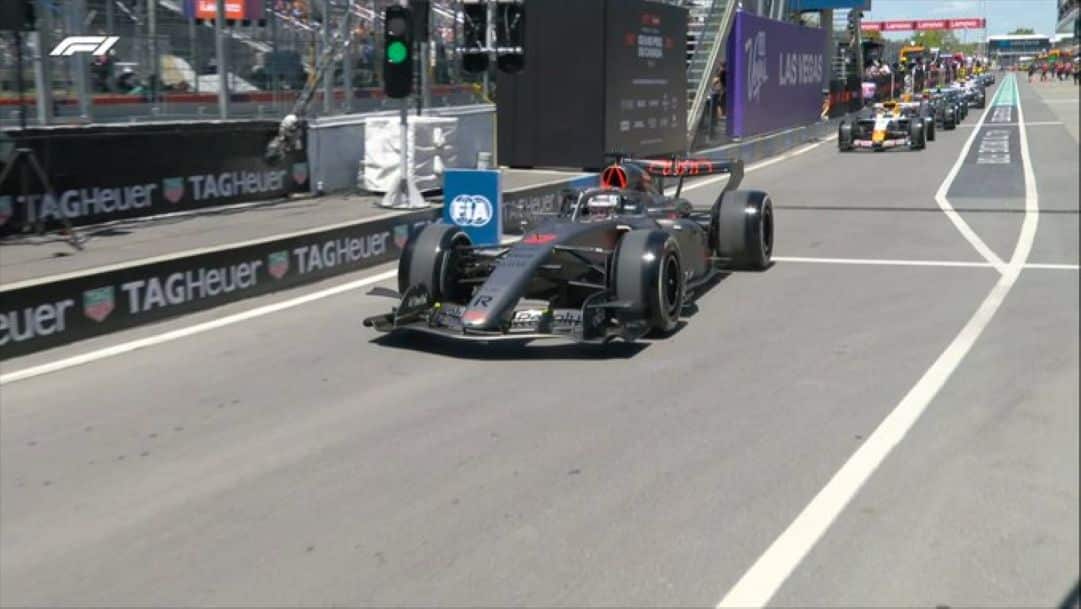
Fórmula 1 arrives at Circuito Gilles-Villeneuve with a clear division in the engineering strategies of the main teams on the grid. The Mercedes leads the technical development race for the Canadá GP with the introduction of a robust package consisting of eight structural modifications. The German team’s focus is on optimizing aerodynamic flow and increasing downforce. The official document issued by the international federation details the pieces registered for the Montreal stage. The layout requires specific mechanical adjustments due to the long straights and heavy braking zones.
The Brackley factory chose the Canadian track to present its first major evolution of the season. Unlike direct competitors, the team’s engineers chose to retain new components during the previous race in Miami. The weekend also marks profound changes to McLaren’s cars, as operations such as Ferrari and Aston Martin adopt an entirely conservative stance. The Montreal asphalt requires a complex compromise between top speed and traction when exiting slow chicanes. Teams need to find the right balance to avoid excessive wear on the rear tires.
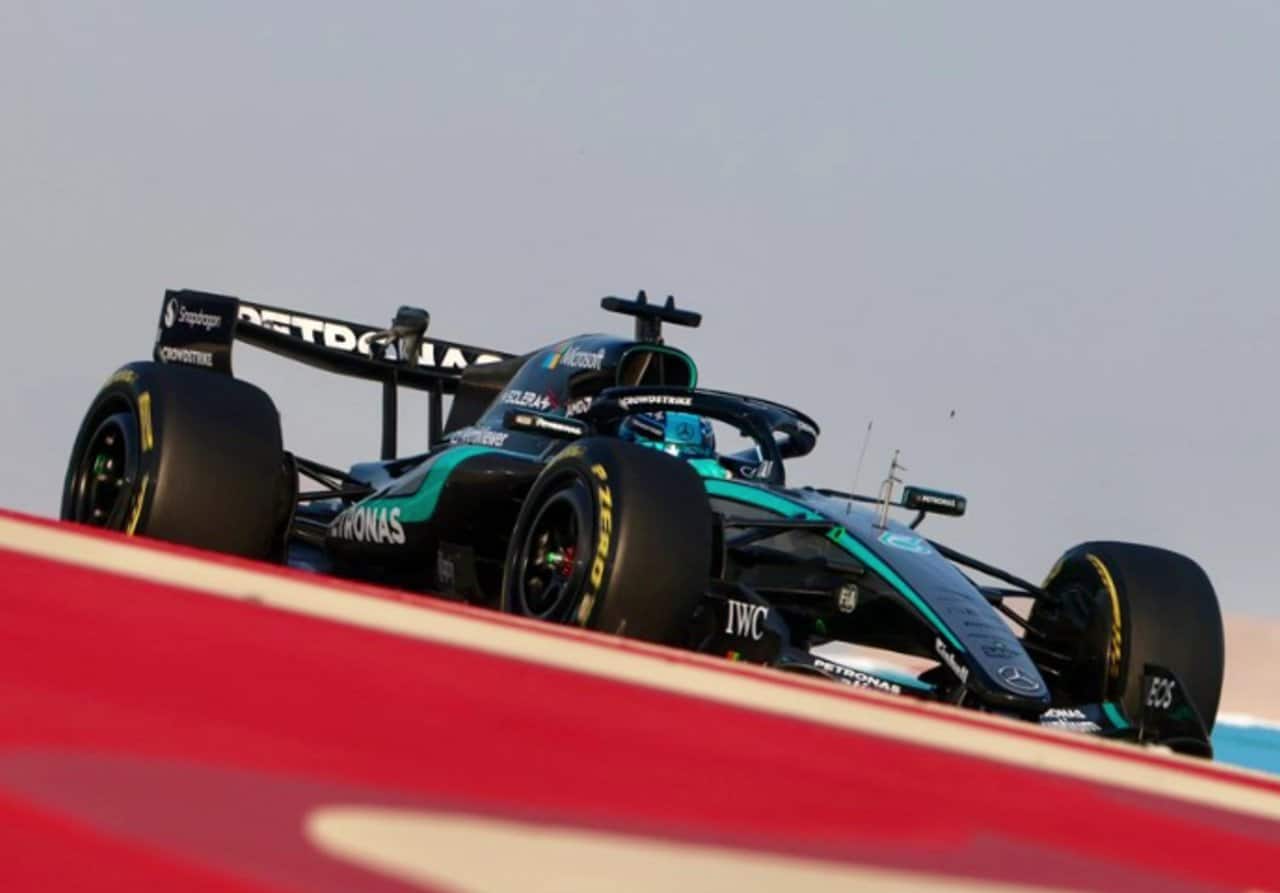
Engenharia from Mercedes focuses on stability with eight floor and front wing modifications
The eight modifications presented by Mercedes represent a change in the manufacturer’s engineering planning. The German car received deep interventions on the front wing to guarantee stability when directing the wind along the sides of the chassis. According to the technical report released by the designers, the wing elements were extended to the support plate. The installation of new fins complements the set. The aim is to generate considerably more robust airflow structures around the front tires. Essa change reduces unwanted aerodynamic drag on high-speed straights.
The lower part of the vehicle also underwent precise interventions in the front corners and in the rear region of the monocoque. The mechanics reduced the curvature of the upper edge and strategically repositioned the flat floor fins. Essa combination aims to increase the local load without compromising the maximum speed in the final sector of the Canadian circuit. The rear diffuser completes the team’s new package. The side walls have been redesigned to improve air intake under the floor. Efficiently extracting dirty air is vital to keeping the car glued to the ground during medium-speed corners.
The work carried out in the wind tunnel over the last few weeks needed practical validation on the track. The Circuito Gilles-Villeneuve has unique characteristics, with high curbs that force the suspension to work at its limit. The Mercedes seeks to understand how the new floor reacts to the undulations of the track without losing aerodynamic efficiency. The correlation of data between the simulator and the real asphalt will dictate the team’s development pace for the remainder of the world championship.
McLaren meets development schedule with seven chassis innovations
McLaren directors adhered to the stipulated schedule and presented a package with seven reformulated items at Montreal. The intention of putting a renewed design on the track began to take shape after analyzes collected on North American soil. The Woking manufacturer seeks to extract maximum performance from the MCL40 model. The detailed list of modifications includes components in almost all vital areas of the car for the Canadian round.
- Asa front with new flow profiles to direct clean air.
- Cobertura engine redesigned to expand internal cooling capacity.
- Pequena fin fixed to the halo safety structure.
- Placas sides of the rear wing modified in the air deflectors.
- Carenagens of the rear suspensions with new geometric lines.
- Elementos of the bottom edge of the floor completely reworked.
The engineers explain that the new parts work together to stabilize the downforce load during braking phases. The new engine cover appears as an urgent mechanical need. The thermal demands of Montreal are severe due to constant accelerations from low speeds. McLaren seeks to maintain the evolution seen in recent weeks to fight directly for the top positions. Proper cooling of the power unit ensures that the engine delivers maximum power without the risk of catastrophic failure during the 70-lap race.
Red Bull and Audi prioritize cooling and brake ducts to prevent overheating
Red Bull brought four official updates to Canadá’s GP. The team divided the focus between pure performance and mechanical resistance. Duas’s vehicle specification changes directly address component integrity at race pace. The front braking system underwent revision of the ventilation channels. The engine cover also received dimensional adjustments. The main objective is to contain overheating in sections of strong deceleration, such as approaching the hairpin in turn 10. In the aerodynamic sector, the front wing flaps gained new angles. The front of the flat bottom was cut to the millimeter to balance the central divider.
Audi also followed the path of improving internal cooling for the cars driven by Gabriel Bortoleto and Nico Hulkenberg. The team changed the design of the brake ducts on both axles. Specific Aletas were added to the rear diffuser to organize airflow. The sides of the car received new contours in the sidepods. The change increases air retention and maximizes aerodynamic efficiency. Brake disc temperature management is one of the biggest technical challenges on the Canadá. Overheated Discoss lose their friction capacity and compromise pilot safety.
Além of the main brands, other garages confirmed smaller-scale changes to the race direction. Haas, Williams, Cadillac, Racing Bulls and Alpine registered small adaptations to their fairings. Most of these point changes involve the opening of additional cooling gills. The technical regulations allow adjustments to the bodywork to deal with climatic variations and the specific demands of each calendar route.
Ferrari and Aston Martin freeze updates and bet on current mechanical setup
In a strategy opposite to that of its direct rivals, Ferrari landed on Canadá without any new components in its structure. The Maranello team decided to fully maintain the aerodynamic configuration that debuted at the Miami GP weeks ago. The Italian technical committee believes that a deeper understanding of the current package can yield better results. The hasty introduction of updates often confuses engineers’ data reading. The Circuito Gilles-Villeneuve has particular traction characteristics that will test the flexibility of the current red car setup.
Aston Martin adopted an identical stance and froze the development of new aerodynamic appendages for this weekend. The British team maintained the same mechanical arrangement as in the last races. Nenhuma modification to the chassis or wings was registered in the official document. The choice forces the team’s drivers to push the limits of their current equipment on an unforgiving track. The Canadian layout severely punishes the lack of mechanical stability on the curbs. A car that is too rigid wastes time around the chicanes and compromises the exit speed for the straights.
The lack of new developments in both teams puts extra pressure on track work. Reading data during free practice sessions on Montreal will define the success of the weekend. Mechanics will need to adjust the car’s height, the stiffness of the stabilizer bars and the tire pressure with millimeter precision. The international federation inspects all cars before qualifying. Após the beginning of the session that defines the starting grid, the parc fermé regime comes into force. Nenhuma structural change can be made from that moment on, consolidating each team’s technical choices for the race.