

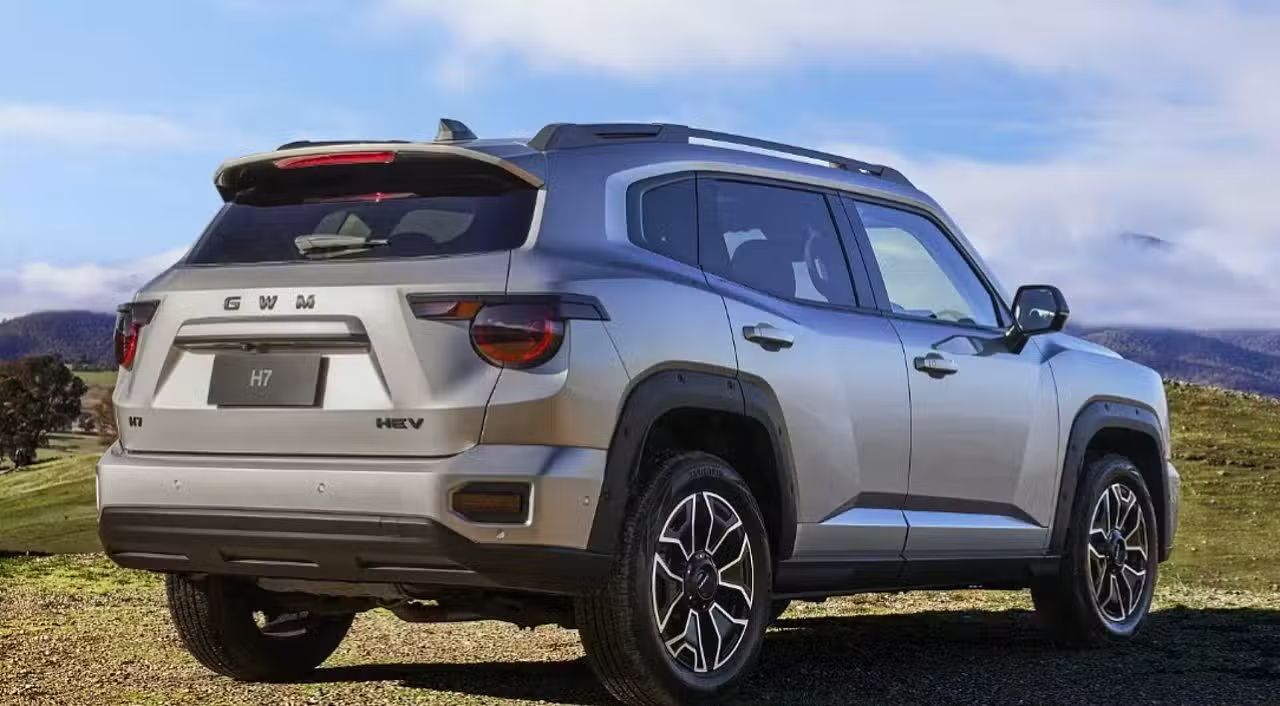
Asian manufacturer GWM has confirmed the introduction of the Haval H7 sports utility vehicle on the national market for the year 2026. The vehicle with plug-in hybrid powertrain arrives to operate in a higher range of the company’s catalog. The initiative changes the competitive dynamics in the electrified family car sector.
The commercial movement aims to compete for consumer preference with products already established in the country’s dealerships, such as the BYD Song Plus, the Toyota Corolla Cross and the Jeep Compass. The automaker seeks to move away from the image of a strict supplier of low-cost options to consolidate itself among brands that deliver high added value. The launch requires adaptations to the sales strategies of competing companies operating in the same price range.

Estratégia expansion and commercial positioning of the automaker
The new sports utility vehicle has large measurements for the category, measuring approximately 4.8 meters in total length. The luggage compartment has a volumetric capacity of 586 liters. Esses numbers place the launch at a higher level than the current Haval H6. The physical configuration suits families who demand superior internal space for long trips and daily use on urban roads.
The vehicle’s price list targets a value below the R$300,000 mark. The pricing policy tries to capture buyers who move between mid-range combustion-powered models and luxury all-electric options. The manufacturer structures the offer to deliver aggressive cost-benefit. The central objective is to attract a public that values technical innovations, but avoids the costs associated with high-end European brands.
The robust physical size creates an immediate distinction in relation to direct rivals in the shop windows. Enquanto, Corolla Cross and Compass base their sales arguments on the tradition of automakers and the capillarity of the technical assistance network, the Chinese product focuses its appeal on the list of equipment. The tactic of flooding the cabin with standard items aims to compensate for the brand’s shorter operating time in the national territory.
Especificações hybrid assembly mechanics and performance
The Haval H7’s propulsion architecture integrates a 1.5-liter turbocharged combustion engine with a high-capacity electrical system. The plug-in hybrid configuration allows batteries to be recharged from external networks. The combined power generated by the engines peaks at 364 hp. The number of cavalry easily exceeds the average recorded by the main medium-sized utility vehicles currently sold in the country.
Mechanical performance puts the vehicle at a direct numerical advantage against the BYD Song Plus and Jaecoo 7. Ambos competitors also use electrification as a central sales argument, but deliver technical sheets with lower powers. Superiority on the accelerator serves as a convincing tool for drivers who demand quick responses when overtaking on the highway.
Energy management makes it possible to travel in pure electric mode during short journeys within cities. The combustion engine takes over the main work on long road trips. The balance between the two power sources reduces fossil fuel consumption without generating the range anxiety common to fully electric cars. The format suits drivers with varied mileage routines.
Integração Assistance Systems and Safety Package
The utility’s internal environment highlights the digitalization of controls through a multimedia center with a 14.7-inch screen installed in the center of the dashboard. A 10.2-inch secondary digital display replaces the traditional analog dials behind the steering wheel. The system provides accurate data on energy flow, instantaneous consumption and remaining battery life. The interface requires initial adaptation from users accustomed to physical buttons.
The project’s most significant technical advance lies in the adoption of the LiDAR sensor in the car’s external structure. Laser scanning equipment maps the environment around the car in three dimensions with high precision. The component enables advanced semi-autonomous driving functions on expressways and highways. The presence of technology raises the bar for future launches in the category.
The list of occupant protection features encompasses multiple active monitoring systems. The automaker included the following equipment in the factory catalog:
- Full perimeter Monitoramento via high-resolution 360-degree cameras
- Controle adaptive cruise speed with automatic distance adjustment
- Emergency autonomous Frenagem with pedestrian and stationary vehicle detection
- Assistente lane keeping with active steering wheel correction
The offering of these devices changes the perception of the product’s value at dealerships. Utilitários sports cars from traditional brands tend to charge additional amounts for similar safety packages or restrict them to top-of-the-line versions. The standardization of driving assistants attracts buyers focused on family protection during daily commutes.
Impacto in direct competition and segment reconfiguration
The introduction of the Chinese model creates immediate pressure on rivals’ price lists and equipment lists. Volkswagen Taos, Jeep Compass and Toyota Corolla Cross face the challenge of justifying their values against a more powerful and technological competitor. Traditional brands have dominated license plates for years based on consumer trust and resale value. The new scenario requires quick responses from the marketing departments of these companies.
The dispute gains more intense contours in the direct rivalry with BYD Song Plus. The Chinese compatriot quickly gained space in Brazilian garages by betting on energy efficiency and aggressive pricing. The Haval H7 attacks exactly where the Song Plus presents more restrained numbers, offering extra cavalry and the LiDAR sensor. The fight between the two Asian automakers accelerates the technological renewal of the national market.
The expansion of the catalog allows the manufacturer to cover different income ranges of buyers. The Haval H6 maintains its role as a gateway to the company’s medium-duty utilities. The superior model fills a strategic commercial gap, retaining customers who want to change cars and move up a category without abandoning the brand. The structuring of the portfolio demonstrates long-term planning for local operations.
Dinâmica of the electrified vehicle sector on the national scene
The market for cars with alternative propulsion registers continuous expansion in domestic sales. Consumers demonstrate greater acceptance of hybrid technologies to the detriment of exclusively combustion engines. Public charging infrastructure still presents bottlenecks on highways and inland cities. Plug-in models get around this limitation by allowing the use of gasoline on long trips.
Taxation policies for imported and electrified vehicles directly influence automakers’ decisions. The nationalization of production appears as an alternative to avoid exchange rate fluctuations and tax increases. Asian manufacturers are leading the energy transition movement on the country’s streets, forcing Western brands to bring forward their hybrid launch schedules. The end consumer benefits from the expansion of purchasing options at Brazilian dealerships.