

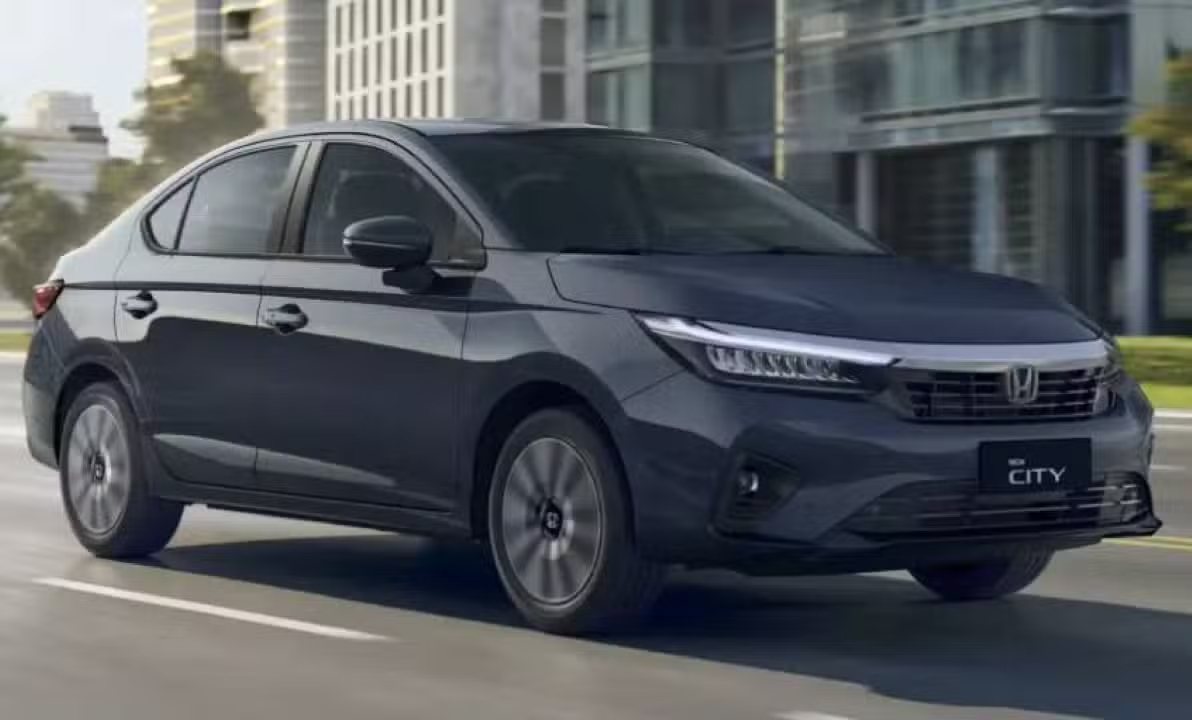
Honda announced the restyling of the Honda City model for the Tailândia market, introducing substantial changes to the structure of the product line. The urban vehicle starts to adopt versions equipped with hybrid propulsion as the main alternative for consumers. Variants powered exclusively by gasoline lose their previous protagonism and take on a secondary position in the automaker’s catalog. The update covers both sedan and hatchback bodies.
The manufacturer’s move reflects a global trend towards fleet electrification and adapts the portfolio to new energy efficiency demands. Car renovation includes aesthetic changes to the exterior and the incorporation of advanced systems into the cabin. The Asian market works as a thermometer for the innovations that the brand implements in other regions. The commercial strategy seeks to strengthen the model’s competitiveness against direct competitors in the compact segment.

Reformulação aesthetics in the front and rear details
The restyling project features a redesigned front, characterized by LED headlights with sharper and more precise lines. The front grille adopts a refined honeycomb shape, giving an updated appearance to the optical and aerodynamic set. Entry-level models receive distinct air intakes integrated into the front bumper. The RS sports version preserves the visual identity with the traditional red emblem and a lower finish developed exclusively for this configuration.
In the rear section, the taillights made up of LED lights have transparent lenses applied to a dark gray background. The RS model features a simulated diffuser with enlarged dimensions, while the single exhaust system remains discreetly positioned under the bumper structure. The side of the car maintains the essential lines of the previous version, without significant changes since the update carried out in 2019. The contrast between the continuity of the profile and the changes at the ends defines the car’s new identity.
The manufacturer introduced new designs for the alloy wheels in all versions available in the catalogue. The exterior color palette underwent a specific expansion for the RS variant, incorporating Belzing red and Urban gray tones with a pearlescent finish. The configuration known as Drival Edition, which offered a body kit with a more aggressive appeal, was discontinued in this phase of portfolio renewal.
Inovações technological and internal finishing
The Honda City cabin received updates focused on connectivity and occupant comfort. The main modification to the dashboard consists of the installation of a 10-inch infotainment screen, intended for models positioned at the top of the range. Access versions feature slightly smaller multimedia equipment, designed to provide harmonious visual integration with the central console. The system offers faster responses to the driver’s commands.
The standard equipment package has undergone a significant increase in this mid-life update. The automaker added ambient lighting, a camera system with 360-degree vision to assist with maneuvers and a base for charging smartphones without the need for cables. The interior rear-view mirror with automatic dimming function is also part of the list of standard items. The features aim to raise the standard of convenience in daily vehicle use in urban environments.
Customers will find a new interior lining option called Cinza Platina, designed to create a more sophisticated cabin environment. Esta finish alternative has combination restrictions and is tied exclusively to Cinza Meteoro Metálico or Preto Cristal Perolizado exterior paints. The selection of materials seeks to convey a superior perception of quality in assembly and internal finishes.
Transição for hybrid propulsion system
The restructuring of the engine offering represents the most profound change in Honda City’s commercial strategy. The promotion of hybrid sets to the status of a standard option changes the model’s historical positioning in the Asian market. The manufacturer chose to discontinue most configurations equipped only with internal combustion engines. The technical decision follows stricter environmental regulations and growing consumer preference for vehicles with lower fuel consumption.
The current catalog only preserves one variant equipped with the VTEC turbo engine as an alternative for customers who do not want electrification technology. The gasoline engine serves a specific niche of buyers who prioritize traditional performance. The drastic reduction in combustion options highlights the direction of the automaker’s investments towards the development of hybrid and electric platforms in the coming years.
Posicionamento market and equipment list
The modifications implemented in the Tailândia follow guidelines similar to those adopted in the renewal of the sedan sold in the Índia market. The Thai consumer, however, can count on the exclusivity of the hatchback bodies and the RS version, which are not part of the Indian portfolio. The availability of different body shapes guarantees a competitive advantage for the brand in the region. The update package consolidates the car’s differences:
- Configuração standard with unique air intakes integrated into the front bumper.
- Versão RS equipped with red badging, specific lower trim and enlarged rear diffuser.
- Rodas light alloy with an unprecedented design applied to all variants of the line.
- Interior Opção in Cinza Platina conditional on selected exterior colors.
- Central multimedia with 10-inch screen reserved for superior models.
- Sistema 360-degree camera monitoring included as standard equipment.
- Tecnologia induction charging for mobile devices in the center console.
Flexibility in choosing equipment allows buyers to adapt the vehicle to specific daily use needs. The segmentation strategy caters to customers focused on fuel economy to those looking for a look with a sporty appeal. The Japanese automaker structures the offer to cover different price ranges within the premium compact category.
Asian Automotive Industry Contexto
Tailândia’s automotive market acts as a strategic production and export hub for several global manufacturers. Honda City’s transition to an electrification-focused matrix reflects the maturation of local infrastructure and government incentive policies. Urban sedans and hatchbacks face increasing competition from compact sports utility vehicles, requiring constant technological updates to keep registration volumes high.
The integration of driving assistance systems and advanced connectivity into entry-level vehicles demonstrates the democratization of features previously restricted to higher categories. The life cycle of automotive products requires aesthetic and mechanical interventions every three or four years to sustain public interest. The restyling presented by Honda meets the current generation renewal schedule, preparing the ground for future urban mobility platforms and technologies.