Stellar explosion SN Winny generates five images in space and helps measure the expansion of the universe
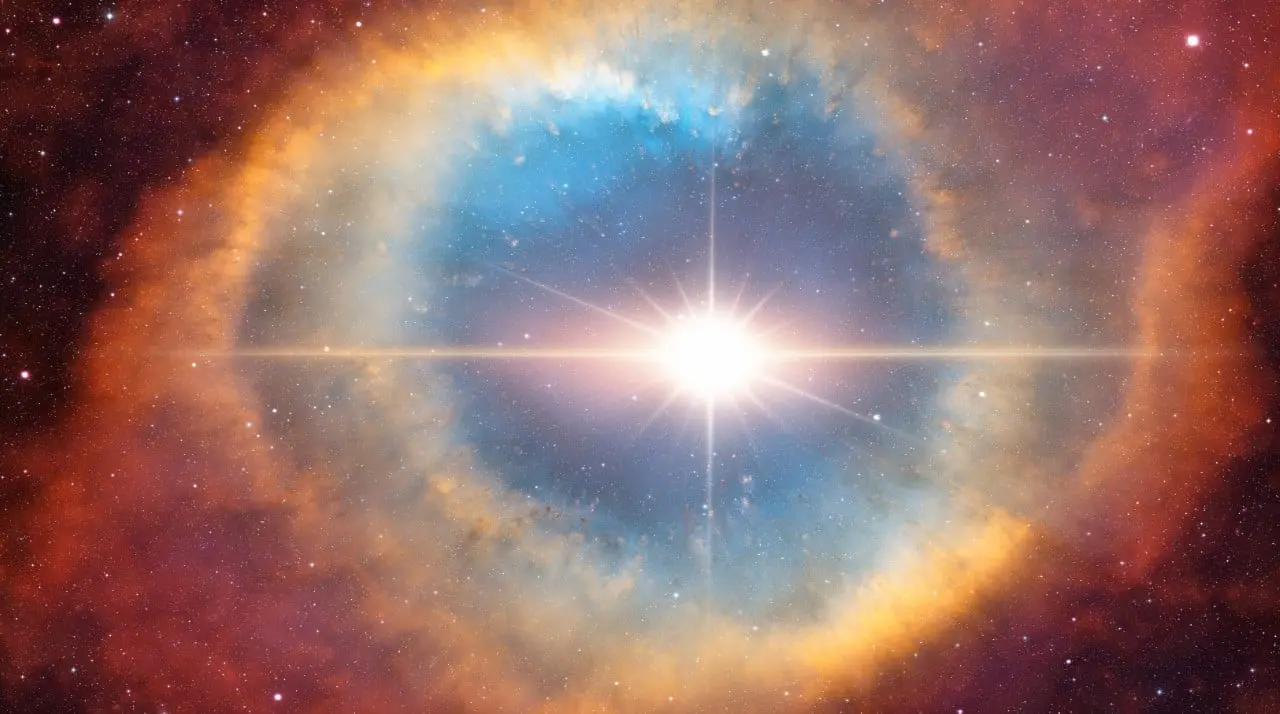
A superluminous supernova located 10 billion light years from Terra appeared multiplied in five distinct points in the sky. The rare astronomical event was officially identified as SN Winny by the researchers involved in the discovery. The observation occurred in August 2025 after six years of searching for ideal candidates in deep space. The visual phenomenon results from a specific cosmic alignment. Duas galaxies positioned in the foreground distort the light from the original explosion.
Intermediate galaxies function as natural gravitational lenses that bend and magnify light from the collapsing massive star. Cientistas of Technical University of Munich and partner institutions classify the registration as an unprecedented opportunity for modern astrophysics. The detailed study of these five images allows us to directly calculate the Hubble constant with high precision. The independent measurement offers a promising path to resolving current disagreements about the true rate of expansion of the universe.
Rare cosmic Alinhamento produces five simultaneous reflections
The visual configuration generated by SN Winny deviates from the pattern observed in most known gravitational lens systems. Astronomers usually record only two or four mirror images when the light from a distant object is spatially distorted. The appearance of five luminous points requires an extraordinarily precise geometric alignment between the emitting source, the lenses and the ground-based telescopes. Sherry Suyu, associate professor of observational cosmology at TUM, points out that the statistical probability of such an arrangement occurring is less than one in a million.
The light emitted by the superluminous supernova traveled through the vacuum for billions of years before encountering the gravitational obstacle. The intense gravity field of the two galaxies bent the path of the photons at different angles and directions. Esse deviation forced the light radiation to travel paths of unequal lengths to reach the detectors in Terra. The phenomenon creates a measurable temporal delay. The equipment captures the five images at different times. Accurately measuring these temporal intervals provides the mathematical basis necessary to independently determine the Hubble constant.
High-resolution Equipamentos map system structure
Capturing the event in detail required the use of cutting-edge optical instruments installed in strategic locations on the planet. The researchers aimed Large Binocular Telescope, situated in the mountains of Arizona, at the specific region of the night sky. The observatory has two gigantic primary mirrors measuring 8.4 meters in diameter operating together. The telescope’s adaptive optics system corrected atmospheric distortions in real time. The equipment produced extremely sharp photographs.
The processed images reveal the exact position of the two central galaxies surrounded by the five bluish reflections of the stellar explosion. Allan Schweinfurth, TUM representative, and Leon Ecker, LMU researcher, led the spatial analysis of these bright spots. The pair of scientists used the photometric data to build the first detailed mathematical model of the mass distribution in the galaxies that act as lenses. The structure of the system presents peculiar characteristics that facilitate the work of computational modeling.
- The original explosion occurred at an estimated distance of 10 billion light years.
- Duas galaxies positioned at redshift z=0.375 form the main lens.
- The five reflections of the supernova exhibit a strong bluish color in the processed photographs.
- The smooth mass distribution of galaxies simplifies the mathematical calculations of the research.
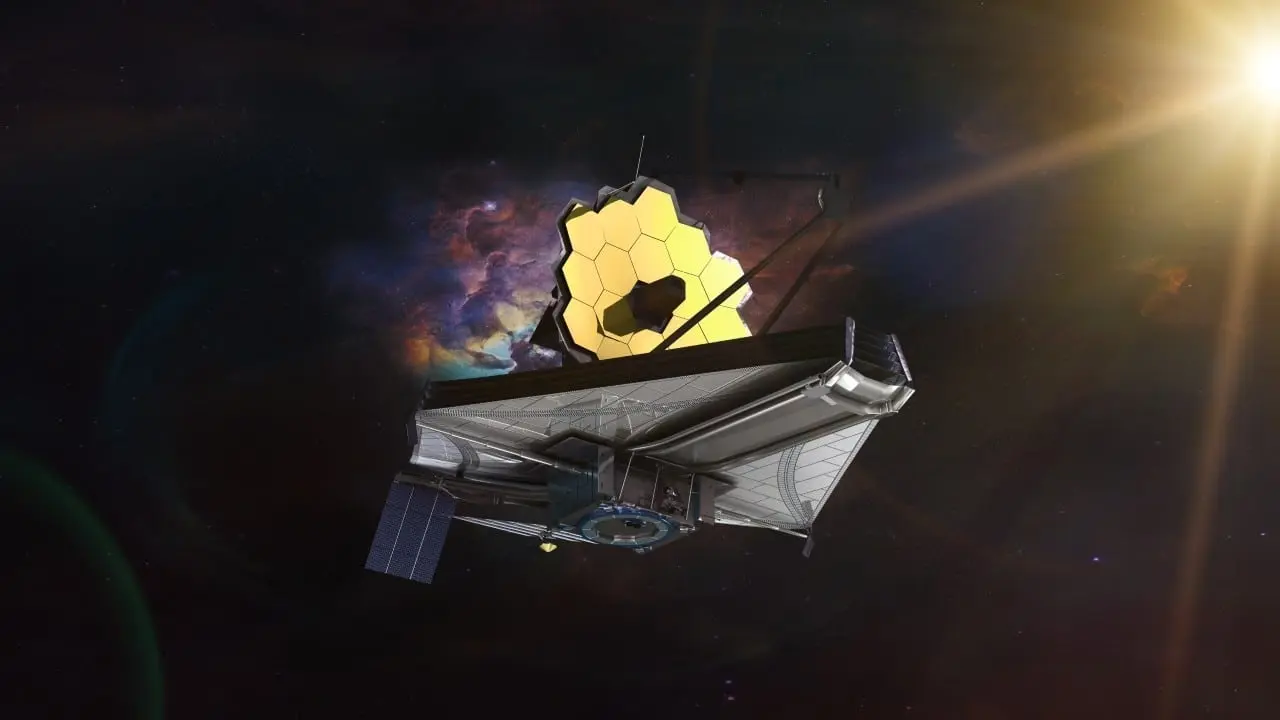
- Continuous monitoring involves the Hubble space telescope and the modern James Webb.
The intervening galactic arrangement shows no signs of recent collisions or destructive interactions in the cosmic past. The absence of complex clusters and the regular distribution of dark matter make the environment more predictable for physical equations. Essa structural simplicity reduces the margin of error in the simulations used to determine the behavior of light as it passes through the gravitational field. Astronomers are able to isolate variables more easily during data processing.
Independent Medição seeks to resolve Hubble tension
Modern cosmology faces a significant obstacle in understanding the evolutionary dynamics of the cosmos since Big Bang. Scientists have traditionally used two distinct methodologies to calculate the current rate of expansion of space. The first method is based on the cosmic distance ladder by observing variable stars and supernovae in nearby galaxies. The second approach looks at temperature fluctuations in the cosmic microwave background. Essa radiation appeared in the first moments of the universe.
The results obtained by these two established routes present a mathematical discrepancy that theorists cannot reconcile. Esse persistent numerical conflict has been given the name Hubble tension and dominates debates in physics departments around the world. The divergence suggests the existence of flaws in the calibration methods or the need to formulate new fundamental physics. The study of SN Winny provides a third avenue of investigation. The technique operates completely independently of previous approaches.
The calculation based on the time delay of gravitational lensing works in a single straightforward mathematical step. Stefan Taubenberger, a member of the research team, highlights that the method eliminates the multiple calibrations required by the distance ladder. The combination of the light arrival time intervals with the galaxy mass model delivers the value of the Hubble constant autonomously. Essa methodological independence makes the results crucial to confirm or refute current conflicting measurements.
Superluminous Explosão exposes dynamics of early universe
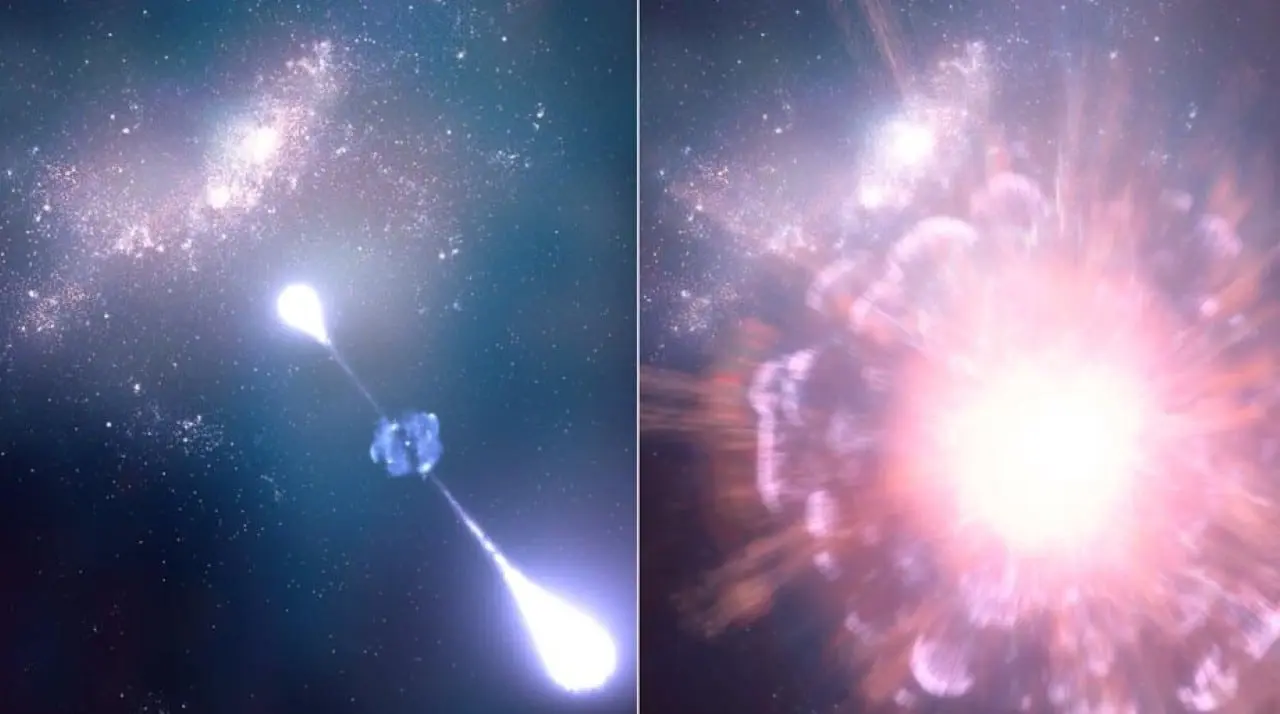
The classification of SN Winny as a superluminous Type I supernova indicates a colossal energy release event. Essas rare stellar explosions shine with an intensity tens of times greater than conventional supernovae recorded in neighboring galaxies. The catastrophic collapse of the progenitor star occurred at a time when the universe was approximately 4 billion years old. The study of emitted light provides valuable data about the chemical composition and physical processes dominant in the early cosmos.
Direct observation of such a distant and ancient object would be impossible with current technology without the aid of gravitational magnification. The natural lens effect multiplied the number of photons captured by terrestrial and space mirrors. Equipes’s international astronomers maintain a rigorous schedule of monitoring the system at multiple wavelengths of the electromagnetic spectrum. Continuous collection of spectroscopic data refines the accuracy of temporal delay measurements between the five images.
The global collaborative effort aims to consolidate a robust database before the supernova’s brightness gradually fades. The researchers plan to publish preliminary results on the universe’s expansion rate by the end of the year 2026. Validating Einstein’s general relativity equations on extreme cosmic scales remains a key secondary objective of the project. The success of this observational endeavor reaffirms the importance of gravitational lenses as indispensable tools for exploring the frontiers of the observable universe.