Webb and Hubble find 27 icy objects orbiting beyond Neptune
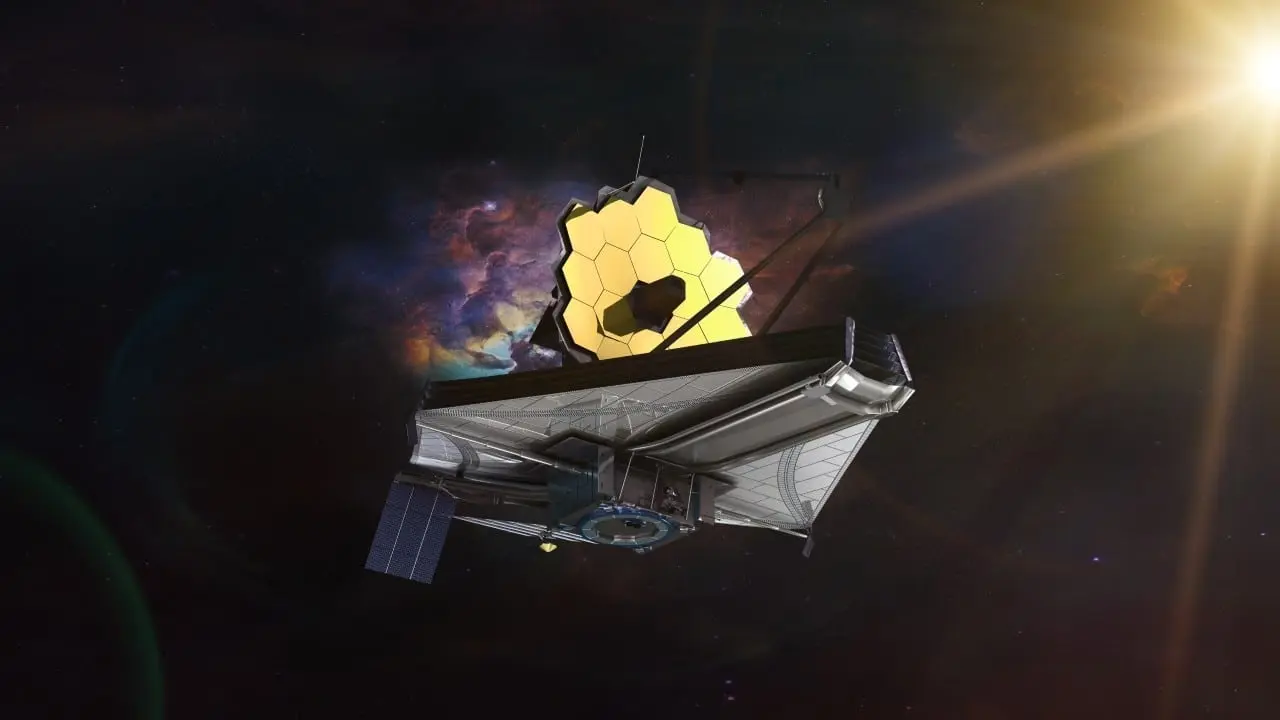
The James Webb Space Telescope and the Hubble Space Telescope documented 27 previously unknown celestial bodies past the orbit of Neptune on September 8. Researchers determined that the evolutionary track of these diminutive worlds contradicts established models of the outer solar system.
Both space observatories identified these tiny trans-Neptunian objects with diameters measuring under 40 kilometers across. The smallest tracked body spans barely 10 kilometers in width. These primordial fragments formed during the solar system’s earliest era as planetesimals that never grew into full planets.
Early theoretical models indicated constant debris collisions would pulverize such bodies and alter their surface composition, yet researchers Anastasia Morgan of Northern Arizona University and Marielle Eduardo of the University of Victoria detected unblemished surfaces.
“You could imagine a scenario where getting knocked around and fragmented would change the surface composition, and then you would see a different surface color for tiny TNOs compared to their larger siblings,” said Morgan, who explained that these small bodies preserved their original compositional markers.
Native fragments residing within the Kuiper Belt travel along circular paths aligned with the solar system’s flat ecliptic plane. Planetary scientists classify these specific bodies as dynamically cold because their orbital paths experienced minimal disruption over billions of years. Their positions remained stable.
Other bodies formed originally between Uranus and Neptune before powerful gravitational resonances hurled them outward into tilted, highly elongated paths that now constitute what astronomers classify as the solar system’s distant and dynamically agitated scattered debris disk.

They remain remarkably unaltered.
“These dynamically hot TNOs retain a signature of where they were born, even though they’ve been orbitally scrambled since then,” said David Trilling of Northern Arizona University. His assessment confirmed that external fragmentation did not rewrite their chemical makeup.
Astronomers now evaluate whether far fewer collisions occur beyond Neptune than previously calculated or if deep space impacts lack the energy required to strip the outer crusts of small icy objects.
Marielle Eduardo measured the physical proportions of the discovered targets using infrared detectors aboard the James Webb Space Telescope. Visible light observations often skew size calculations because reflective ice makes smaller objects shine brighter than darker, broader masses. Infrared radiation bypasses albedo variations by measuring thermal output directly.
The resulting measurements provided precise dimensions for all 27 objects. The survey detected a smaller quantity of miniature bodies than existing accretion models anticipated.
“It’s very interesting that the process of planetesimal formation ends up producing the same distribution of sizes for both cold and hot populations, despite forming in different regions of the early solar system,” said Eduardo.
The targeted objects exhibited brightness ratings ranging between magnitudes 24.1 and 29.3 during the observation window. Detecting these targets matches the difficulty of spotting fireflies situated on the Moon while watching from Earth. The joint mission established the deepest survey conducted across the trans-Neptunian frontier.
The Astronomical Journal published the research across two separate scientific papers on September 8.