

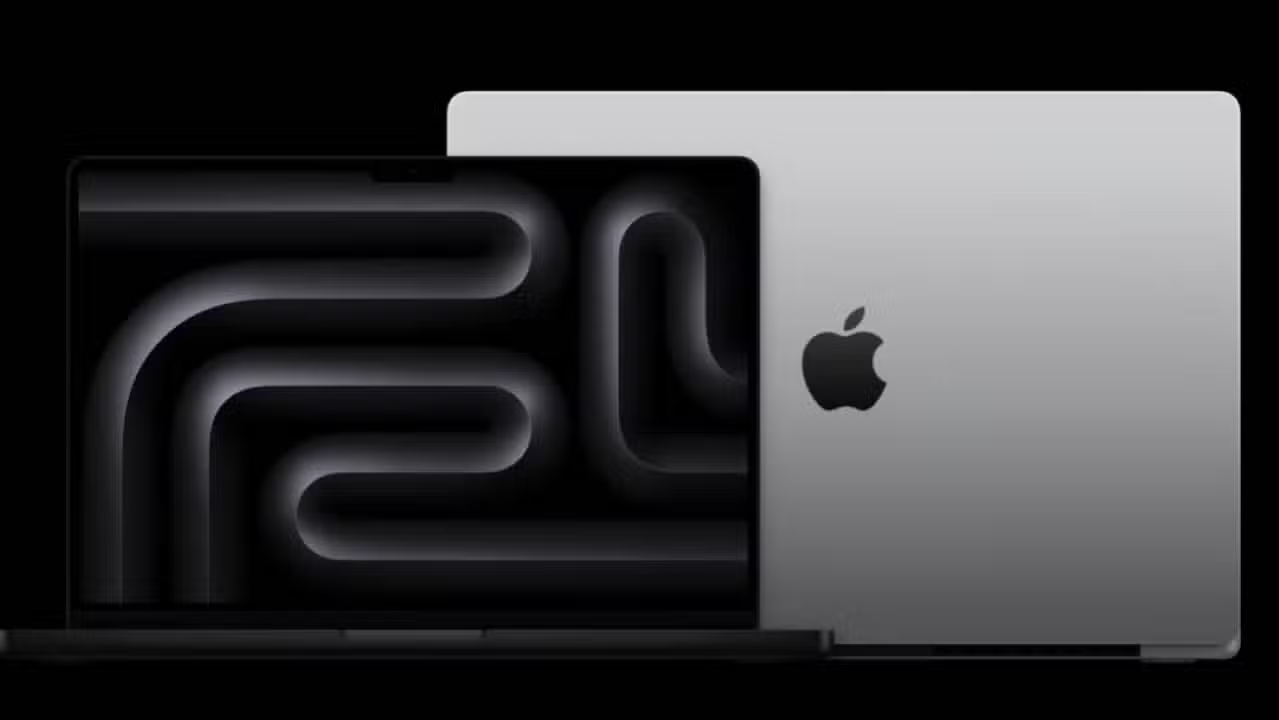
The manufacturer Apple has defined the incorporation of Tela technology from Privacidade, originally launched by Samsung in the Galaxy S26 Ultra smartphone, for the next generation of its portable computers. The new models in the MacBook Pro line, equipped with the M6 Pro and M6 Max processors, will receive visual security functionality in 2026. The decision marks a significant change in the company’s hardware development. Engenheiros from the Cupertino giant is working on adapting the panels to the format of premium notebooks.
The strategic move brings forward the technology industry’s schedule by three years. A report published by consultancy Omdia in February 2026 projected the adoption of this privacy signature on laptops only by the year 2029. The tipster known as Schrödinger leaked the details of the internal project. Samsung’s supply chain was able to accelerate the refinement of the necessary components. Essa factory optimization enabled the immediate commercialization of technology based on OLED screens for larger panels.
Funcionamento of liquid crystal film on OLED panels
The security feature operates through the application of a special liquid crystal film directly integrated into the computer display. Esse material has the ability to change its physical state through operating system commands. The physical modification instantly changes the refractive index of the light emitted by the pixels. The mechanism efficiently blocks the lateral visibility of the panel. Pessoas positioned around the user lose the ability to see the content displayed on the screen.
The hardware solution solves a historical information security problem in corporate environments and public spaces. Profissionais who perform tasks in coffee shops, airport lounges, airplanes or coworking offices face the constant risk of exposing sensitive data. Side privacy ensures that only the operator positioned frontally can view the information. The competitive advantage focused on data protection justifies the high financial investment in the adoption of advanced OLED panels for the computer line.
The development of this visual barrier requires millimeter precision in assembling the screen layers. Calibration of the liquid crystal needs to ensure that the front image quality does not suffer from color degradation or loss of brightness when the function is activated. Especialistas on displays point out that maintaining color fidelity has always represented the biggest challenge for built-in privacy filters. The technology inherited from the Galaxy S26 Ultra manages to balance data protection with the visual quality demands of creative professionals.
Resource Segmentação on different processor versions
Apple internal guidelines indicate limited distribution of the new technology within the computer portfolio. The visual blocking feature will be exclusive to the most expensive models of the new generation. The entry-level MacBook Pro, configured with the entry-level M6 chip, will maintain traditional mini-LED backlight technology. Versions equipped with the M6 Pro and M6 Max processors will receive the full update to the OLED panel. Consequentemente, only these superior machines will feature the native protection mechanism against prying eyes.
The manufacturer’s commercial strategy seeks to preserve a clear margin of differentiation between its product categories. Usuários corporate and independent professionals who prioritize data privacy find a technical justification for investing in mid-range and high-end machines. The portfolio division establishes three distinct levels of specifications for consumers:
- Modelo with basic M6 chip: conventional mini-LED screen, without native side protection.
- MacBook Pro with M6 Pro chip: Advanced OLED panel with standard privacy screen.
- MacBook Pro with M6 Max chip: Premium OLED panel with enhanced privacy screen for high performance.
The targeting of exclusive resources to the top lines reflects the purchasing behavior of the business sector. Information technology Departamentos typically acquires fleets of equipment focused on network security and local data protection. The integration of a physical barrier against visual eavesdropping eliminates the need to purchase third-party accessories. Removable magnetic Películas, widely used in today’s market, reduce image quality and often cause physical damage to the closing of the notebook lid.
Reestruturação thermal and changes in equipment chassis
The implementation of the new OLED screen arrangement and the increase in power of the M6 family chips require a profound restructuring of the notebooks’ internal architecture. Apple prepares severe modifications to the machines’ cooling system. Advanced models will adopt a dedicated vapor chamber for heat dissipation. The design includes completely redesigned fans to maximize airflow. The structural change reaches such significant proportions that the specialized media are considering the commercial baptism of the new machines under the name MacBook Ultra.
Engineering changes affect chassis design, weight distribution, and logic board arrangement. The integration of OLED panels requires extreme care with the internal temperature of the chassis. Componentes organic light emitters exhibit high sensitivity to excessive heat, which can cause image retention or premature pixel degradation. Hardware engineers have optimized thermal exhaust routes to ensure display longevity and maintain consistent processor performance during intense workloads.
Impacto of anticipation in the global computer market
Apple’s move reflects a broader trend of technological convergence in the global electronics industry. Fabricantes portable computers seek to differentiate their machines through direct innovations in display technologies. Samsung took the early lead in introducing native privacy to the smartphone segment with the Galaxy S26 Ultra. The Cupertino giant responds quickly by adapting the same premise for the premium personal computer segment. The transfer of innovations from the mobile sector to desktops defines the pace of launches in 2026.
Establishing this new visual safety standard forces competitors to review their research and development schedules. Traditional Empresas from the corporate sector, such as Dell, Lenovo and HP, tend to follow the technological transition in the following years so as not to lose corporate contracts. The commercial viability of OLED panels with liquid crystal filter changes the requirements of government tenders and purchases from large corporations. The hardware market consolidates physical privacy as a fundamental requirement for high-performance devices.
The standardization of liquid crystal technology in OLED displays also boosts the global semiconductor supply chain. Fornecedores Asians expand the production capacity of assembly lines to meet the volume of orders from the North American manufacturer. Increasing manufacturing scale reduces long-term component operating costs. Essa industrial dynamics paves the way for native side protection to reach lower-tier computers by the end of the decade.