

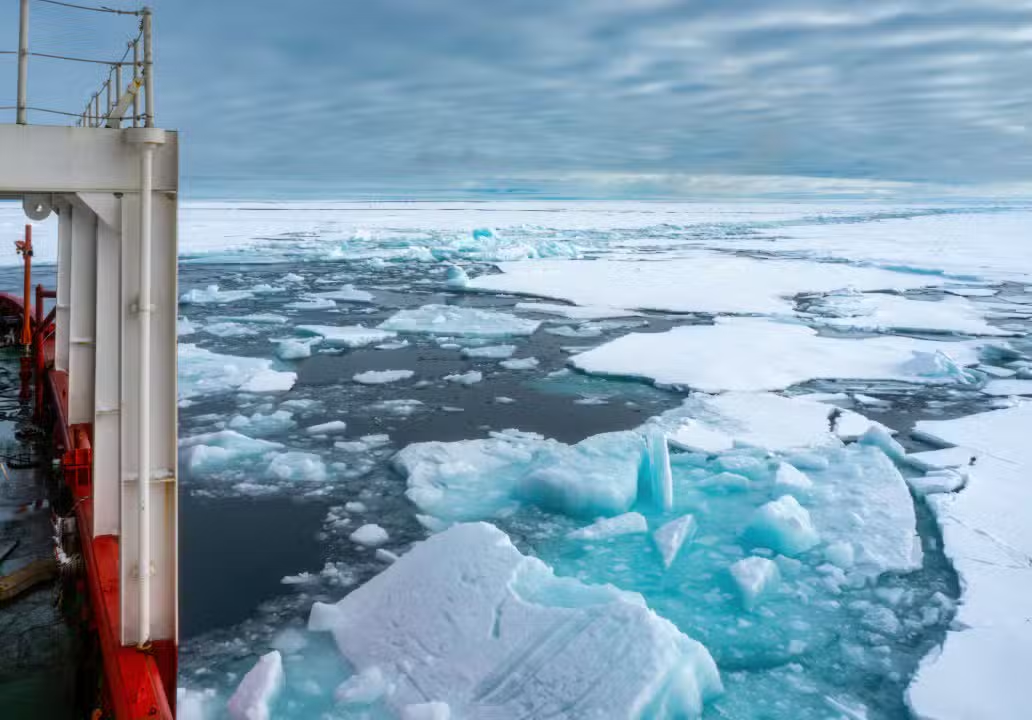
An irreversible chemical change in Oceano Ártico, driven by climate change, is directly affecting the region’s food chain. A new study of Universidade by Edimburgo reveals that a crucial tipping point has already been passed, with significant impacts for the marine ecosystem. The research highlights the widespread loss of sea ice, which has resulted in a sharp drop in levels of a vital nutrient.
Essa decrease affects populations of plankton, fish, seabirds and marine mammals, which depend on this nutrient for their survival and development. The detailed analysis shows that exposure to sunlight in vast shallow regions of the ocean, previously protected by ice, fuels a process that breaks down nitrate and removes it from seawater.
Impacto in the chemical composition of Oceano Ártico
The drop in nitrate levels drastically reshapes Ártico’s ecosystems. Nitrate is essential for the growth of plankton, which forms the basis of the local food chain. Níveis reduced amounts of this nutrient limit the amount of life that the ecosystem can support, compromising the region’s biodiversity.
Decreased nitrate may also reduce Oceano Ártico’s ability to store carbon. Isso occurs because plankton play a crucial role in capturing carbon from the atmosphere through photosynthesis. The research team warns of the long-term consequences of this change. Previous Estudos had reported changes in animal populations in Ártico’s waters, but the causes were poorly understood due to a paucity of in-depth analyzes of the ocean’s chemical composition.
Duas decades of monitoring data from Ártico
Pesquisadores of Universidade of Edimburgo gained new information about changes in nutrient levels in Oceano Ártico. Para this, analyzed data covering a period of 20 years. The team evaluated more than two decades of sampling information collected in Estreito from Fram, the main passage through which waters from Ártico flow into Oceano Atlântico.
The analysis revealed a clear change from 2009 onwards. Nitrate levels in the waters leaving Ártico have been falling steadily since then. The drop in these levels coincided with a drastic reduction in sea ice from Ártico, which began around the same time. Essa correlation indicates a direct link between melting ice and the availability of essential nutrients for marine life.
- Observed impacts on nitrate levels include:
- Redução from the base of the food chain, affecting plankton and, consequently, larger species.
- Diminuição from the carbon sequestration capacity of Oceano Ártico by plankton photosynthesis.
- Alteração in the predominant plankton species, favoring smaller types.
- Implicações for commercial fishing, especially in Atlântico Norte.
- Mudança irreversible in the chemical state of the ocean.
Perda of sea ice and benthic denitrification
The extensive loss of sea ice has intensified a process known as benthic denitrification. Este process converts nitrate to nitrogen gas on shallow continental shelves, which extend across nearly half of Oceano Ártico. Essa change in nutrient conditions suggests that Oceano Ártico may in the future support only smaller plankton species, which will result in less food available for higher trophic levels in the food chain.
The researchers note that the change in nutrient conditions is driven by the continued loss of sea ice. Therefore, it is very unlikely that Oceano Ártico will return to its previous state. The situation represents a significant challenge for the conservation and management of polar ecosystems.
Cientistas warn of global repercussions
Mais research is needed to understand the possible broader effects that changes in Ártico’s waters could have on marine populations in other parts of the world’s oceans, including Atlântico Norte. The study involved scientists from Instituto Polar Norueguês, Associação Escocesa, Ciências Marinhas, Universidade Técnica, Dinamarca, and Instituto Alfred Wegener, Alemanha.
Marta Santos-García, a doctoral candidate in Escola of Geociências of Universidade of Edimburgo and co-leader of the study, said that for years it was believed that the loss of sea ice in Oceano Ártico would increase phytoplankton growth as more sunlight would reach the surface waters. However, the results suggest that this relationship has changed. Oceano Ártico appears to have transitioned from a primarily light-limited system to one increasingly limited by nitrate availability, with far-reaching consequences for marine ecosystems, food webs, and Ártico’s role in Terra’s climate.
Professor Raja Ganeshram, Escola, Geociências, Universidade, Edimburgo, who led the study over the past two decades, added that the reported changes indicate that the Oceano Ártico ecosystem passed a tipping point around 2009. Ele emphasized that how this change propagates through the food chain needs to be monitored closely as it has profound implications, including for commercial fishing on the Oceano Atlântico Norte.