

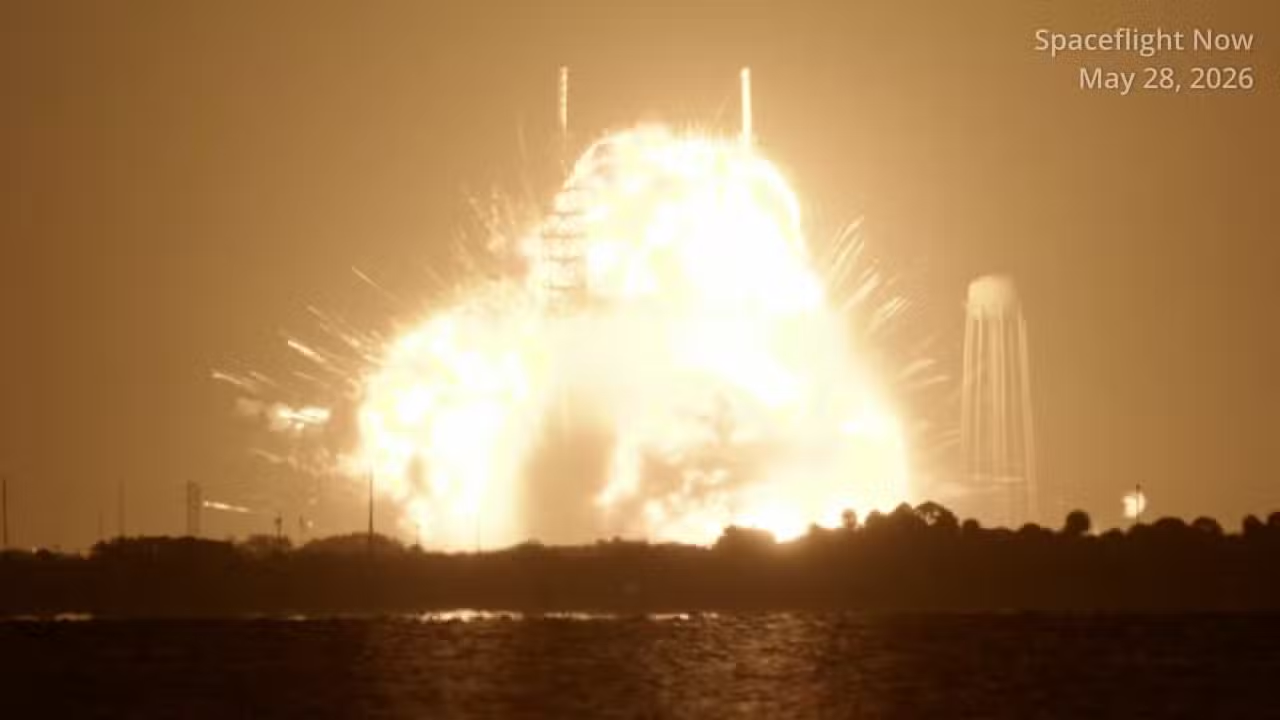
An New Glenn rocket from Blue Origin exploded during a ground ignition test on Thursday night. The incident occurred on Cabo Canaveral Space Force Station launch pad 36, at Flórida. Ninguém was injured. The company confirmed the event as an anomaly in a statement released on social media.
The test involved activating the rocket’s first stage engines. The explosion generated a large fireball visible in several parts of Flórida’s coastline. Moradores from nearby areas reported shaking at homes. Blue Origin has not yet detailed the causes of the problem.
Explosão destroys rocket structure and affects platform
The New Glenn, about 98 meters tall, suffered total damage in the first stage. Partes of the platform’s infrastructure were also hit. A large lightning rod tower fell due to the force of the detonation.
Emergency Equipes responded to the scene shortly after the event. Space Force, responsible for the base, reported that there were no casualties. Investigadores now analyzes data recorded during testing.
- The rocket used liquid methane and liquid oxygen propellant
- The test prepared the vehicle for the NG-4 mission
- Satélites from Amazon Kuiper were not currently coupled
- The platform suffered visible structural damage
Blue Origin operates the launch complex at Cabo Canaveral. The company planned to use New Glenn to launch Project Kuiper and Amazon internet satellites into orbit.
Contexto from New Glenn development
New Glenn represents the main heavy launch vehicle of Blue Origin. Jeff Bezos founded the company in 2000 with a focus on reusable spaceflight. The rocket seeks to compete directly with SpaceX’s Falcon Heavy and Starship.
Previous Testes and New Glenn have already faced delays. The vehicle has made flight attempts in recent months, but with mixed results. A previous satellite delivery flight ended without complete success and sparked an investigation.
The explosion occurs at a time of expansion of the private space launch sector in the Estados Unidos. Nasa relies on commercial providers for lunar cargo missions in the Artemis program.
Impactos for release schedule
The loss of the booster delays the NG-4 mission. Essa operation included the transport of satellites to the Kuiper constellation. Amazon plans thousands of satellites to offer global broadband internet.
Especialistas estimate that the platform’s recovery could take months. Blue Origin will need to rebuild parts of the infrastructure before further testing. Jeff Bezos commented on the case and reinforced the commitment to safety and return to operations.
The incident recalls challenges faced by other companies in the sector. SpaceX had explosions in initial tests of the Starship, but was able to move forward after adjustments. Blue Origin accumulates experience with the New Shepard suborbital rocket.
Reações from the space sector
Nasa monitors the case. The agency uses New Glenn in plans to deliver lunar cargo. Outros trading partners also watch Blue Origin’s next steps.
The space launch market grows with demand for Terra communication and observation satellites. Vehicle reliability has become a decisive factor for government and private contracts.
Blue Origin maintains a focus on manned and unmanned flights. The company invests in reuse technology to reduce costs per launch.
Detalhes technicians of the affected vehicle
The New Glenn has seven BE-4 engines in the first stage. Esses thrusters use methane, a choice also adopted by SpaceX in some projects. The second stage uses a BE-3 engine.
- Altura total: about 98 meters
- Capacidade payload: designed for low orbit
- Main Objetivo: Heavy missions and reusability
- Local Manufacturing: Blue Origin Facilities
The company has not yet released a revised schedule for the next test. Investigadores of Federal Aviation Administration must participate in the analysis.
The accident reinforces the complexity of engine testing on the ground. Empresas from the sector perform these procedures to validate performance before real flights.