

The Stellantis group structures the launch of three new vehicles for Chrysler, ending a 10-year period without substantial new features in the automaker’s portfolio. The initiative is part of the FaSTLAne business plan, which focuses on introducing more affordable SUVs to the América and Norte market. The new models will arrive at dealerships with projected prices between US$25,000 and US$30,000. The corporate strategy seeks to rejuvenate the manufacturer’s image and expand the consumer base quickly.
The North American manufacturer focused its recent efforts solely on restyling the Pacifica minivan, but will now receive significant financial contributions for its commercial revitalization. The central objective of the operation is to increase sales volume by 60% by the year 2030, projecting a total of 225 thousand vehicles registered annually. Stellantis’s management estimates that 35% of these new sales will come from customers who have never previously purchased a car from Chrysler. The change of route requires rapid adaptation of assembly lines.

Commercial Reposicionamento aims to reverse sales stagnation
Chrysler’s long break from presenting new vehicles led to severe stagnation in the catalog offered to drivers. Durante for an entire decade, the brand survived in the automotive market supported almost exclusively by Pacifica, without delivering technological innovations capable of attracting new buyer profiles or competing in more dynamic categories. Esse commercial isolation scenario created the urgent need for a deep strategic reformulation to ensure the company’s long-term viability. Analistas from the sector highlighted the urgency of renewal.
Para To modify this unfavorable situation, Stellantis established aggressive expansion goals, seeking to practically double Chrysler’s registration volume in the coming years. Of the current 143 thousand vehicles sold annually, the official projection is to reach the mark of 225 thousand units by the end of the current decade. Alcançar this level will require the offer of modern products and the ability to convince a significant portion of consumers to consider the brand for the first time in their purchasing decisions. The challenge involves marketing and engineering.
The central point for the success of this commercial expansion lies in the introduction of vehicles with highly competitive values, a niche that Chrysler ignored for many years in favor of larger models. The new utilities will have prices ranging between US$25,000 and US$30,000, figures that represent the equivalent of R$126,000 and R$152,000 in direct conversion at the current price. Atualmente, the most basic version of the Pacifica costs around $41,495, which illustrates the huge price gap that new SUVs need to fill quickly.
Detalhes technicians for models Airflow, Arrow and Arrow Cross
The three launches confirmed for the upcoming industry calendars are the Airflow, the Arrow and the Arrow Cross. Embora complete technical specifications still remain under industrial secrecy, information about development and market positioning is beginning to circulate behind the scenes in the automotive sector. Cada utility was designed by engineering teams to meet specific demands and different driver segments within the new Chrysler guideline. The planning involves rigorous safety and energy efficiency tests.
The Airflow model will operate in the medium SUV segment, reviving the name of a classic vehicle in the history of Chrysler. The car’s architecture will use the new STLA One platform, which allows the installation of different engine options, aligning the project with the multi-energy strategy adopted globally by Stellantis. Este utility will have a direct equivalent under the Dodge brand, called GLH, which will take over as successor to Hornet. Essa movement highlights the strong platform synergy between the different brands controlled by the automotive group.
The Arrow and Arrow Cross utilities will occupy the base of the Chrysler portfolio in the América region of the Norte. Esses two vehicles represent fundamental pieces for the automaker’s return to the entry-level segment, an area of activity abandoned decades ago by executives. The development of these SUVs occurred with the purpose of delivering more accessible and functional alternatives to urban drivers. The proposal directly contrasts with the image of luxury and exclusivity that the brand boasted in past decades.
Architecture Compartilhamento with Fiat Grizzly family
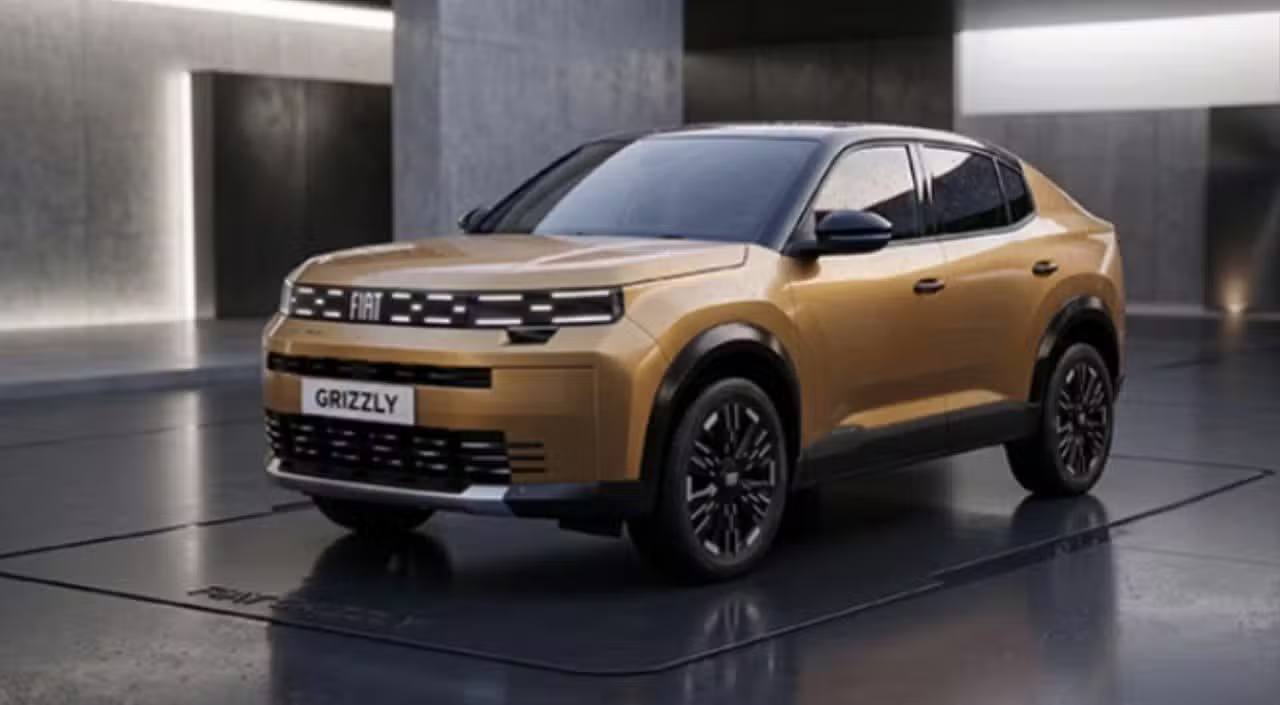
The new Arrow and Arrow Cross SUVs will be derived directly from Fiat cars, more specifically from the recently created Grizzly family. Esta The same family of vehicles will serve as the basis for the next generation Fiat Fastback and a new seven-seater crossover destined for the Brazilian market. Technical collaboration with Fiat gives Chrysler the opportunity to accelerate the development timeline and optimize production costs. The use of existing and extensively tested platforms reduces the risk of mechanical failures.
The Arrow will sport a coupe body style, acting as the direct equivalent of the Fiat Fastback, and its design cues have already partially appeared in promotional materials for the Stellantis. The vehicle will stand out due to the sharp drop of the roof at the rear and a sportier visual appeal. On the other hand, the Arrow Cross will deliver a more traditional SUV body, characterized by a raised rear end and a spacious cargo compartment. The focus of the Arrow Cross is to ensure maximum practicality for transporting luggage and everyday use for families.
The component sharing strategy, known in the industry as rebadge, will be applied intensively to the Arrow and Arrow Cross models to keep the initial price below the US$30,000 barrier. The vehicles will retain most of the structural elements of the original Fiat, including the proportions of the glass area, the main lines of the body and the overall dimensions. The visual identity of the Chrysler will appear concentrated at the front, with the adoption of an exclusive grille, bumper and headlights. The rear will also receive its own lights and emblems to ensure aesthetic differentiation.
Nova identity keeps automaker away from the luxury segment
- The Arrow model will act as the North American equivalent of the Fiat Fastback, featuring a sports coupe design.
- The Arrow Cross utility will deliver a conventional format, focused on internal space and family practicality.
- The Airflow vehicle will occupy the medium SUV category, built on the modern STLA One platform.
In the mechanical aspect, the Arrow and Arrow Cross models will adopt the Smart Car platform, developed by Stellantis engineering. Essa structural base is already present in commercially successful vehicles, such as the Jeep Avenger and several Citroën and Peugeot cars sold in the Brasil. The use of this architecture proves the versatility and robustness of the project in different global markets. Standardization of assembly lines simplifies parts logistics and drastically reduces research expenses for the Chrysler.
The introduction of the Arrow family has the clear objective of redefining the public perception of the Chrysler in the competitive international automotive market. The board’s goal is to transform the brand into a recognized supplier of practical, reliable cars that are perfectly suited to the daily routine of ordinary drivers. Esta change of direction consolidates a definitive departure from the company’s previous image, which maintained a strong association with luxury and high consumption vehicles, such as the 300C sedan. The new phase positions the automaker in a more pragmatic way within the global gear of the Stellantis group.