

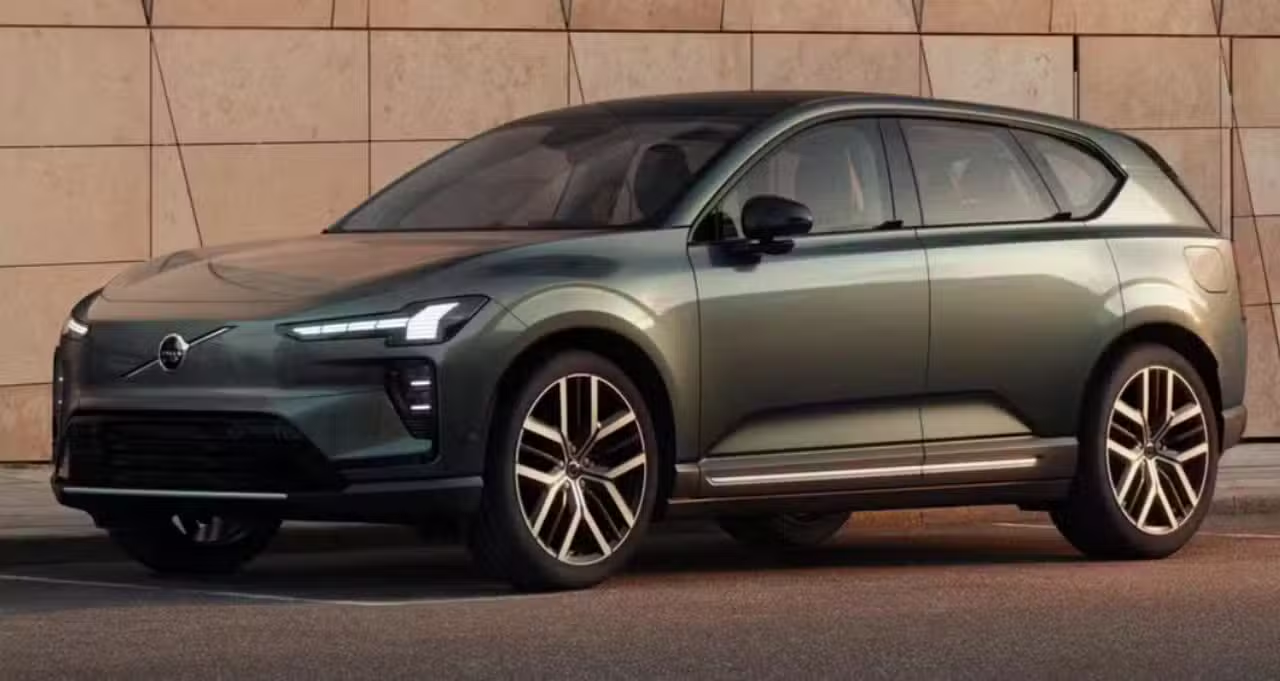
The Swedish manufacturer confirmed the launch of the Volvo EX60 electric sports utility vehicle on the Brazilian market for the period between October and November 2026. The model arrives in the country with an estimated value in the range of R$550,000. The vehicle has a range of up to 660 kilometers in the European WLTP cycle. The main innovation of the project involves the native integration of Google Gemini artificial intelligence into the multimedia system. The technology changes the dynamics of interaction between the driver and the machine through advanced vocal commands. The introduction of the model intensifies competition in the electrified luxury segment.
The first global tests of the car took place in the city of Barcelona, at Espanha. The utility uses the new SPA3 modular platform. Esta engineering base allows the development of vehicles with varying dimensions on the same assembly line. The rear section of the chassis consists of a single piece of cast aluminum. The 95 kWh battery is integrated into the car’s structure itself. The construction method reduces the total weight and reduces the complexity of industrial assembly. The architecture optimizes internal space and improves the body’s torsional rigidity.
Arquitetura electronics and artificial intelligence integration
The operation of the Volvo EX60 depends on the electronic architecture called HuginCore. The system was developed by the automaker itself in partnership with technology companies such as Google and NVidia. A central supercomputer manages all of the car’s functions. The equipment replaces dozens of smaller electronic modules spread throughout the body. Processing capacity reaches 250 trillion operations per second. Centralized hardware simplifies vehicle wiring harness.
Continuous internet connection allows you to receive remote updates via the cloud. The resource guarantees the constant modernization of operational systems without the need for visits to dealerships. Advanced electronics even monitor passive safety features. Seat belts identify occupants’ weight, height and posture in real time. The tensioner automatically adjusts the holding force during collisions to prevent serious injuries. The response time of the sensors occurs in fractions of a second.
The application of the Google Gemini represents a milestone in the human-machine interface in the automotive sector. The virtual assistant understands the context of sentences and maintains natural conversations with passengers. The system operated in Brazilian Portuguese during the evaluations at Europa. Artificial intelligence provided restaurant suggestions and tourist itineraries to drivers. The charging station mapping functionality still requires adjustments to the local language. The manufacturer promises a quick solution through remote data packets sent directly to the car’s computer.
Desempenho dynamic and quick reload system
The P10 version will be the first configuration available in Brazilian stores. The official range reaches 660 kilometers in the European WLTP standard. Inmetro measurements should record approximately 500 kilometers of real range. The electrical system operates with an 800 Volts architecture. The technology supports ultra-fast recharges of up to 400 kW in direct current. The battery level jumps from 10% to 80% in just 16 minutes on high-power terminals. A ten-minute stop adds 315 kilometers of range to the dashboard. The internal alternating current charger supports 22 kW, exceeding the market average.
The mechanical set of the P10 option has two electric thrusters installed, one on each axis. The system generates 510 hp of combined power and 72.4 kgfm of immediate torque. The utility vehicle weighs almost 2,200 kilos. Acceleration from zero to 100 km/h takes place in 4.6 seconds. The maximum speed follows the electronic limit of 180 km/h established by the brand for all its cars. Acoustic insulation uses double glazing on all four doors to block aerodynamic noise. Suspension calibration conveys the driving sensation of a compact vehicle. The energy efficiency of the powertrain optimizes consumption on highways.
Especificações techniques and equipment package
The national market will receive the model exclusively with the Ultra finishing package. The list of equipment includes adaptive regenerative braking and autonomous driver assistance systems. The lane keeping assistant has the ability to automatically change lanes when the turn signal is turned on. The specific lane changing feature will not work on the Brasil due to homologation restrictions and deficiencies in the country’s road signage. Radars and cameras monitor traffic around the vehicle continuously.
The board is studying the future import of the P6 entry-level version. The most affordable model delivers 374 hp and 48.9 kgfm of torque. The configuration uses only one electric motor on the rear axle. Acceleration time to 100 km/h increases to 5.9 seconds. The catalog dispenses with the adaptive suspension and sport driving mode present in the top-of-the-line variant. Rear-wheel drive changes the vehicle’s dynamic behavior in tight curves.
The digital instrument panel has a 10-inch screen positioned behind the steering wheel. The classic layout prevents the driver from looking away from the center of the dashboard, correcting a frequent criticism made of the EX30 model. The steering wheel has reduced dimensions and an oval shape, reminiscent of the style adopted by Peugeot cars. The electric steering offers direct responses and light assistance for urban maneuvers. Ergonomics prioritize comfort on long journeys.
- Motorização: Propulsores synchronous electrics on the front and rear axles with permanent all-wheel drive.
- Desempenho: Potência maximum 510 hp and torque of 72.4 kgfm in the top-of-the-line version.
- Bateria: 95 kWh Capacidade with lithium-ion cells integrated into the chassis.
- Dimensões: Comprimento of 4.80 meters and an extended wheelbase of 2.97 meters.
- Cargo Capacidade: Porta – 523-liter main trunk and additional 58-liter front compartment.
Dimensões Expanded and Market Strategy
The external design of the Volvo EX60 modernizes the visual identity established by the manufacturer over the last decade. The bodywork features voluminous wheel arches and vertically divided taillights. The utility has grown compared to the previous hybrid generation. The total length reaches 4.80 meters. The width measures 1.90 meters, while the height is 1.64 meters. The 2.97 meter wheelbase guarantees ample legroom for rear seat occupants. The completely flat floor makes it easy to accommodate a fifth passenger in the center of the cabin. The body lines were sculpted in a wind tunnel to reduce aerodynamic drag.
The interior finish eliminates the use of animal leather and adopts high-quality sustainable materials. The glove box moved to the center of the console with a traditional mechanical drive. The automaker responded to consumer requests and reinstalled the four physical buttons for the electric windows on the driver’s door, abandoning the simplified system from the EX30 and EX90. The multimedia center uses a 15.04-inch high-resolution OLED screen. The display displays contextual icons that change depending on the vehicle’s usage situation. Climate controls remain concentrated on the central monitor.
The arrival of the new product changes the company’s long-term planning. The goal of total fleet electrification by 2030 has undergone recent strategic reviews. The XC60 combustion model will continue in production and will receive visual updates to coexist with the electric equivalent in dealerships. The battery-powered utility project solves long-standing autonomy and data processing limitations in the automotive industry. The scalable software architecture sets the stage for the Swedish brand’s next generations of vehicles. The automotive sector’s energy transition faces different paces depending on the global region.