
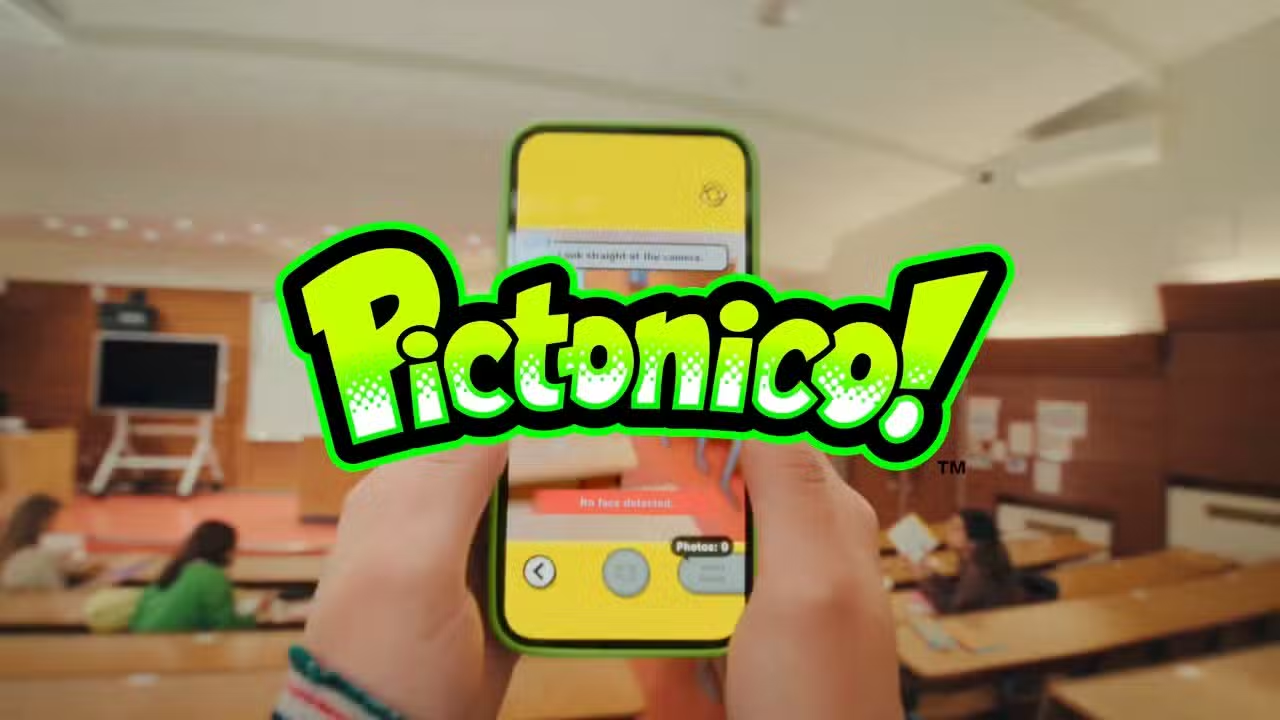
Nintendo has confirmed the launch of its latest application aimed at mobile devices, officially named Pictonico!. The software hits the global market on May 28, 2026, with versions developed specifically for the iOS and Android operating systems. The central proposal of the title is to use photographs captured by users to generate interactive and personalized experiences on the cell phone screen. Initial access to the system is free. Players can test the basic functionalities before deciding on financial investments within the platform.
The system’s operation is based on reading images present in the device’s gallery or recorded in real time by the smartphone’s camera. From this capture, the software applies algorithms to transform visual elements into scenarios, characters and challenges of different genres. The initiative marks another step for the Japanese company in expanding its portfolio outside of traditional consoles. The company seeks to reach a casual audience that consumes digital entertainment quickly and affordably. The commercial strategy adopts the format of outright purchases, moving away from the monthly subscriptions that dominate much of the current technology industry.
Mecânica game and image transformation
The technical difference of Pictonico! lies in its ability to interpret visual data and convert it into functional game mechanics. Quando the user selects a photograph, the system analyzes factors such as color palette, lighting, contours and highlighted objects. Esses elements serve as the basis for building unique stages. Matches can range from logic puzzles to virtual sports competitions and battles in closed arenas. The unpredictability of results encourages continuous experimentation with different types of everyday images.
In total, the application houses a catalog of 80 different minigames, which are unlocked as the user progresses and purchases additional packages. The variety of genres aims to cater to different player profiles. The title attracts everyone from those looking for quick challenges to wait moments to those who prefer longer problem-solving sessions. The interface was designed to be highly intuitive. The system requires few taps on the screen to start a game, which makes it easier to adopt by people who are not in the habit of consuming complex electronic games.
Além’s automatic phase generation, the software allows a degree of customization where the player can adjust the difficulty and rules of each minigame generated. Essa flexibility increases application lifetime. The same photograph can yield completely different experiences depending on the settings chosen before the start of the match. The developer focuses on replayability as one of the fundamental pillars to maintain the daily engagement of active users on the platform.
Modelo monetization and available packages
The financial structure of the project follows the model known as freemium, where the initial download from online stores does not require any prior payment. Users can download the app directly from App Store or Google Play and access a free demo. Essa initial release includes a limited number of minigames for you to try. Para release the complete catalog and remove usage restrictions, it is necessary to make purchases within the application ecosystem itself.
The sale of additional content was divided into specific packages, allowing consumers to choose the level of investment they wish to make. The values published for the European market serve as a basis for the global pricing of the product. Company-structured purchase options include:
- Pacote expansion 1: sold for a fixed price of €7.99.
- Pacote expansion 2: available at a price of €5.99.
- Acesso complete: full release of 80 minigames and all extra editing features.
An important feature of this commercial approach is the absence of recurring charges. Diferente services that require monthly or annual payments, purchases on Pictonico! are definitive. Once the package has been purchased, the content is permanently linked to the user’s account. Essa decision meets a growing demand from consumers. Muitos prefer to have possession of digital assets without worrying about automatic credit card renewals at the end of each month.
Privacidade data and local processing
The security of personal information was one of the central points during the development and programming of the application. Como’s main mechanics require the use of photographs that may contain users’ faces, locations and intimate moments, Nintendo has implemented a strictly local processing system. Image analysis and generation of minigames occur directly on the smartphone’s processor. The system eliminates the need to send files to external cloud processing servers.
The company has confirmed that no photographs are stored in its databases or shared with advertising partner companies. Após completion of the match, the application automatically deletes the visual records from its internal cache. The user maintains full control over their media gallery. The software requests clear permissions only at the exact moment the image will be used to create the virtual scene, ensuring transparency in the use of the device’s resources.
Internet connection is required on an occasional basis and restricted to specific actions. The device only needs to be online during the initial download of the application, the first launch to verify licenses and when processing expansion pack purchases. Após these mandatory steps, the vast majority of minigames work completely offline. The title allows use in locations without mobile network coverage or Wi-Fi signal, such as during commercial flights or traveling in remote areas.
Company’s Estratégia in the mobile device market
The launch of Pictonico! reflects the continuation of Nintendo’s strategy of diversifying its revenue sources beyond the sale of dedicated consoles and traditional physical games. The smartphone market has an installed base of billions of devices around the world. Esse volume offers a range that no specific video game hardware can match today. The strong presence in this sector allows the brand to reach consumers who would not invest in purchasing equipment exclusively for electronic games.
The company’s track record in the mobile segment includes significant commercial successes over the last decade. Previous Títulos, such as Pokémon GO and Fire Emblem Heroes, have demonstrated the viability of adapting established franchises and creating new intellectual properties for the paperback format. Esses apps have generated billions in revenue and served as marketing tools. Eles act as gateways for new audiences to learn about the company’s ecosystem, often later migrating to purchasing desktop consoles.
With this new project, the developer seeks to fill a specific gap in the casual entertainment market. Enquanto many options available in app stores focus on repetitive mechanics or excessive microtransactions, the current bet tries to combine the creativity of personal photography with an accessible game design. The public reception starting on May 28th will define the company’s next steps. Commercial performance will dictate the pace of development of future software that uses native cell phone features to create new forms of digital interaction.