

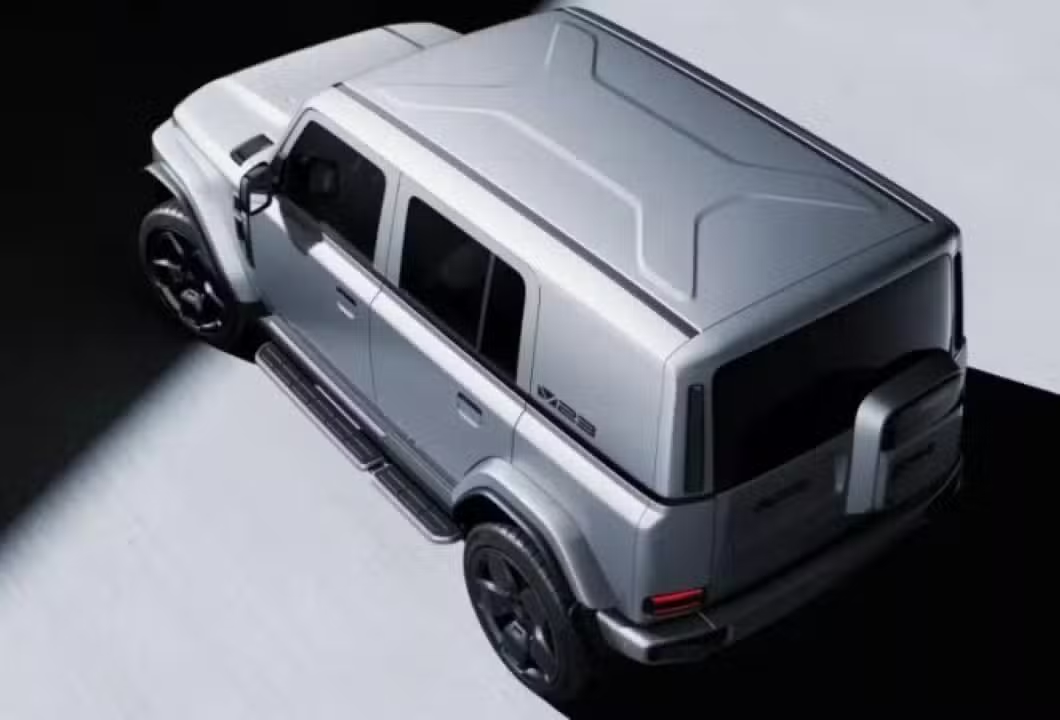
The automaker Chery began the testing phase of the iCar V23 electric sports utility vehicle on the streets of Índia. The compact model features features aimed at off-road use and a design inspired by classic vehicles. The operation in the Indian market will take place under the responsibility of JSW Motors. The schedule points to commercial launch in 2027.
The project seeks to serve consumers looking for an electric vehicle suitable for light trails and daily urban use. The manufacturer positions the car as a sustainable alternative in the robust utility vehicle segment. The model will face direct competition from the future Mahindra Thar Electric. The strategy involves local production to adapt costs to the reality of the Asian country.

Dimensões structural and uneven terrain capability
The visual design of the iCar V23 adopts straight lines and round headlights. The body has a high position in relation to the ground. Essa configuration conveys resistance and facilitates driving on unpaved roads. The square shape optimizes space in the cabin. The engineering maintained compact proportions to ensure agility in urban traffic.
The structure balances passenger comfort and load capacity. The body shape accommodates five adults. The trunk offers versatility for transporting luggage on long trips. Official vehicle dimensions include:
- Comprimento total 4,220 mm
- 1915mm Largura
- 1845mm Altura
- Distância 2,735 mm wheelbase
Technical capabilities for off-road use represent the focus of the project. The version equipped with all-wheel drive has an approach angle of 43 degrees and a departure angle of 41 degrees. Ground clearance varies between 205 and 210 millimeters, depending on the configuration chosen. Esses numbers allow you to overcome obstacles and rough terrain safely.
Large-diameter Rodas and reinforced bumpers make up the exterior of the vehicle. The design combines the robust appearance with the aerodynamic efficiency required by a battery-powered car. The suspension received specific calibration to absorb impacts from holes and rocks. Freios four-wheel discs ensure stopping power on different surfaces.
Desempenho of electric motors and system autonomy
The manufacturer offers two mechanical set options for the utility vehicle. The entry-level version has an engine installed on the rear axle, generating 136 horsepower and 180 Nm of maximum torque. The superior option has two engines and four-wheel drive. The integral system delivers 211 horsepower and 292 Nm of torque.
Acceleration from zero to 100 km/h occurs in 7.5 seconds in the all-wheel drive variant. The maximum speed reaches the electronic limit of 140 km/h in all versions. Electric thrusters provide instant response to the accelerator pedal. Modos selectable driving modes alter the car’s behavior according to the driver’s needs. Low-speed torque makes it easier to get out of jams.
Energy storage uses batteries with two different capacities. The available packages have 59.93 kWh and 81.76 kWh. The CLTC test cycle indicates a range of 401 kilometers for the smaller battery. The version with greater energy capacity reaches 510 kilometers on a single charge. Esses values make it possible to use the vehicle on road routes without the need for constant stops.
The electrical system supports fast recharging at direct current stations. Maximum charging power varies between 85 kW and 104 kW. The time required to recover energy depends on the infrastructure of the charging station used. Thermal management of the battery preserves the useful life of the components and maintains the efficiency of the set on days of intense heat or extreme cold.
Tecnologia internal and standard equipment package
The instrument panel concentrates functions on a central 15.4-inch screen. The multimedia system offers wireless connection for cell phones. The latest generation Processadores guarantees fluid navigation through the menus. The cabin has physical buttons to control the air conditioning and radio volume. Essa ergonomic choice prevents driver distraction during movement.
The safety package includes level 2+ advanced driving assistance systems. Controles traction and stability electronics act to correct the trajectory in emergency situations. The chassis structure uses high-strength steels to increase torsional rigidity. Testes impact impacts validate the protection offered to occupants in the event of frontal or side collisions.
The front seats have a ventilation system and full recline adjustment. The rear backrest adopts a split format to facilitate expansion of the cargo compartment. The interior features additional USB ports for charging electronic devices. A specific space organizes the vehicle’s charging cables. The sound system uses multiple speakers spread throughout the cabin.
The elevated driving position improves visibility of traffic ahead. The materials used in the interior finish withstand severe use and exposure to dust. Filtros air purifiers purify the closed environment. The assembly of the parts prioritizes the absence of noise on bumpy roads. The proposal combines external rusticity with the technological comfort required by today’s consumer.
Estratégia production and positioning in the Indian market
JSW Motors prepares the infrastructure for manufacturing the model on Índia. The assembly line will operate in a new industrial unit located in the Maharashtra region. The start of series production will take place in 2026. The product will arrive at Indian dealerships throughout 2027. The nationalization of components will reduce import costs.
Commercial planning aims to establish a competitive price for the electric utility. The brand seeks to attract young audiences and outdoor activity enthusiasts. The offer of all-wheel drive and a range of over 500 kilometers sets the model apart from other urban cars. The strategy anticipates the launch of direct competitors in the battery-powered adventure vehicle segment.
The Mahindra Thar Electric represents the main target of the new utility in the Asian market. Ambos vehicles exploit boxy visual appeal and the ability to overcome natural obstacles. The Chery model relies on more compact dimensions to gain an advantage in energy consumption. The reduction in operating costs per kilometer driven attracts buyers concerned about their monthly budget.
The electric car market at Índia has recorded continuous growth in recent years. Public charging infrastructure receives government and private investment to expand coverage on highways. The introduction of off-road SUVs expands the options available to local drivers. The testing period on public roads serves to adapt the suspension and engine software to the specific conditions of Indian asphalt.