

Consumidores often come across a variety of labels in the meat aisles, from Estados Unidos (USDA) ratings of Departamento and Agricultura to terms like “grass-fed” and “dry-aged.” The complexity of these seals and designations raises doubts about their true meaning and impact on product quality. Muitos wonder if they indicate superior meat or if they are mere marketing strategies to influence purchases.
Para To clarify these questions, Peter Mistretta, a professional with extensive experience in beef supply, who previously managed beef programs for Baldor Specialty Foods and Julius Silvert before his current position as Vice President of Business Development at Darik Enterprise Inc, shares his perspective. Ele emphasizes that understanding these labels is critical to making an informed choice, but warns that the official classification is just one piece of the puzzle.
Classificação USDA and the role of marbling
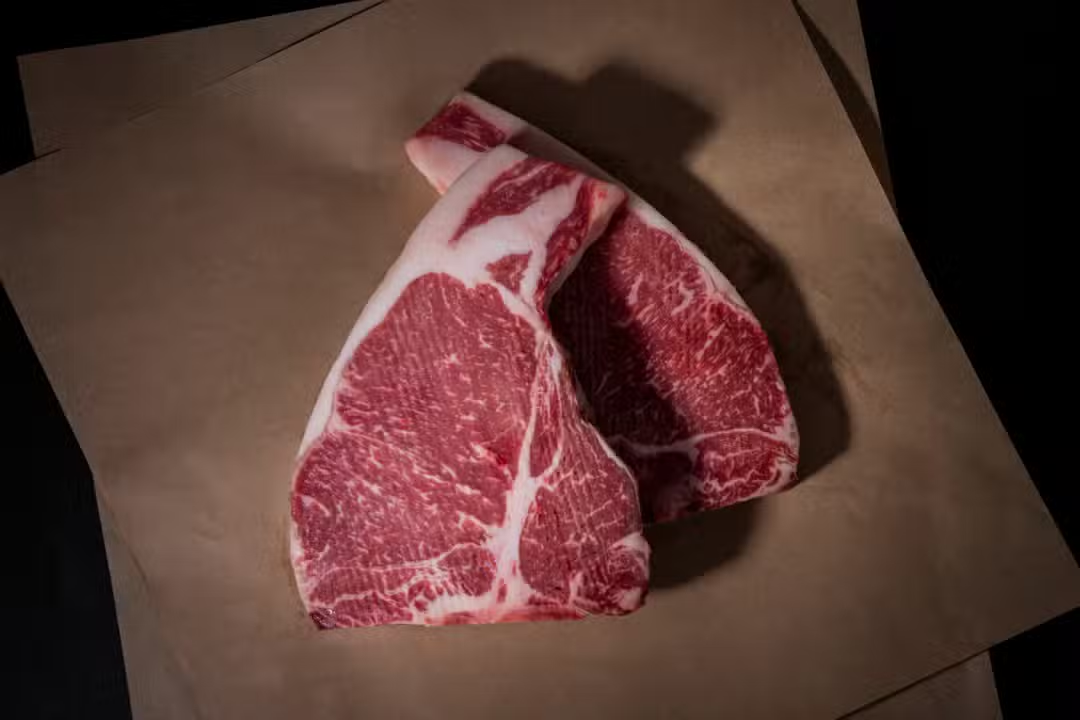
The Departamento of Agricultura of the Estados Unidos (USDA) establishes ratings that serve as a primary guide to the quality of beef in the American market. Essas categories include Prime, Choice and Select, primarily reflecting the degree of marbling found in the meat. Prime meat, for example, is recognized for having the highest marbling content, which are the small veins of fat interspersed in the muscles. Este higher level of intramuscular fat generally translates to greater flavor and tenderness, explaining why Prime cuts often fetch higher prices compared to other ratings for the same type of cut.
The Choice classification follows Prime in terms of marbling, still offering good quality, but with a significantly greater range of variation. Mistretta points out a vast discrepancy in quality within the Choice category itself. Ele notes that “there is a huge variation in quality” within this designation, which applies to a vast percentage of the beef available to consumers. Therefore, a steak classified as USDA Choice may appear lean and low in fat, while another with the same label exhibits marbling remarkably close to that of an Prime steak. Essa inconsistency is crucial for consumers to consider when making their purchases.
Além of the label: visual inspection is decisive
Mistretta advises consumers not to blindly trust the USDA rating alone. His recommendation is to carefully observe the marbling in the meat before making the purchase. The visual appearance of the piece of meat, with the presence and distribution of fat, can be a more faithful indicator of the flavor and tenderness experience that the consumer will have at home. Essa proactive approach avoids surprises and ensures that the investment in meat brings the expected results. The trained eye to identify good marbling can be more effective than any stamp printed on the package.
Desvendando the specific terms on steak labels
Além of the USDA classifications, several other terms appear on the labels, adding layers of information that can confuse the consumer. Understanding what each one really means is vital for a purchasing decision aligned with individual expectations of flavor, texture and production ethics.
- Maturação dry:Este processing method allows the meat to develop complex and peculiar flavors, which can range from nutty notes to a touch of cheese. Embora valued by many gourmets, Mistretta emphasizes that dry aging does not automatically guarantee superior meat. Inadequate execution of the process can lead to unsatisfactory results, where the expected flavors do not develop correctly or the meat loses quality.
- Alimentado on pasture (Grass-fed):Meat from exclusively grass-fed cattle tends to be leaner and darker in color. In some cases, this meat may be less tender compared to meat from grain-fed animals. The production process for grass-fed animals can also be longer, which often results in a higher cost to the consumer as “time is money” in the livestock industry.
- Criado in pastures (Pasture-raised):The image of animals grazing freely is very appealing to many consumers concerned about animal welfare. Contudo, Mistretta warns that regulations for the term “pasture-raised” are less stringent than one might imagine. Geralmente, the label refers to the animal’s access to pasture, not necessarily indicating that the animal spent most of its life consuming forage in open fields.
- ABF (Antibiotic-Free):Esta acronym simply means that the animal was raised without the use of antibiotics. It is a straightforward designation that addresses animal health and welfare concerns by consumers who wish to avoid products treated with these substances.
- Orgânico:The “organic” certification granted by the USDA is more comprehensive. Ela encompasses a series of rigorous standards that apply to the animal’s food, the use of the land where it was raised and general production methods. Organic meat, therefore, guarantees that various stages of the production chain followed specific guidelines for sustainability and purity.
Does steak labeling really matter?
In summary, Peter Mistretta argues that many of the labels available on the market have the function of communicating the production methods used, and not necessarily the inherent quality of the final product. Para he, quality can vary widely even within the same classification category, especially in wide-ranging seals such as USDA Choice. Portanto, sole reliance on labeling may not be the most effective strategy to ensure a satisfactory purchase.
Mistretta emphasizes the importance of consumers conducting their own research. Essa investigation should focus on what is most relevant to each person, considering aspects such as desired taste, nutritional value and, crucially, price. An active search for information and the development of a critical sense about meat are essential steps. Fazer friendship with your local butcher and answering questions directly can be a valuable strategy, allowing access to expert knowledge and personalized recommendations.
Para optimizes cost-benefit, Mistretta prefers to buy “whole, firmer and relatively cheap cuts”. Ele suggests that these cuts can be boned at home and make several meals, maximizing use and minimizing expenses. Essa The same tactic can be applied to noble cuts. Purchasing whole loins or ribs in large quantities, followed by portioning and freezing for future use, can yield “tremendous savings, often several dollars per pound.” By choosing the entire piece of meat, the consumer has greater control over cost and quality. Assim, when buying steak in the supermarket, the recommendation is to focus on the appearance of the meat, look for good marbling and, whenever possible, question the sellers before finalizing the purchase.