

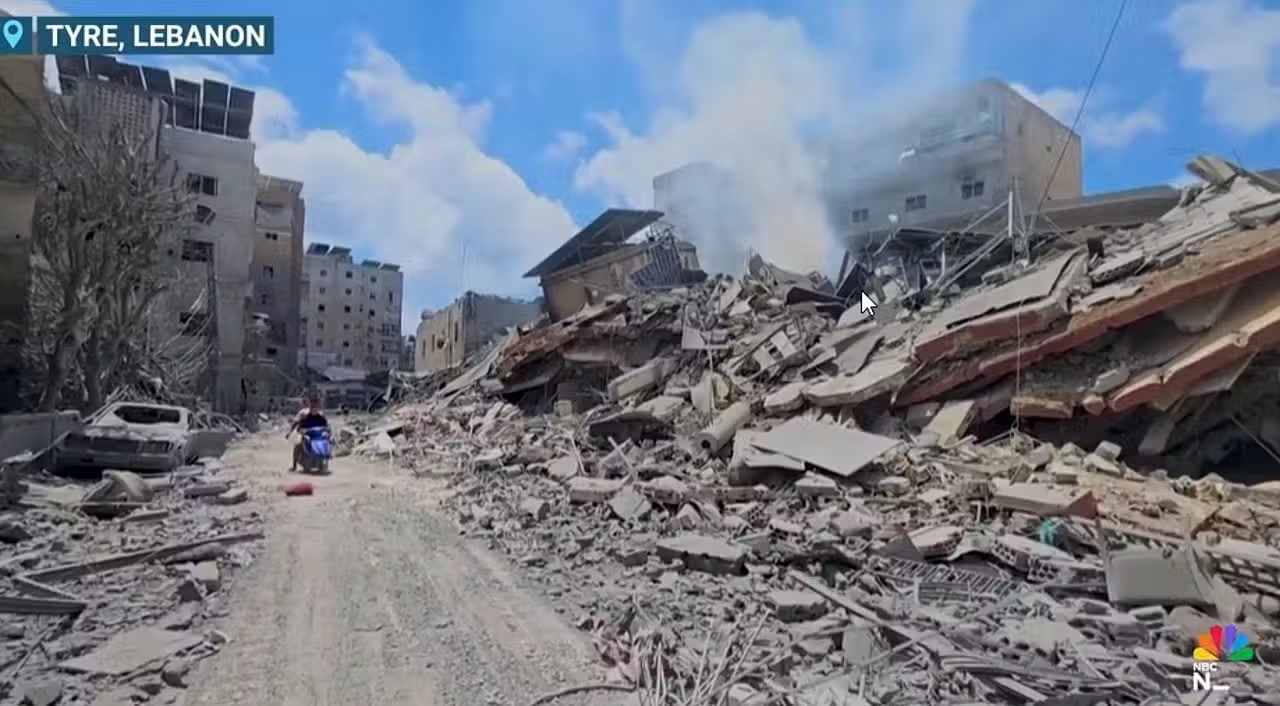
Forças Israelis captured the strategic Beaufort Ridge in Líbano, crossing Litani River and consolidating Israel’s deepest incursion into the country in 26 years. The advance comes after days of intense fighting in southern Líbano, triggering a “dramatic change” in Israeli strategy, as stated by Prime Minister Benjamin Netanyahu.
Military action intensifies regional tensions, defying expectations of a peace plan mediated by Estados Unidos. Autoridades Israelis have signaled their intention to expand direct control over more Lebanese territories, raising concerns about a possible prolonged occupation. The offensive continues despite a nominal ceasefire agreement in force for a month, with mutual accusations of violation between Israel and the militant group Hezbollah, supported by Irã.
Captura of Beaufort Ridge and Nova Estratégia
The seizure of the Beaufort outpost, site of a medieval castle, represents a significant milestone in the current climb. Benjamin Netanyahu confirmed the military operation, highlighting the strategic importance of the location. Sua’s direct instruction is to “deepen and expand” control over areas previously dominated by Hezbollah, fundamentally altering the policy led by the Israeli government.
Defesa minister Israel Katz emphasized the importance of capture in speech. Ele stated that the Israeli flag “once again flies over the peaks overlooking Galileia’s communities.” Katz added that the soldiers who took Beaufort will remain in place, forming a security zone in Líbano, and reinforced Israel’s determination to “crush” Hezbollah, active in the south of Líbano, close to the border with the north of Israel.
Histórico and Importância Estratégica
Israeli troops had previously captured Beaufort Ridge in 1982, during Líbano’s second invasion. The site remained under Israeli control until the country’s withdrawal in 2000. The current resumption reopens a long-standing chapter in the complex military relationship between the two nations.
UNESCO, the UN cultural agency, had expressed “deep concern” before the capture. The entity expressed alarm at the Israeli attacks near Castelo of Beaufort, which has provisional protection status. Historic Locaiss of this nature, UNESCO stressed, must receive the “highest level of legal protection against attack and use for military purposes.” The crossing of Litani River and subsequent capture of Beaufort Ridge drastically raises the level of the ongoing conflict.
Chamados by Ocupação Permanente and Repercussões
Litani River has cemented itself as a *de facto* border in Líbano since the 1982 Israeli invasion. Extensas areas south of the river have come under Israeli military control. Local Residentes were ordered to evacuate, and Israel forces destroyed bridges over the river, claiming they were used by Hezbollah for weapons smuggling and movement of fighters.
Amid this scenario, fears of a long-term occupation are growing. Alguns segments in Israel openly call for permanent control of southern Líbano, citing the security advantages this would provide. An editorial in Jerusalem Post in March recalled David Ben-Gurion, Israel’s prime minister, who identified Litani as a natural northern border for the Jewish state.
- 1982:Tropas Israelis capture Beaufort Ridge during Líbano’s second raid.
- 2000:Israel withdraws its forces from Líbano, including Beaufort’s area.
- 2026:Forças Israelis retake Beaufort Ridge, marking deepest foray in 26 years.
- Ultracionalistas:Pedem permanent occupation of southern Líbano and more severe actions against Beirute.
- UNESCO:Expressa concern about attacks close to Castelo of Beaufort, cultural heritage.
The calls were renewed among Israeli ultranationalists last Sunday. Finanças’s Israel minister, Bezalel Smotrich, described Beaufort Ridge’s seizure as a “correction of old national sins.” Ele publicly called for a permanent occupation of the region. Segurança Nacional’s minister, Itamar Ben Gvir, had already pressured Netanyahu on Saturday to go further, suggesting “flattening” parts of Beirute. Fawaz Gerges, professor of international relations at London School of Economics, warned of the risk of Israel engaging in an “forever war” on Líbano, even with the ability to occupy a “massive swath” of territory.
Cenário Regional and Impacto Humanitário
The Israeli conflict in Líbano is the most lethal development of the war with Irã. Mais of 1.2 million Lebanese have been displaced by Israeli strikes and evacuation orders since March 2. The situation worsened after Hezbollah fired at Israel in support of their ally Teerã.
Alguns of the displaced returned home after the initial ceasefire, but Israel continued to issue evacuation orders. Israeli Ataques in Líbano killed more than 3,350 people, according to Ministério data from Lebanese Saúde. Israel reports the deaths of 25 of its soldiers and 2 civilians in or near the south of Líbano in the same period. Dois civilians also lost their lives north of Israel.
Negociações of Cessar-Fire and Pressões Internacionais
Líbano Prime Minister Nawaf Salam declared on Friday that “nothing can justify” Israel’s attacks against the country. The statement came after the IDF bombed Tiro, Líbano’s fourth-largest city, in a wave of attacks in the south that killed at least 14 people. Salam classified the continued attacks, threats and evacuation orders as “collective punishment”, condemned by all international norms and laws.
The violence at Líbano coincides with negotiations between Estados Unidos and Irã to extend the ceasefire in the ongoing war between the two nations. Irã conditioned any ceasefire with the US on the end of the conflict in Líbano. A senior Arab official involved in the mediations said American and Iranian negotiators agreed on the terms of a truce agreement days ago, but both sides delayed finalizing and announcing it. Gerges warned that Israel’s broader offensive on Líbano threatens to “undermine and torpedo” any agreement between the US and Irã, underscoring the need for President Donald Trump to intervene to pressure Netanyahu.