

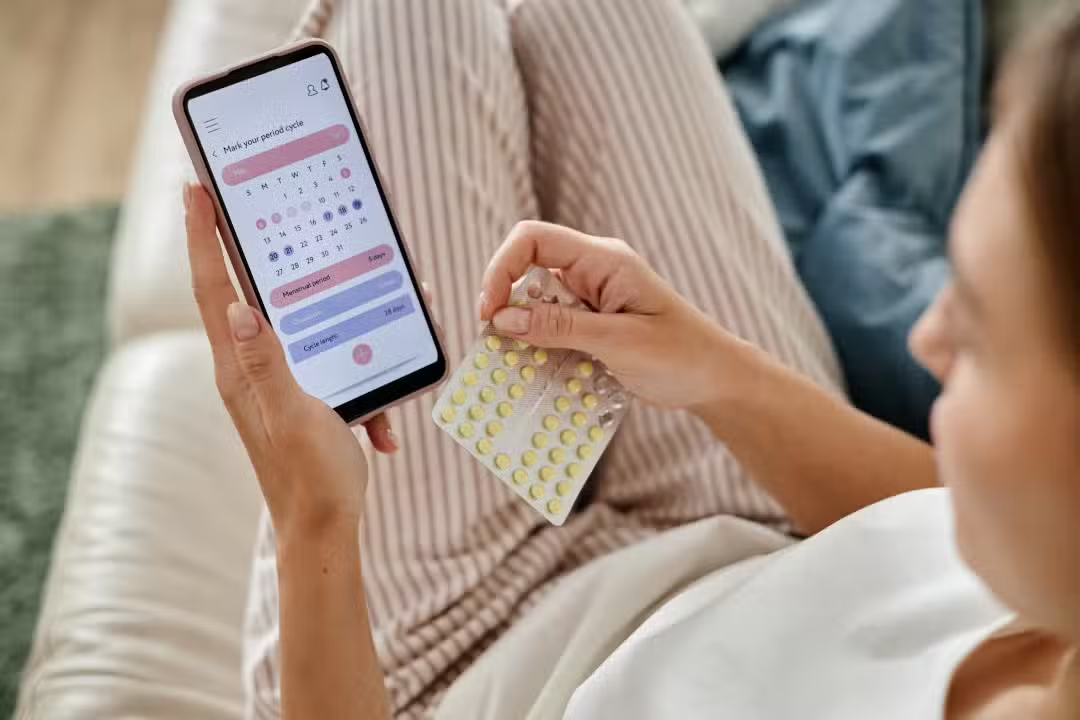
The Natural Cycles app begins official operations on Brasil next week as a new non-hormonal contraception alternative. The digital tool has received approval from Agência Nacional of Vigilância Sanitária (Anvisa) to act specifically as a medical device aimed at preventing pregnancy. The decision is unprecedented in the country. The system uses body data analysis to identify a woman’s fertile and infertile periods.
The official presentation of the technology takes place during the 63rd Congresso Brasileiro of Ginecologia and Obstetrícia (CBGO 2026), held in the city of Belo Horizonte, in Minas Gerais. The launch is supported by Federação Brasileira, Associações, Ginecologia and Obstetrícia (Febrasgo), which guides healthcare professionals on the clinical application of the method. The platform was adapted for the national audience, with an interface in Portuguese and payment processing in reais, and is recommended for women aged 18 and over.
Aprovação from Anvisa and arrival on the national market
The regulatory process for releasing the tool in Brazilian territory required proof of safety and effectiveness criteria. Anvisa issued the seal of approval in March 2025, classifying the software as a valid contraceptive method. Esta certification differentiates the system from other platforms available in application stores, establishing a clinical standard for the company’s operation in the country. The technical analysis considered clinical test reports and the database accumulated by the developer over the years of operation abroad.
The release from the federal agency meets a growing demand for family planning options that do not require the intervention of synthetic hormones. Natural Cycles’s country manager at Brasil, Taurã Figueiredo, explained that the introduction of digital contraception represents a change in the way science and information reach clinics. The executive highlighted that the advancement of this category depends on building clinical trust and correct understanding on the part of doctors and patients.
The company works to provide structured data to ensure experts understand the specifics of the device. The international validation of the platform facilitates acceptance in the domestic market, as the system already operates in more than 30 countries. The launch strategy prioritizes ongoing medical education and transparency about the limits and capabilities of the algorithm. The introduction of technology based on data intelligence in the field of gynecology requires a paradigm shift in clinical care, transferring part of the monitoring responsibility to the patient’s own routine.
Diferenças Between Monitoring Applications and Medical Devices
Febrasgo recently published an instructive document to clarify the distinctions between technologies linked to female fertility. The medical entity emphasizes the need to separate digital tools into two main categories to avoid failures in family planning. Understanding these classifications guides users about the level of protection offered by each program installed on their smartphones.
The first category includes menstrual monitoring apps, which work exclusively as virtual diaries. Estes software allows the recording of bleeding dates and physical symptoms, but has no scientific basis or laboratory tests to prevent pregnancy. The function of these platforms is restricted to monitoring the cycle, without any claim or contraceptive certification.
The second category covers digital medical devices, which undergo rigorous testing and require approval from health authorities. Natural Cycles falls into this group, being the only application certified by Anvisa to act as a contraceptive method in Brasil. The development of these programs involves the application of complex algorithms and the analysis of large volumes of physiological data to deliver accurate results. The certification process for a digital medical device requires proof that the software not only records data, but performs diagnostic or therapeutic functions with a margin of error controlled and auditable by health authorities.
Funcionamento algorithm and temperature measurement
The Natural Cycles system is based on an intelligent algorithm that interprets each user’s individual biological signals. The technology moves away from traditional tables, which use standardized and fixed mathematical calculations for all women, regardless of biological variations. The personalized approach increases accuracy in detecting the fertility window, adapting to the body’s natural fluctuations throughout the month.
Correct use of the method requires the incorporation of a daily routine for collecting and inserting data into the application. The process is divided into fundamental steps to ensure the effectiveness of the algorithmic calculation:
- Measurement:The user measures their basal body temperature immediately after waking up, using a specific thermometer or compatible wearable devices. Equipamentos as well as Apple Watch, Oura Ring, Garmin Watch and the NCº Band bracelet can automatically detect thermal variations, including during sleep.
- The record:Temperature indicators and complementary data about the menstrual cycle need to be entered into the platform every day. Continuous feeding of the database is essential for the training and accuracy of the intelligent system.
- The result of the day:The software processes the information and displays the risk of pregnancy for the next 24 hours using a color code. Days classified as red indicate the fertile period and require the use of a condom, while green days indicate safety for unprotected sex.
The accuracy of the daily diagnosis directly depends on the user’s discipline in measuring basal temperature. Fatores external factors such as alcohol consumption, sleepless nights or fever can change body temperature and must be signaled in the application. The algorithm recognizes these anomalies and adjusts the calculation, prioritizing safety and classifying the day as red in case of doubt. Consistency in thermal data collection forms the mathematical basis that allows the software to predict ovulation in advance, ensuring that the risk window is identified even before the egg is released.
Taxas of effectiveness and security of user data
The scientific validation of Natural Cycles involved clinical studies with the participation of more than 60 thousand women in different regions of the world. Surveys show that the effectiveness of the digital method reaches 98% in the perfect use scenario, when the patient follows all instructions without making mistakes. The index is high. In the typical usage scenario, which encompasses everyday reality with possible forgetfulness or registration errors, the protection rate is established at 93%.
The rates are similar to traditional short-acting contraceptive methods. The common contraceptive pill, for example, registers 99% effectiveness in perfect use and the same 93% in typical daily use. Failures in the oral method occur due to delays in ingestion, missed doses, drug interactions or gastrointestinal problems, according to information from Ministério of Saúde and Organização Mundial of Saúde (WHO).
The credibility of the algorithm receives endorsement from highly technical international regulatory agencies. Além of Brazilian release, the software has certification from the FDA, the health and food control body of Estados Unidos. Na Europa, the tool bears the Mark CE seal, which attests to the product’s compliance with the continent’s safety, health and environmental protection standards.
The platform’s history began in 2013, with the work of physicists Elina Berglund Scherwitzl and Raoul Scherwitzl. The founder was looking for a non-invasive alternative to her own family planning and applied data science concepts to create the program. Hoje, the company’s information bank, processes more than 20 million menstrual cycles, coming from 6 million active users.
Managing this massive volume of sensitive data requires strict information security protocols. The application’s infrastructure uses advanced encryption systems and pseudonymization techniques to delink health records from women’s real identities. Estas layers of digital protection block unauthorized access and guarantee the privacy of intimate information stored on the company’s servers. The company’s privacy policy prohibits the sale of physiological data to third parties, ensuring that the business model is supported exclusively by subscriptions paid by users who use the service.