

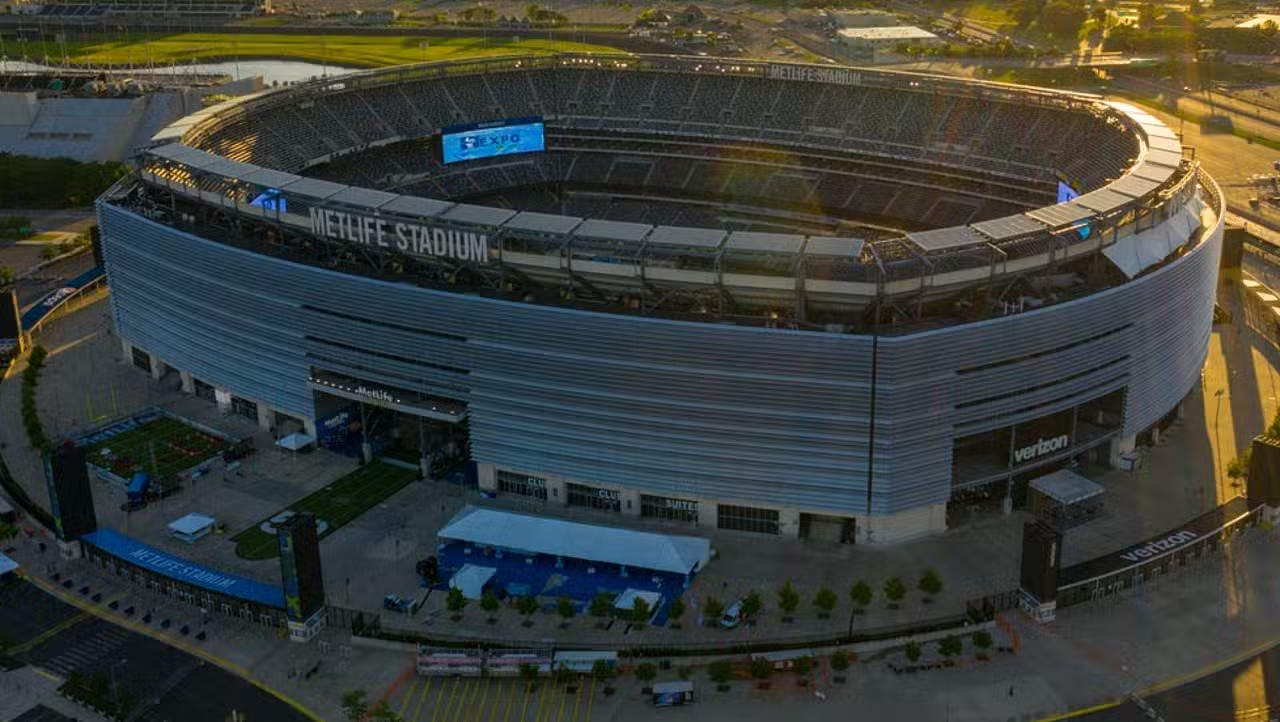
The 2026 Mundo Copa is shaping up to be the biggest tournament in history, involving a record number of stadiums and host countries. A total of 16 venues will host matches in the Estados Unidos, México and Canadá, each with a rich history and unique architectural features that shape the past and future of the sport in their respective cities. FIFA approved the official stadium names for the tournament, ensuring compliance with the entity’s clean facilities rules and moving away from sponsored names.
Esses stadiums were selected for their ability to host major events, modern infrastructure and their communities’ passion for football. Preparation involved significant renovations, including adapting pitches to FIFA standards and adjusting capacity to accommodate global audiences. The choice of multiple countries to host the competition reflects the scale of the event and the regional collaboration in América of Norte.
Copa of Mundo FIFA 2026: 16 venues in three nations
Copa of Mundo FIFA 2026 will mark the first time that three different nations, Canadá, México and Estados Unidos, will share the responsibility of hosting football’s most prestigious event. Esta expanded edition of the tournament will feature 16 carefully selected stadiums, each set to offer a memorable experience for players and fans. The venues are distributed geographically, covering a vast area of the continent and allowing different cities to showcase their passion for sport.
Preparations for the event included technical and structural adaptations to many of the locations. The implementation of imported natural lawns and the installation of modern technologies were crucial points. The official FIFA capacity for each stadium has been adjusted, aiming for the best experience during games.
Canadian Arenas: BC Place Vancouver and BMO Field Toronto
The Canadá will be represented by two notable stadiums, the BC Place Vancouver and the Estádio of Toronto (BMO Field). The BC Place Vancouver, opened in 1983 and renovated in 2011, has a capacity for 54,000 fans. Sua most striking feature is the retractable roof supported by cables, considered the largest in the world in its category. Embora roof may cast unusual shadows, reports indicate that it will remain closed during Copa and Mundo due to concerns about uneven sunlight on the natural lawn.
Estádio by Toronto (BMO Field), opened in 2007 and expanded in 2016, will feature a capacity of 45,000 spectators thanks to the addition of more than 17,000 temporary seats at the south end. Originalmente A modest stadium for MLS side Toronto FC, it has undergone several improvements, such as new LED screens and a modern sound system, giving it a European feel.
Símbolos Mexicans: Estádio Guadalajara, Estádio of Cidade of México and Estádio Monterrey
México, with its rich football tradition, will house three iconic stadiums. Estádio Guadalajara (Estádio Akron), opened in 2010 and with capacity for 48,000 people, stands out for its external facade that resembles an erupting volcano, designed by architects Jean-Marie Massaud and Daniel Pouzet. Grande part of the structure is set into an artificial grass-covered hill, and only the 360-degree roof rises above it.
Estádio of Cidade of México (Estádio Azteca), opened in 1966, is the most iconic of the Copa of Mundo stages, with capacity for 83,000 fans. Passou has undergone recent extensive renovations and is the world’s eighth largest stadium used for football. Foi the first to host two Copa Mundo finals (1970 and 1986). The Cidade’s altitude of 2,200 meters above sea level creates a challenging environment for adversaries.
The Estádio Monterrey (Estádio BBVA), opened in 2015 with a capacity for 53,500 people, offers a magnificent view of the Cerro from the Silla. Apelidado’s “steel giant”, the stadium has a sustainable design and a cantilevered roof to block sunlight and allow air circulation, refreshing México’s northeastern environment.
Costa Oeste of Estados Unidos: Seattle, Bay Area and Los Angeles
Estados Unidos’s Costa Oeste will be the stage for important clashes, with three modern stadiums. Estádio de Seattle (Lumen Field), opened in 2002, has a capacity for 69,000 fans and is located in the urban center of the city, on the former Kingdome ground. Sua’s unique architecture includes a roof covering most of the side bleachers, a pyramid-shaped grandstand, and several works of public art, such as Bob Houzous’s “Earth Dialogue”. The tremors in the crowd are so intense that they are detected by seismographs.
Estádio’s Área’s Baía’s São Francisco (Estádio Levi’s), opened in 2014, has a capacity for 71,000 people. Construído to replace the historic Candlestick Park, is praised for its eco-friendly design and excellent visibility. Contudo, the upper stand exposes fans directly to the sun, causing heat stress problems in day and night games.
The Estádio of Los Angeles (SoFi Stadium), opened in 2020, with a capacity for 70,000 spectators, cost around US$5 billion. Sua semi-transparent cover, which extends over 93 thousand square meters, covers the entire structure and allows light to pass through. The stadium, home to two NFL teams, usually uses synthetic grass, but for Copa’s Mundo it required a FIFA-approved natural turf, which required the demolition of some rows of permanent seats.
Gigantes Americans: Dallas, Houston, Kansas City, Atlanta, Miami, Boston and Filadélfia
The rest of Estados Unidos contributes to seven giants of engineering and sports culture. Estádio of Dallas (Estádio AT&T), known as Jerry World, opened in 2009, stands out for its capacity of 94,000 people, the largest of all Copa stadiums of Mundo 2026. The stadium’s dome, with two 91-meter-high arches, is one of the tallest in the world. Espera The retractable roof must remain closed during the tournament.
The Estádio of Houston (NRG Stadium), opened in 2002, was the first with a retractable roof to be used in the NFL. With a capacity for 72,000 spectators, it is covered in fabric and offers abundant natural light, although the roof must remain closed during Copa.
Estádio of Kansas City (Estádio Arrowhead), opened in 1972 and renovated in 2010, is the oldest of the Estados Unidos in Copa, but still fully operational with 73,000 seats. Distingue stands out for its curved silhouette at the top and the proximity of the seats in the corners.
The Estádio of Atlanta (Estádio Mercedes-Benz), opened in 2017 with 75,000 seats, features a retractable weathervane roof design and a glass wall for exterior views. The pricing policy for snacks and drinks, similar to external prices, is a differentiator for the fan experience.
The Estádio of Miami (Hard Rock Stadium), opened in 1987, has undergone a major transformation over the years, with the addition of a canopy over most of the seats, giving it a more traditional feel. With 65,000 seats, it has hosted six Super Bowls and is the venue for the Miami Open tennis tournament.
The Estádio of Boston (Estádio Gillette), opened in 2002 and with a capacity of 65,000 people, replaced the old Foxboro Stadium. Apresenta a cutout in the grandstand in the northeast corner and a replica lighthouse offering panoramic views of the stadium and Patriot Place.
Finally, the Estádio of Filadélfia (Lincoln Financial Field), opened in 2003, seats 69,000 fans and is a huge exposed steel structure. One
Jogos from Copa from Mundo from 2026 in select locations
-
- Estádio of Nova York/Nova Jersey (MetLife Stadium):
* Brasil x Marrocos, June 13
* França x Senegal, June 16
* Noruega x Senegal, June 22
* Equador x Alemanha, June 25
* Panamá x Inglaterra, June 27
*Oitavas from final, June 30
*Oitavas from final, July 5th
* Final, July 19
-
- Estádio of Dallas (Estádio AT&T):
* Holanda x Japão, June 14
* Inglaterra x Croácia, June 17
* Argentina x Áustria, June 22
* Japão x Suécia, June 25
* Jordânia x Argentina, June 27
*Oitavas from final, June 30
*Oitavas from final, July 3
*Oitavas from final, July 6th
* Semifinal, July 14
-
- Estádio of Miami (Hard Rock Stadium):
* Arábia Saudita x Uruguai, June 15
* Uruguai x Cabo Verde, June 21
* Escócia x Brasil, June 24
* Colômbia x Portugal, June 27
* Oitavas from final, July 3
*Quartas from final, July 11
* Disputa for third place, July 18