

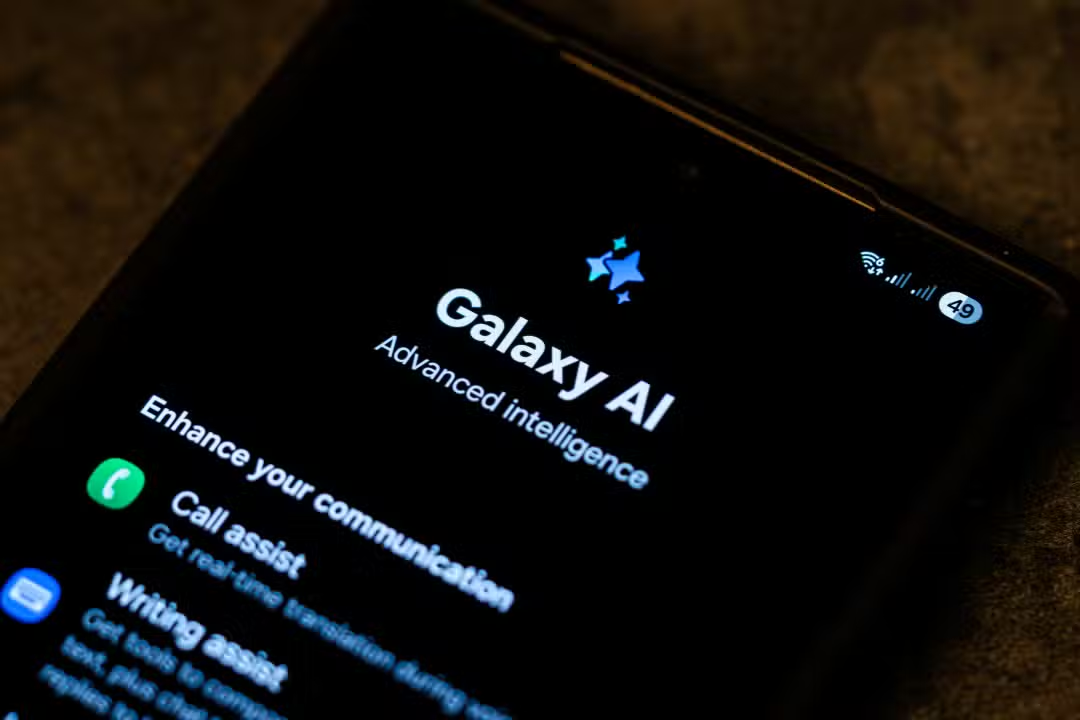
The integration of artificial intelligence into mobile devices reaches a new phase with Samsung’s decision to expand the Galaxy AI system to earlier lines of smartphones and tablets. The South Korean manufacturer has started rolling out the One UI 6.1 update, which brings automation, translation and editing tools, originally exclusive to the Galaxy S24 series, to a broader portfolio of devices. The measure changes the dynamics of the technology market in 2026, consolidating software as a decisive factor in the choice of electronic equipment.
The feature suite utilizes a hybrid architecture that merges on-premises processing and cloud operations to ensure speed and security. The company’s strategy aims to extend the useful life of premium models from past generations, delivering features that optimize users’ routines. The movement requires complex software engineering adaptations so that older processors can execute advanced algorithms without compromising battery life or the fluidity of the operating system.

Tradução simultaneous and local data processing
The Live Translate feature operates as a personal interpreter integrated directly into the smartphone’s native dialer. The tool performs two-way translation of voice and text calls in real time, eliminating the language barrier in international communications. The system converts the user’s speech into the interlocutor’s language and vice versa, also generating a text transcription on the device’s screen. The functionality eliminates the need to install third-party applications and works even when the other person on the line uses a landline or a device from a competing brand.
Information security represents a central pillar in the architecture of this translation tool. Data processing occurs completely locally, using the device’s own neural processing unit. Esta approach ensures that the content of telephone conversations does not pass through external servers, preserving users’ privacy during corporate negotiations or personal contacts. Native execution also reduces translation latency, providing more natural dialogue with fewer interruptions caused by delays in artificial intelligence processing.
Parceria with Google and advanced image editing
The collaboration between the South Korean manufacturer and Google resulted in the implementation of the Circle to Search function, which modifies the search pattern on mobile devices. The user just needs to press and hold the central navigation button to activate the tool over any application in use. From this command, you can circle, highlight or tap any element on the screen, such as images, videos or texts, to obtain immediate search results. The technology eliminates the need to switch between applications or type terms in the browser, speeding up obtaining information.
In the field of digital photography, the Photo Assist uses generative artificial intelligence to offer professional-grade editing options. The tool allows device owners to resize, reposition or remove unwanted objects from images with a few taps on the screen. Quando an element is moved or deleted, the system analyzes the visual context and fills the empty space with textures and colors corresponding to the original background. The feature also adjusts the photo’s global illumination and corrects distorted angles, generating results that previously required complex editing software on desktop computers.
Productivity and Text Organization Ferramentas
The corporate environment and the academic sector receive direct support through updates to the Samsung Notes application. The Note Assist functionality acts as an automatic organizer for digital notes, capable of structuring long, confusing texts into clear, readable formats. Artificial intelligence identifies the main points of the document and generates accurate summaries, in addition to creating personalized covers that make it easier to find files in the gallery. The system also translates entire documents and corrects typos, turning quick drafts into reports ready for professional sharing.
Recording meetings and lectures gains greater utility with the introduction of Transcript Assist. The feature converts audio files into written text with high accuracy, even in environments with moderate background noise. The technology has the ability to identify and separate the speeches of multiple interlocutors, attributing each part of the transcription to the correct person. Após audio conversion, the user can ask the system to prepare an executive summary of the topics discussed, optimizing the time spent reviewing extensive meetings or university classes.
Otimização communication and compatible devices
Daily communication management receives improvements through Chat Assist, a tool integrated into the operating system’s virtual keyboard. The feature analyzes the context of received messages and offers support on different fronts of digital interaction. Main functions include:
- Ajuste message tone, allowing you to transform a casual text into a formal response suitable for the work environment, or adapt the language for social networks.
- Revisão spelling and grammar in real time, which identifies inconsistencies and suggests corrections before the final text is sent.
- Geração quick responses based on recent conversation history, providing coherent options to keep the dialogue flowing in times of rush.
The expansion of these technologies occurs through the One UI 6.1 software update, which has begun to be released globally. The official list of compatible devices includes the Galaxy S23 line smartphones, the Galaxy Z Fold5 and Galaxy Z Flip5 foldable screen models, as well as the Galaxy Tab S9 series tablets. The inclusion of these devices in the artificial intelligence ecosystem demonstrates the company’s effort to maintain the relevance of its products in the secondary market and reward the consumer base that invested in high-performance equipment in previous years.
Impacto on the mobile device market in 2026
Adapting artificial intelligence capabilities to older hardware presents a significant challenge for development teams. Software engineers needed to optimize algorithms to ensure that local processing does not cause overheating or drain the battery of last-generation devices. Maintaining the fluidity of the operating system required fine adjustments in memory allocation and power management, ensuring that the new functions operate with the same stability found in the most recent models launched by the brand.
The technology market scenario in 2026 indicates that the presence of artificial intelligence tools has become a basic requirement for consumers. The decision to purchase a smartphone is no longer based solely on physical specifications, such as camera quality or processor speed, but rather on the software ecosystem offered by the manufacturer. Samsung maintains research teams dedicated to improving the efficiency of local processing, seeking to ensure that future updates continue to deliver practical innovations without compromising the performance of devices already in users’ hands.