

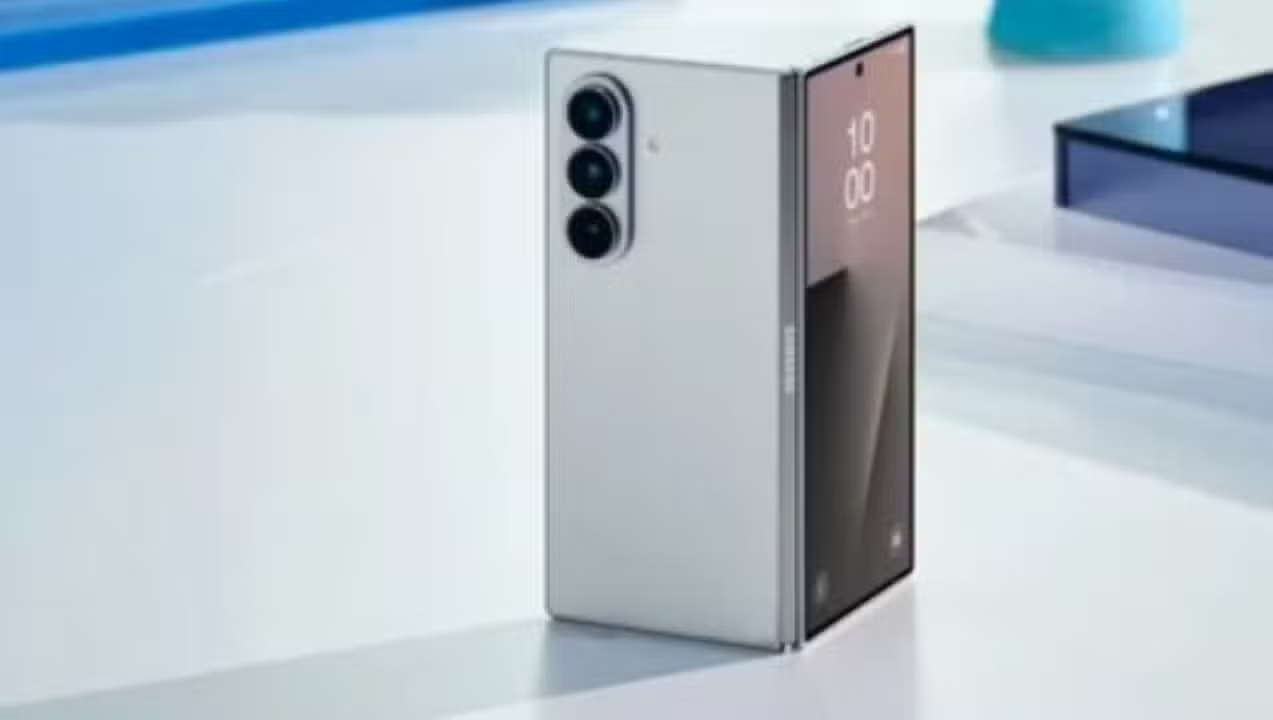
The Samsung prepares the launch of the Galaxy Z Fold8 for the month of July 2026 with significant updates to its internal structure and energy capacity. Recent Informações released by sources linked to the supply chain detail the technical specifications of the South Korean manufacturer’s new foldable device. The device maintains the visual identity of the previous generation, but presents profound changes to the hardware components and chassis construction.
The project focuses on the thickness of the equipment and the autonomy of daily use. The company’s engineers managed to integrate a higher density battery into a thinner and lighter body compared to the predecessor model. The strategy aims to consolidate the brand’s position in the premium cell phone segment in the face of growing competition from Asian manufacturers who are betting on increasingly compact designs.
Engenharia screen and design reduction
The flexible internal panel has 8 inches of useful area, while the external display has 6.5 inches for conventional use. Ambas screens use Dynamic AMOLED technology with a 120Hz refresh rate, ensuring fluid image transitions and page scrolling. The proportion of the displays remains similar to the standard established by the Fold line in recent years, prioritizing ergonomics during one-handed handling.
The durability of the folding mechanism received special attention in product development. The main display incorporates a double-layer ultra-thin glass (UTG) coating designed to minimize center crease visibility and increase resistance against direct impacts. A laser-perforated metal support plate acts as structural reinforcement beneath the flexible display, distributing the mechanical pressure generated by the opening and closing movement of the device.
The dimensions of the chassis reflect an advance in the miniaturization of internal components. The cell phone measures approximately 9 millimeters thick when folded and reaches 4.5 millimeters in tablet mode. Essa thickness reduction requires a complete reorganization of the printed circuit boards and connection modules, optimizing the internal space without compromising the structural rigidity of the aluminum used in the frame.
Processamento advanced temperature control
The performance of the Galaxy Z Fold8 depends on the Snapdragon 8 Elite Gen 5 for Galaxy processor, developed by Qualcomm. The next-generation chip offers faster data processing speed and optimized power efficiency for variable form factor devices. The component architecture enables the execution of complex tasks and artificial intelligence applications natively, reducing dependence on cloud servers for translation and image editing functions.
Thermal management poses a challenge in structures less than 5 millimeters thick. The manufacturer implemented an enlarged vapor chamber to dissipate the heat generated by the processor during intense use sessions, such as recording high-resolution videos or running heavy games. The cooling system prevents performance loss due to overheating and protects the battery’s integrity throughout charging cycles.
The memory options match the equipment’s high performance proposal. Consumers will be able to choose between versions with 12 GB or 16 GB of RAM, facilitating multitasking navigation on a split screen. Internal storage uses the fast read standard, with capacities ranging from 256 GB to 1 TB, with no support for expansion via physical memory card.
Updated photo system Configuração
The rear camera set features a 200-megapixel main sensor with a physical size of 1/1.3 inch. The high-resolution lens captures a greater volume of light and detail, resulting in sharp photographs even in poorly lit environments. The Samsung chose to maintain the sensor base used in the previous generation, applying improvements to the image processing software to improve dynamic range and color fidelity.
The ultra-wide-angle lens marks the main evolutionary leap in the photographic module, starting to operate with a 50 megapixel sensor. The update corrects a historical lag in the folding line and allows the capture of wide landscapes with superior quality. The telephoto camera remains at 10 megapixels and offers 3x optical zoom to zoom in on distant objects without losing geometric definition.
The native camera app exploits the foldable format to offer different capture angles. The user can use the external screen as a viewfinder while shooting with the main set of lenses. Optical image stabilization works in conjunction with correction algorithms to minimize shake during motion video recording, delivering professional results without the need for auxiliary equipment.
Capacidade energy and recharge speed
Battery autonomy is one of the main demands of users of foldable cell phones. The new model houses a 5,000 mAh power cell, surpassing the 4,400 mAh limit present in the previous version. The increase in the battery’s physical capacity, combined with the efficiency of the new processor, means significantly more usage time away from sockets, supporting a full day of continuous browsing.
The power supply system supports 45W wired charging. The recharging speed reduces the time needed to fill the battery completely, adapting the device to the current standard in the premium device market. Support for wireless charging and reverse power sharing continue to be present in the specifications package, allowing you to charge headphones and smart watches on the back of the smartphone.
Posicionamento on the market and launch schedule
The leak of technical specifications outlines the company’s commercial strategy for the second half of 2026. The cell phone sector with flexible screens attracts a growing number of competitors, demanding constant innovations from pioneering brands. The leaked hardware set indicates the following core design features:
- Processador Snapdragon 8 Elite Gen 5 to Galaxy focusing on artificial intelligence.
- 5,000 mAh Bateria with 45W fast charging support.
- Câmera 200 MP main and ultra-wide lens upgraded to 50 MP.
- Telas Dynamic 120Hz AMOLED with double-layer UTG coating.
- Chassi redesigned with 9mm thickness when folded.
Especialistas from the technology sector monitors preliminary data carefully until official confirmation from the manufacturer. The production schedule follows the industry’s traditional pace, with mass manufacturing expected to begin in the months leading up to the announcement. The component supply chain is already adapting its assembly lines to meet the requirements of the new ultra-thin design.
The global presentation event for the Galaxy Z Fold8 will take place in July 2026. Commercial distribution for the main global markets begins just a few weeks after the official unveiling of the product. The company organizes distribution logistics to guarantee the simultaneous availability of the device in different regions, aligning marketing campaigns with the arrival of units at physical stores and telephone operators.