

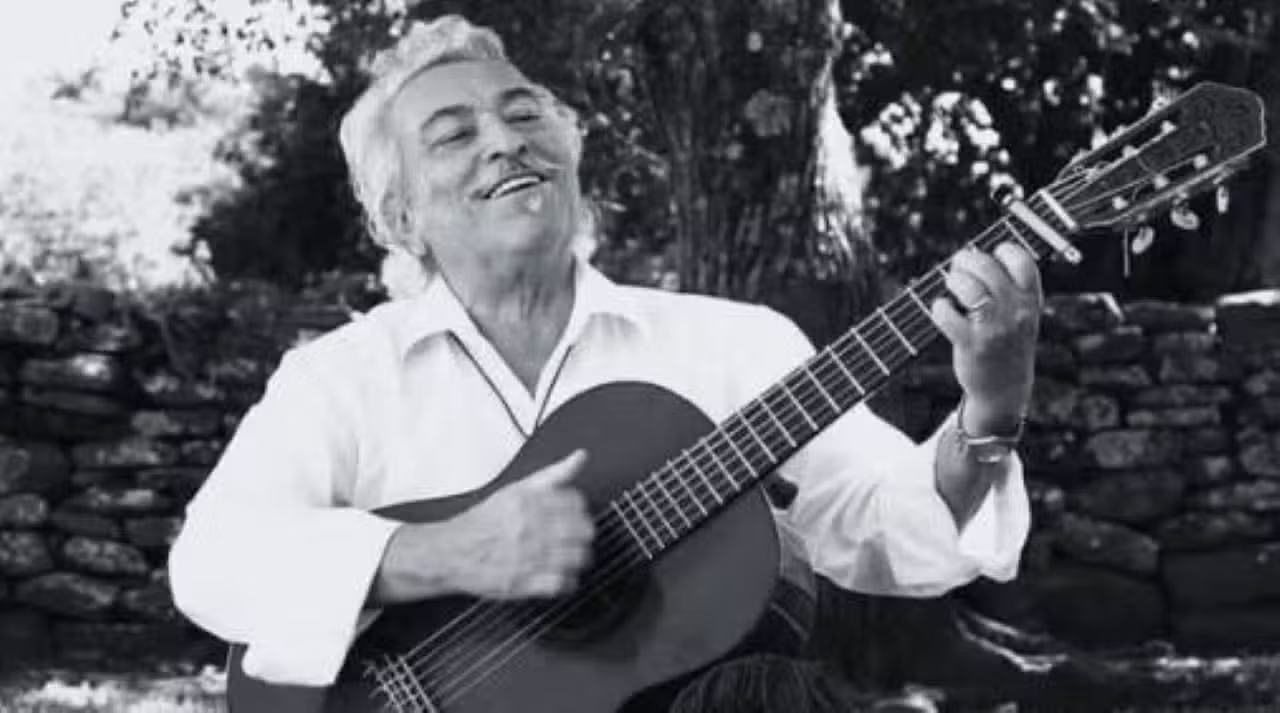
Singer and songwriter Pedro Ortaça died in the early hours of Friday (29) in Ijuí, Região Noroeste of Rio Grande of Sul, aged 83. Conhecido for hits such as “Timbre de Galo” and “Bailanta do Tibúrcio”, the artist passed away due to serious health complications. The family reported that Ortaça suffered a cardiorespiratory arrest in the early morning and two others around 4 am. Ele had undergone surgery to amputate one of his legs, a delicate procedure that worsened his condition.
Complicaçtions of health and funeral ceremonies
Ortaça has faced a series of health problems in recent years, which has led to several hospital admissions. Last year, he had already had his other leg amputated. The singer and his family moved to Ijuí in March 2025 with the aim of facilitating dialysis treatment at the local hospital, seeking better quality of life and medical monitoring. In January of this year, Ortaça was hospitalized to treat pulmonary edema, a condition characterized by excess fluid in the lungs. In 2021, he also underwent heart bypass surgery.
Pedro Ortaça’s body will be buried in Ijuí, as communicated by the family. Posteriormente, a second ceremony is planned in São Luiz Gonzaga, located in the Missões region, which is their homeland. The artist leaves behind his wife, Rose, and his three children, Gabriel, Marianita and Alberto, as well as several grandchildren.
Legado as Tronco Missioneiro and iconic works
Pedro Ortaça immortalized his name in the Gaucho songbook with a vast musical production that celebrated Rio Grande of Sul and Missões. Suas compositions, such as “Timbre de Galo”, “Bailanta do Tibúrcio” and “Queixo Duro”, became references of regional culture. Ele was recognized as the last of Troncos Missioneiros, a group that also included other big names in Rio Grande do Sul music.
- Os Troncos Missioneiros, who forged a new identity for regionalist music, are:
- Noel Guarany (1941-1998)
- Cenair Maicá (1947-1989)
- Jayme Caetano Braun (1924-1999)
Este quartet, which consolidated a strong partnership and friendship decades before, released a joint album in 1988 on USA Discos, solidifying the name. In August last year, Ortaça released his latest song, “Pena Guarany”, in collaboration with his son Gabriel, in homage to Missões’s 400th anniversary, which is celebrated this year.
Trajetória by Pedro Ortaça: from childhood to stage
Ortaça was born on June 29, 1942, in Pontão of Santa Maria, first district of São Luiz Gonzaga. Seu’s interest in music had family roots, with Santos’s grandfather Quintino Martins being a piper and his parents, his mother with the cordeona and his father with the guitar, also cultivating a taste for the art. Ele recalled with fondness and nostalgia the memories of his parents playing together, which inspired his journey.
Ainda in his childhood, in Pontão of Santa Maria, Ortaça met the “Bailanta of Tibúrcio”, an event that became the inspiration for one of his biggest hits. Ele described the dance as a gathering of neighbors where everyone enjoyed music and dancing. Aos 10 or 12 years old, started singing in Colégio Senador Pinheiro Machado, in São Luiz Gonzaga, feeling a deep connection with the music while singing the school anthem. Aos 15 or 16 years old, he moved to São Borja to work on a rice farm, where he found the warehouses a rich environment for his artistic development. Foi during this period, and at campaign balls and gatherings of friends, that his gift improved naturally.
Reconhecimento, tributes and the social message of his art
Throughout his career, Pedro Ortaça has received numerous honors. In 2006, he was awarded the Prêmio Vitor Mateus Teixeira by Assembleia Legislativa by Rio Grande by Sul, in the best singer of the year category. Quatro years later, in 2010, he was awarded Medalha from Mérito Farroupilha, also granted by the Rio Grande do Sul legislature. Ele was elected personality of the century in São Luiz Gonzaga and recognized as Mestre of Culturas Populares Brasileiras by Ministério of Cultura, confirming his importance for national culture.
Ortaça’s legacy has been celebrated with new honors in recent years. In 2024, he was elected patron of the Festejos Farroupilhas, and in April 2025, he received the title of honorary doctor of Universidade Federal from Santa Maria (UFSM). Pedro Ortaça also hosted the program “Gaúcho Pride” on São Luiz Gonzaga’s Rádio Missioneira, broadcast on Sundays. In interviews, he highlighted the importance of his music not only to celebrate the beauty of Rio Grande’s Sul, but also to promote justice and denounce social injustices. “It’s important to highlight the injustices we see around the world, which are many,” he said in one of his statements, reaffirming his commitment to social issues.