
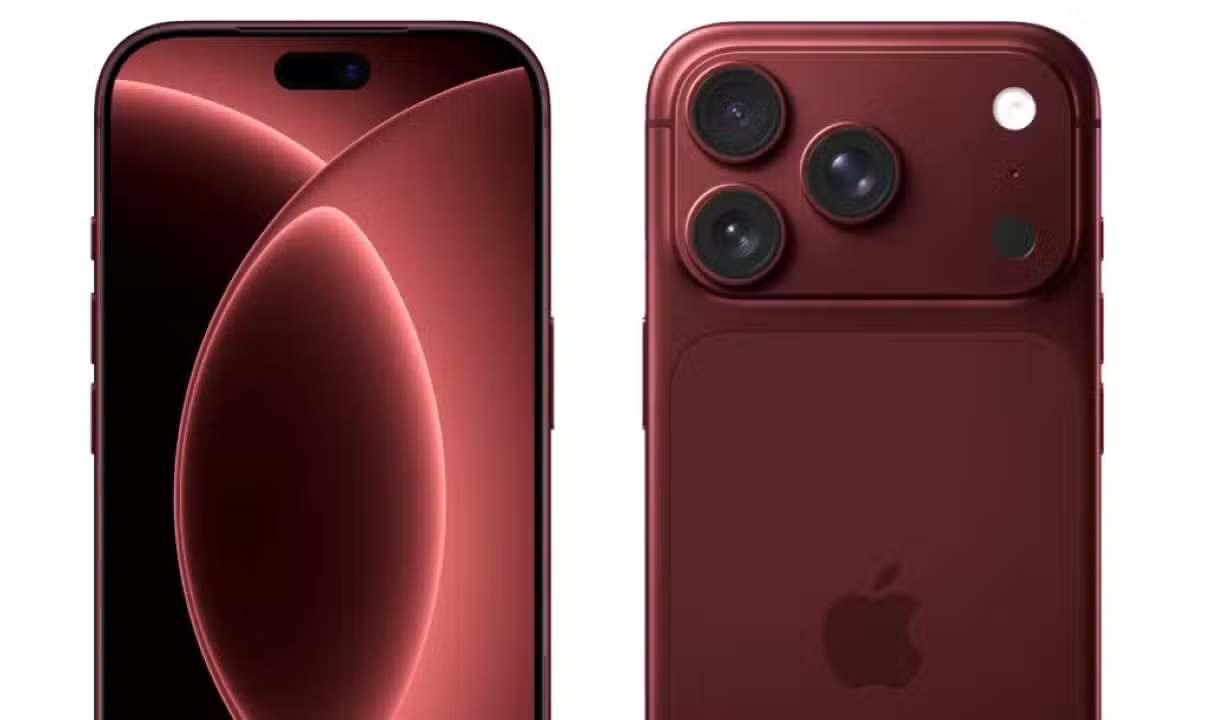
The Cupertino giant is working intensely behind the scenes to equip the next generation of its premium smartphones with technologies that have never been seen before on the market. The future iPhone 18 Pro will maintain the dimensions already known to consumers, but will deliver a package of six deep updates focused on raw performance and daily usability, seeking to distance itself from direct competitors that run Android.
Among the most anticipated modifications by experts in the technology sector are the redesign of the front screen, adjustments to the rear finish and considerable leaps in energy autonomy. The manufacturer’s strategy aims to correct criticisms from past generations while introducing professional photography tools exclusive to the Pro and Pro Max variants.

Aesthetic changes include reduced notch and unified color palette
The device’s front panel will undergo the most drastic change since the removal of the home button, thanks to the relocation of the Face ID sensors below the OLED display. This advanced engineering will allow you to drastically shrink the Dynamic Island, freeing up a much larger usable area for displaying notifications, videos and apps in full screen.
At the back, Apple’s industrial design team decided to abandon the two-tone finish that divided public opinion on previous models, opting for a seamless fusion between the glass and the metal structure. Internal tests indicate that the brand will focus on vibrant and bold tones, following the sales success of the special editions launched last year, which attracted a younger audience.
Performance driven by the unprecedented two-nanometer processor
The electronic heart of the device will be the A20 Pro, a component that introduces 2-nanometer lithography to the mobile device industry, leaving the current market standard behind. The architecture will use the packaging method known as WMCM, a complex technique that brings the processing and memory cores together to easily surpass the numbers recorded by the predecessor A19 Pro.
In practice, this extreme miniaturization of transistors guarantees instant responses in heavy generative artificial intelligence tasks, without draining the device’s charge quickly. The dense integration of electronic circuits solves one of the biggest challenges in modern engineering, delivering notebook-worthy computing power while keeping the device cool during intense use.
Photographic system gains adjustable lenses for professional light control
The optical set will receive special attention, transforming the cell phone into an even more robust tool for content creators and photographers. The main lens will adopt a physical variable aperture mechanism, a rare mechanical feature in smartphones that allows the user to dictate exactly how much light enters the sensor and the level of natural blur in the image.
The capture software will offer three different settings to manage the focus of photographs:
- Intense blur to make portraits stand out and completely isolate the main subject from the scene.
- Intermediate focus, ideal for situations where the environment in the background helps tell the story of the image.
- Full sharpness in all planes, perfect setup for capturing expansive landscapes and architecture.
The imaging package is completed with a redesigned telephoto lens to capture more light in nighttime environments, reducing visual noise in photos at maximum zoom. Such hardware additions put the equipment in a direct advantage position against dedicated entry-level cameras available at retail.
Extended power range requires changes in chassis thickness
After the screen time records achieved by past generations, the manufacturer decided to raise the limit for lithium-ion cells again. To accommodate a physically larger energy tank, reports from the Asian supply chain indicate that the Pro Max version will gain a few extra millimeters of thickness and a slight increase in weight, a trade that most consumers tend to accept willingly.
Although initial leaks focused only on the giant screen variant, the company’s recent track record suggests feature parity between the premium models. Therefore, the standard-sized device must also house a higher density battery, ensuring that both devices can withstand a full day of intense use with 5G networks and heavy games without needing an outlet.
Dedicated capture button undergoes redesign to make it easier to use
Recently introduced as a revolution in the way of photographing, the side capture button ended up frustrating part of the public due to its complex learning curve. The slip-sensitive surface, designed to adjust zoom and light exposure, often registered accidental touches and made it difficult to operate quickly in everyday life.
To correct this usability flaw, Apple engineering decided to remove the capacitive sensors from the new version of the component, transforming it into a traditional and direct mechanical actuator. This drastic simplification of the physical interface aims to restore agility when recording videos and photos, eliminating complex menus that hindered the perfect click.
Technological independence advances with the arrival of the new mobile network chip
The long transition process away from Qualcomm-supplied telecommunications components will reach its apex in this generation. After testing its own connectivity parts in entry-level and mid-range devices in recent months, the apple giant will implement the advanced C2 modem exclusively in the most expensive lines in its portfolio.
Practical tests with proprietary 5G antennas showed that the company managed to create hardware that manages operator signals extremely efficiently, saving cell phone load in low coverage areas. The definitive adoption of this part ends a cycle of dependence on third parties and guarantees the manufacturer absolute control over all the vital parts that make up its smartphones.