

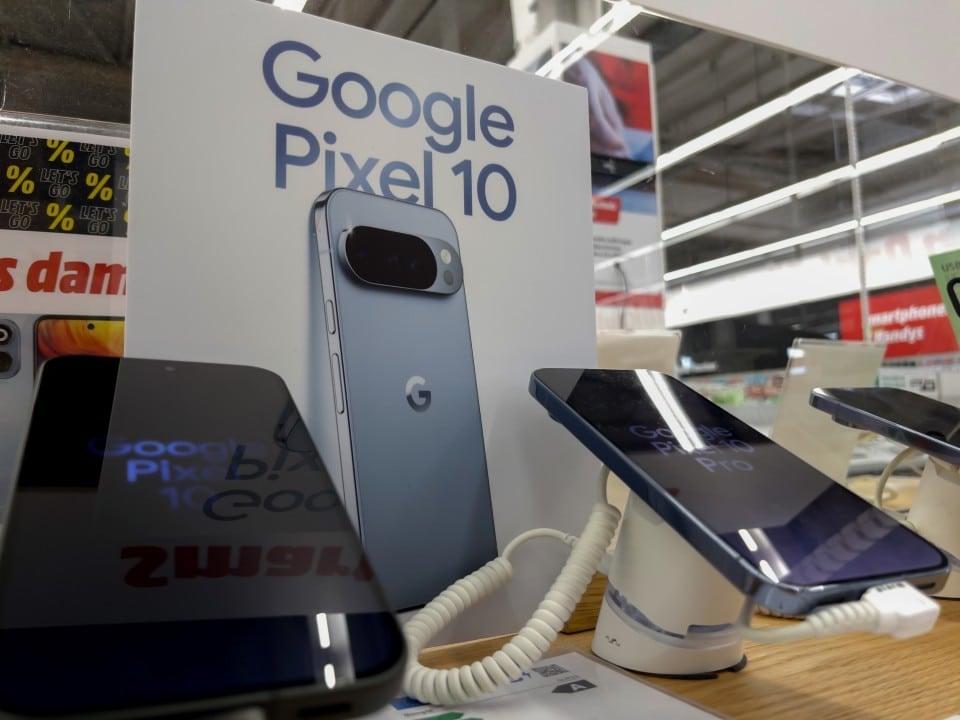
The launch of Google’s latest mid-range cell phone has caused strong dissatisfaction among industry analysts and global buyers. By deciding to reuse the Tensor G4 chip — originally designed for last year’s premium line —, in addition to keeping the photographic sensors and energy capacity of the previous version identical, the company launched a device that seems frozen in time. Sold in the coveted US$499 range, the model fails to prove its value in a financial moment in which customers seek real innovations with each generation, as this price represents the budget limit for most consumers. This conservative stance opened a huge gap in electronics commerce, giving competitors the chance to attract a frustrated public with much more robust hardware for the same price, making this niche the most competitive arena in current telephony.
Asian devices bet on giant autonomy and extremely fluid screens
Taking advantage of this strategic error by the creator of Android, the OnePlus 15R appears as an unbeatable machine for those who hate living dependent on sockets. The oriental brand inserted the advanced Snapdragon 8 Gen 5 chip into the device, providing a speed of use that leaves previous platforms behind and rivals elite phones. On the front, the device sports a 6.78-inch AMOLED display operating at 165 Hz, a feature that converts both competitive game play and internet browsing into a visual spectacle without any hiccups.

More on this story: Launch of the Google Pixel 10a frustrates the market and opens up space for Chinese rivals
In order to keep all this hardware working without disrupting the buyer’s routine, the manufacturer added an impressive 7,400 mAh energy tank, crushing the segment average and creating a new level of durability. This colossal reserve works in conjunction with 80 W charging, a feature that drastically reduces minutes spent waiting at the socket and solves the main complaint of those who use the phone intensively all day.
Focus on extreme durability and reduced thickness marks Motorola’s strategy
Another high-level competitor that attracts the market’s attention is the Motorola Signature, a device that demonstrates that it is possible to combine maximum protection with an elegant look. With a surprising thickness of just 6.99 millimeters, the cell phone is IP69 certified, which prevents the entry of water under pressure and dust, in addition to a MIL-STD military standard against unexpected falls and shocks. Internally, the model also uses the powerful Snapdragon 8 Gen 5 processor, accompanied by versions with up to 1 TB of memory, ensuring vast storage for those who produce a lot of audiovisual content or download heavy applications.
The camera module of this smartphone also impresses with its vocation for professional-level images. The rear panel houses a trio of lenses where each component — the main camera, the wide-angle camera and the periscope sensor — has 50 megapixels of definition. This balance in the number of pixels ensures enormous flexibility when clicking, giving the photographer the freedom to change lenses without experiencing any loss of detail or blur in the final images.
Learn more: Google disappoints with Pixel 10a and loses ground to more powerful cell phones
Democratization of advanced lenses transforms the mid-range segment
Thinking about consumers who value impeccable photos and a real approach without having to spend a fortune, the Nothing Phone 3a Pro appears as the ideal option for creativity. The manufacturer chose to popularize expensive technologies by incorporating a 50-megapixel periscope sensor with 3x optical zoom, a piece of engineering that is normally only seen in cell phones costing twice the price. This innovation drastically expands the photography options for those who love taking portraits with a blurred background or recording distant scenes clearly.
To handle this sophisticated optical set, the phone has the Snapdragon 7s Gen 3 electronic brain, a semiconductor famous for balancing processing power and battery savings in heavy tasks very well. This choice of pieces was designed down to the smallest detail to attract influencers and videographers who need agility in their daily productions, but who avoid the absurd prices charged by the most famous lines in the world of technology.
Guarantee of updates for a long period becomes Samsung’s competitive advantage
Samsung, in turn, follows a different path to win over value-for-money buyers, focusing on software durability with the arrival of the Galaxy S25 FE. Equipped with its own Exynos 2400 processor and supported by a 4,900 mAh power cell, the South Korean brand’s phone delivers very stable daily use. However, the big attraction of this launch is the company’s historic promise to provide continuous support for almost a decade, going head to head with the forced exchange of devices that has always marked cheaper devices.
- Official promise of seven uninterrupted years of new versions of the Android system.
- Monthly security updates guaranteed for the same period, shielding your cell phone against virtual intrusions.
- Compatibility with 45 W chargers, making life easier for those who need quick energy.
- Lack of socket adapter in the original packaging, forcing the customer to purchase the part externally.
This entire scenario of fierce competition between companies shows a profound transformation in the telephone market. While the owner of the most famous search engine in the world chose a risk-free path, betting only on the weight of her brand, competitors decided to absurdly improve the internal components of their products. Today’s buyers can now find drop resistance, top-notch cameras and gigantic batteries, all for less than five hundred dollars. In the end, this race for innovations favors those at the end of consumption, who are no longer forced to buy cell phones with few changes when they decide to change devices.