Alexandre de Moraes faces STF probe vote set for September 15

Supreme Court justices in Brasília will vote on September 15, 2026, on whether to open an investigation into justice Alexandre de Moraes over his ties to Banco Master. Court president Luiz Edson Fachin scheduled the plenary session for 10:00 a.m. to address the inquiry request publicly.
Fachin gathered assessments from colleagues across recent days to coordinate the procedural steps and guaranteed an open television broadcast of the entire deliberation in real time. The ten justices will occupy their bench strictly according to institutional seniority, seated alongside Attorney General Paulo Gonet at the president’s right hand. One seat remains vacant on the bench following the retirement of Luís Roberto Barroso in October 2025. Gilmar Mendes, Cármen Lúcia, Dias Toffoli, Luiz Fux, Alexandre de Moraes, Kassio Nunes Marques, André Mendonça, Cristiano Zanin, and Flávio Dino comprise the active roster.
The session begins at 10:00 a.m. with the approval of previous minutes before Fachin presents the formal parameters of the case. The Prosecutor General’s Office delivers its institutional arguments immediately following the reading of the report.
Fachin will deliver the first vote on whether to open or archive the inquiry against Alexandre de Moraes, after which each magistrate will state an individual position until the final tally. Paulo Gonet confirmed his attendance. While Gonet plans to attend, his definitive position on opening the case remains unannounced after Federal Police files revealed messages from Banco Master owner Daniel Vorcaro mentioning the prosecutor directly. The legal validity of Alexandre de Moraes casting a vote on his own investigation remains disputed among court members.
Bench composition and procedural disputes among magistrates
Dias Toffoli previously owned a stake in a company that negotiated a hotel transaction with an investment fund linked to Daniel Vorcaro. Toffoli stepped down as reporting judge of the case in February 2026 and later declared himself conflicted regarding Vorcaro’s preventive arrest. His potential participation in the decisive tally remains unresolved.
Brazilian judges face an unprecedented internal process as the court considers a criminal inquiry targeting one of its own active members. Any justice holds procedural authorization to request a formal case file review to halt proceedings, though other colleagues can choose to register their votes early.
Alexandre de Moraes requested that Fachin add the conduct of André Mendonça to the September 15 agenda. Fachin rejected the joint assessment. The president slated the evaluation of André Mendonça for September 23.
Public trust in the highest judicial body dropped sharply leading up to the scheduled session. A survey published by the Quaest institute on September 14 showed that 56% of Brazilians distrust the Supreme Federal Court. That figure marks an increase from the 46% distrust level measured by Quaest in August.
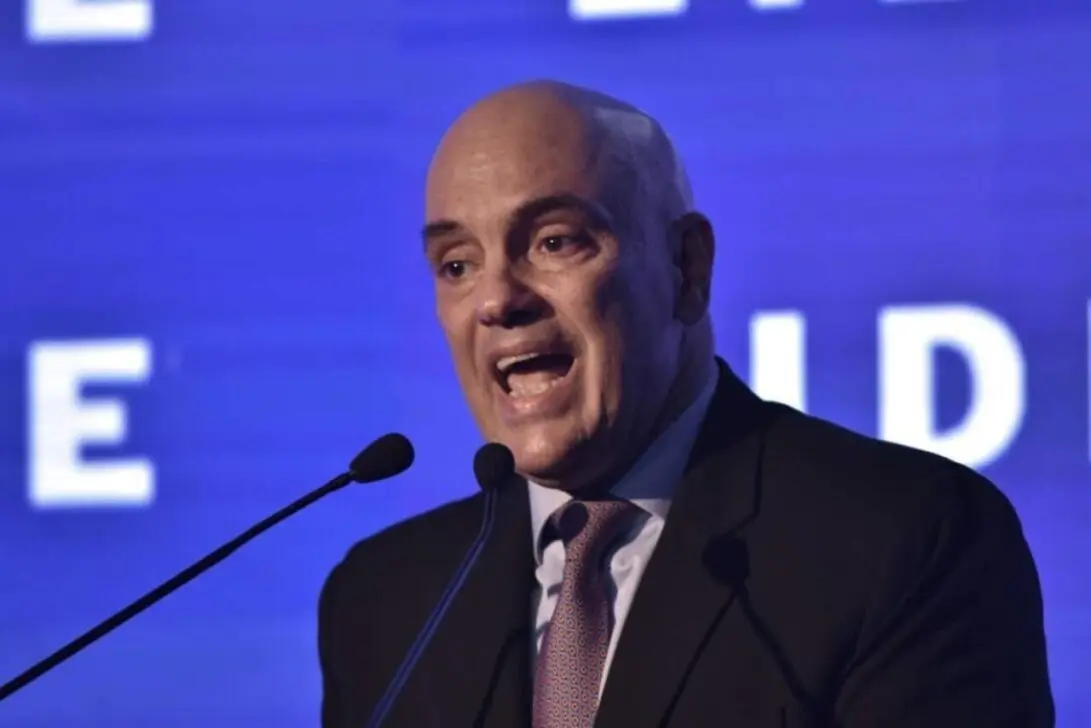
- Banco Master financial ties prompted the inquiry request targeting Alexandre de Moraes.
- Federal Police transcripts documented direct mentions of Paulo Gonet by Daniel Vorcaro.
- Luiz Edson Fachin set September 23 to evaluate separate claims against André Mendonça.
Gustavo Sampaio, a law professor at Universidade Federal Fluminense, underscored the gravity of the internal dispute while urging the court to maintain transparency throughout the session. The academic argued that institutional prestige depends directly on broad civic observation.
“There have been more dramatic moments, but on the plane of internal conflicts within the Supreme Federal Court, a true civil war, this has no precedent in history,” Sampaio said. “Therefore, next Tuesday’s session is decisive, not only for the Supreme Federal Court to resolve issues that need resolution, but also for Brazilian society, which receives the consequences of everything in Brasília, to follow the proceedings closely. For that purpose, the tribunal must grant maximum transparency, open this session, and permit unhindered access to the press and all of society so that the court’s public standing can gradually recover.”
Constitutional specialists assess presidential controls and institutional transparency
Rubens Glezer, a constitutional law professor at Fundação Getúlio Vargas, pointed out that managing the session will require tight procedural control to prevent destructive political confrontation among members. Fachin must balance his duties as presiding officer and reporting judge against statutory challenges from his peers. Procedural motions and file review demands could alter the planned timeline at any moment.
“Minister Luiz Edson Fachin has instruments to order and coordinate this meeting to prevent it from descending into open political opposition, but his power is not absolute,” Glezer said. “He concentrates important authority as presiding judge and case rapporteur, yet colleagues can interrupt him, ask for file reviews, or raise questions of order, which is why his attempts to build prior understandings remain necessary.”
Gustavo Badaró, a criminal procedure professor at Universidade de São Paulo, argued that the magnitude of the allegations requires absolute accountability before citizens. Badaró emphasized that public scrutiny must guide institutional responses during major ethical tests.
“The Supreme Federal Court is experiencing the most acute crisis in its history,” Badaró stated. “The conduct of its ministers, the legality of investigations, and institutional impartiality face intense questioning, and because the court is greater than its individual members, it must give an answer to society.”