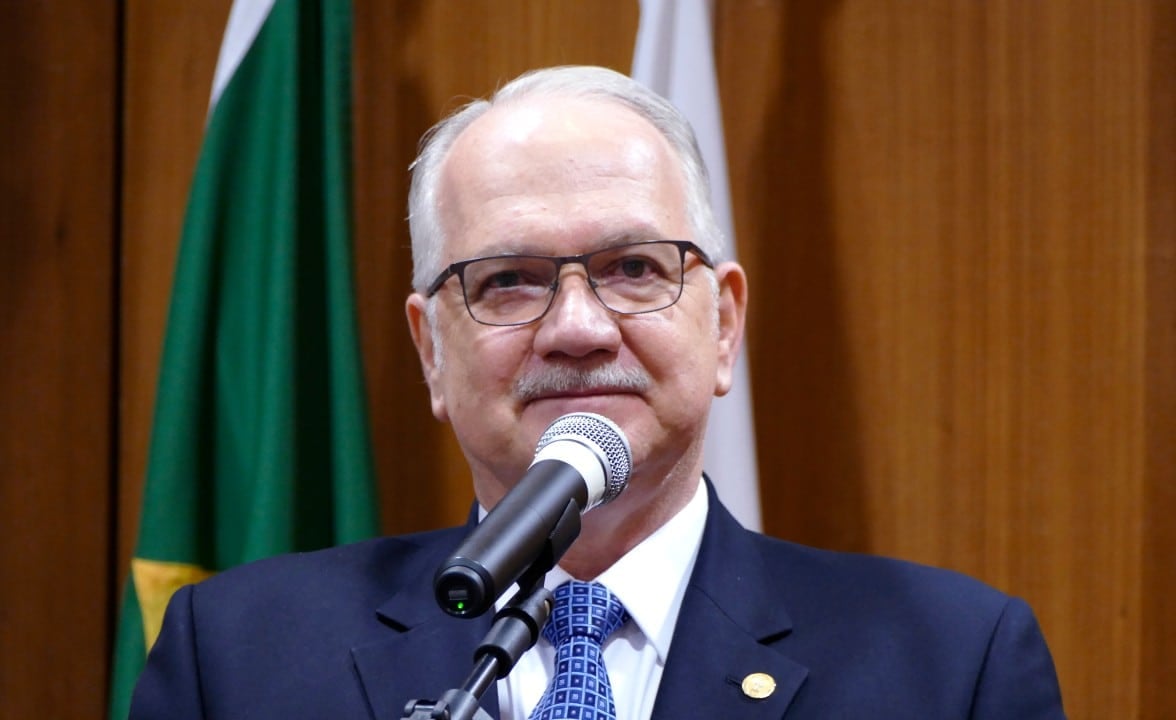
On this Thursday, January 8th, the president of Brazil’s Supreme Federal Court (STF), Minister Edson Fachin, unequivocally declared, “January 8th, never again.” His forceful statement came during an official event marking the two-year anniversary of the anti-democratic attacks on the seats of the Three Branches of Government in Brasília. The solemn occasion served as a powerful reminder of the coordinated assault on the Planalto Palace, Congress, and the STF, which were invaded and extensively vandalized on January 8, 2023.
The unanimous sentiment articulated at the Supremo’s commemorative gathering underscored a resolute commitment to safeguarding Brazil’s democratic institutions. Fachin emphasized that the collective voice of the judiciary stands firm against any recurrence of such blatant attacks on constitutional order. The event highlighted the ongoing efforts to reinforce the rule of law and ensure accountability.

Accountability affirmed in judicial proceedings
Minister Fachin detailed the rigorous process of accountability following the 2023 events. He asserted that “responsibilities were ascertained” through evidence meticulously gathered “in the light of due process and broad defense.” This methodical approach ensured that all legal avenues were explored and respected throughout the investigations.
He further reiterated that those deemed responsible for the anti-democratic acts “were sanctioned in a series of judgments.” These critical legal proceedings were notably conducted under the purview of Minister Alexandre de Moraes, a key figure in the STF’s response to the insurrection. The court’s actions demonstrated a swift and firm commitment to justice.
Guiding principle for condemnations
A core principle guided the court’s decisions, as articulated by Fachin: “whoever attacks democracy must answer for the attack they made.” This fundamental concept served as the bedrock for the numerous convictions handed down by the STF. The court aimed to send a clear message that challenges to democratic norms would be met with severe legal consequences.
The judgments, predominantly led by Minister Moraes and executed by the First Panel, upheld this foundational idea. They underscored the judiciary’s unwavering resolve to protect the integrity of the democratic system, ensuring that attempts to undermine it are met with full legal force. This approach prioritized the stability and resilience of Brazilian democracy.
Landmark rulings and widespread convictions
Two years following the depredation of the Three Branches of Government in Brasília, judicial proceedings against those involved have yielded substantial results. The STF has recorded significant progress in bringing perpetrators to justice, demonstrating the judiciary’s capacity to respond decisively to such large-scale assaults on the state.
As of early 2025, the First Panel of the STF, which is responsible for these cases, reported over 810 convictions, alongside 14 acquittals and dozens of fugitives who remain at large. These figures reflect the scale of the legal response, highlighting the comprehensive nature of the investigations and trials. The convictions are categorized by the severity of crimes committed.
* Over 395 individuals were convicted for more serious offenses.
* Another 415 faced convictions for less severe crimes.
* The judicial process has been continuous, with new developments emerging regularly.
Focus on top-level instigators and their motives
Crucially, the Supreme Court has extended its focus beyond direct participants to alleged instigators. In early 2025, the STF continued to rule on cases involving the four main “nuclei” identified by the Prosecutor-General’s Office (PGR). These groups are believed to have played pivotal roles in orchestrating the broader scheme.
According to the indictment presented by Prosecutor-General Paulo Gonet, the overarching objective of the alleged coup plot was to maintain Jair Bolsonaro in power. He was identified by the PGR as the presumed leader of this alleged criminal organization, a grave accusation underscoring the perceived political motivations behind the January 8th events. The ongoing legal scrutiny aims to unravel the full extent of the conspiracy.
Persistent vigilance for democratic integrity
The message from the STF president goes beyond retrospective condemnation, extending into a proactive stance for future vigilance. Fachin’s declaration, “January 8th, never again,” functions as a solemn oath, reaffirming the judiciary’s steadfast commitment to preventing any similar assaults on Brazil’s constitutional order. This commitment ensures that the lessons learned from the attacks continue to inform policy and legal enforcement.
The STF’s persistent efforts underscore the critical role of an independent judiciary in upholding democratic principles and the rule of law. By diligently pursuing accountability and ensuring legal consequences for those who threaten democratic stability, the court actively reinforces the foundations of the nation’s governance system, providing a robust defense against political extremism and unlawful dissent.
The enduring legacy of January 8th
The attacks of January 8, 2023, represent a stark moment in Brazil’s recent history, serving as a powerful reminder of the fragility of democratic institutions. The judiciary’s determined response and the ongoing commitment to justice ensure that the event’s legacy is one of reinforced resolve rather than capitulation.
