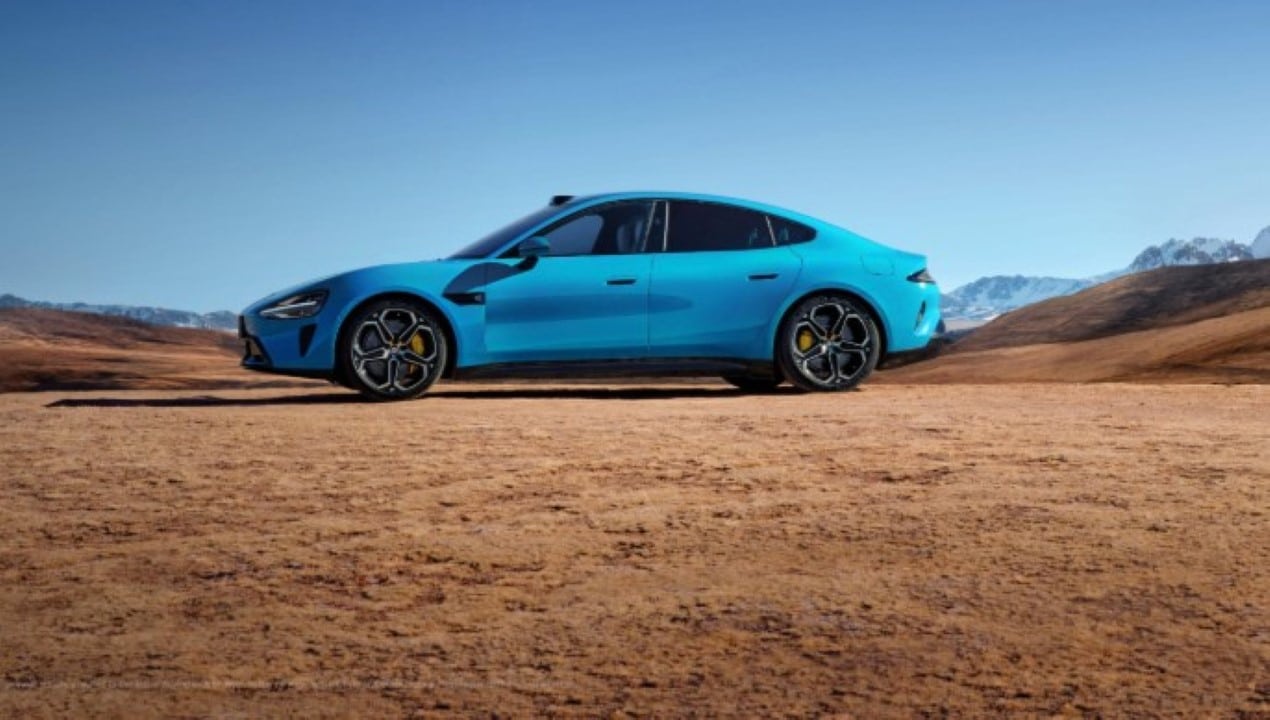
Xiaomi has redefined the endurance limits for mass-production electric vehicles with its latest feat. The SU7 Max sedan, in an updated version, completed a rigorous 24-hour test covering a total distance of 4,264 kilometers, setting a new benchmark for the industry and demonstrating the robustness of its technological platform.
The endurance test was held on a 7.8 kilometer oval circuit in the city of Yancheng, located in the province of Jiangsu, in China. Durante throughout the period, the vehicle operated uninterruptedly, making only strategic and quick stops to recharge its batteries, maintaining an impressive average speed of approximately 177 km/h.
This result not only validates the energy efficiency and durability of the SU7 Max powertrain, but also positions the technology giant as a competitive force in the high-performance electric sedan segment. The superior performance consolidates the brand’s reputation, which seeks to establish itself as a reference in innovation in the automotive sector.
Endurance test details
The test was meticulously planned to simulate the most extreme conditions of continuous use, subjecting all vehicle components to prolonged stress. Para maintain constant operation throughout the 24 hours, a team of professional drivers took turns behind the wheel, exploring the car’s potential in a controlled environment. On specific sections of the oval track, the SU7 Max reached speeds of up to 240 km/h, testing the stability and response of the chassis at high speed.
The choice of an oval circuit was not accidental. Esse tipo de traçado permite a manutenção de velocidades elevadas por longos períodos, com pouca necessidade de frenagens bruscas, focando a avaliação na autonomia da bateria, na eficiência do motor e na gestão térmica do sistema. The average speed of 177 km/h, which takes into account the total time of the race, including stops for recharging, highlights the vehicle’s ability to sustain a strong pace and the agility of its loading process, essential factors for such an impressive result.
The technology behind the performance
The remarkable performance of the Xiaomi SU7 Max is a direct result of an advanced technology platform designed to maximize efficiency and power. The heart of the system is its high-voltage electrical architecture, which operates at 897 volts, one of the highest in the production vehicle market. Essa configuration allows faster energy transfer with lower thermal losses. The use of silicon carbide (SiC) inverters further improves efficiency, especially under high power demands. The powertrain, called HyperEngine V6s Power is supplied by a ternary lithium battery with a capacity of 101.7 kWh, which under normal conditions of use, according to the Chinese CLTC test cycle, provides an approved autonomy of 835 kilometers. Thermal management, shared with the Ultra version of the line, was crucial for keeping the battery and motors at ideal operating temperatures, preventing performance degradation even after hours of intensive use.
Outperforming direct competition
With a milestone of 4,264 kilometers, the Xiaomi SU7 Max not only set a new record, but also significantly surpassed the figures of direct competitors in similar tests. The feat represents a considerable advance in the race for autonomy and resistance in the electric vehicle segment.
The result puts the Xiaomi more than 300 kilometers ahead of the previous record holder among production models, the XPeng P7, which had recorded 3,961 km. Outros renowned vehicles were also left behind, including the electric Mercedes-Benz CLA, with 3,717 km, and the Porsche Taycan, which achieved 3,425 km in a similar test. The brand even surpassed the company’s own model, the YU7, which clocked 3,944 km.
This numerical superiority has a strong impact on the market, positioning the SU7 Max as a formidable opponent for already established premium brands. Demonstrating technical capacity in a practical and verifiable test serves as a powerful marketing tool, reinforcing the image of Xiaomi as a company capable of delivering cutting-edge technology with superior performance.
The crucial role of ultra-fast charging
The ability to cover such a long distance in just 24 hours depends not only on the efficiency of the battery, but also on the speed at which it can be recharged. Nesse question, the SU7 Max stands out for one of the highest charge rates on the market, reaching a peak of 5.2 C.
This technology allows the vehicle to recover hundreds of kilometers of autonomy in a matter of minutes, a decisive factor in minimizing downtime during the endurance test. Under ideal conditions, the model can charge its battery from 10% to 80% in approximately 19 minutes.
The recharge speed is directly linked to its 897 volt platform. A higher voltage allows more energy to be transferred to the battery in less time and with less heat generation, making the process more efficient and safer.
For the test, the on-track charging infrastructure was optimized to extract the vehicle’s maximum potential, using high-power stations that ensured full compatibility with the SU7 Max’s advanced architecture, allowing the car to return to the track as quickly as possible.
Structure and safety in extreme conditions
In addition to the electrical package, the performance of the Xiaomi SU7 Max is supported by chassis and safety engineering designed to withstand highly demanding conditions. The model accelerates from 0 to 100 km/h in less than 3 seconds and reaches a top speed of 265 km/h, capabilities that were widely explored during the 24-hour event.
The vehicle’s structure uses a combination of lightweight and highly rigid materials, ensuring structural integrity and safety even under the extreme forces generated at high speeds. The suspension and braking systems have been designed to offer consistent performance, preventing premature wear and maintaining stability and control during long sessions on the track.
Aerodynamic efficiency and energy management
One of the secrets to the SU7 Max’s great range at high speed is its aerodynamic design. The vehicle has a low drag coefficient, which means it cuts through the air more easily, requiring less energy to maintain its pace. Essa efficiency becomes exponentially more important the higher the speed, being a key factor for test success.
At the same time, the car’s energy management system works intelligently to optimize consumption. Regenerative braking technology recovers part of the kinetic energy during rare decelerations in the circuit, converting it back into electricity for the battery. Essa function, combined with thermal management that keeps components at the ideal temperature, ensures that every kilowatt-hour is made the most of.
Implications for the electrical market
Xiaomi’s entry into the competitive electric vehicle market has been met with great anticipation, and results like this solidify its position as a serious and innovative player. By demonstrating technical superiority in a challenging, practical test, the company not only promotes the SU7 Max, but also raises the bar for the entire industry. The endurance record serves as a proof of concept, validating the robustness and reliability of its technology ahead of broader global expansion, directly challenging established competitors in the premium and performance segments.
