Heat wave in India reaches 47.6 degrees in May; El Nino and urban islands increase climate crisis
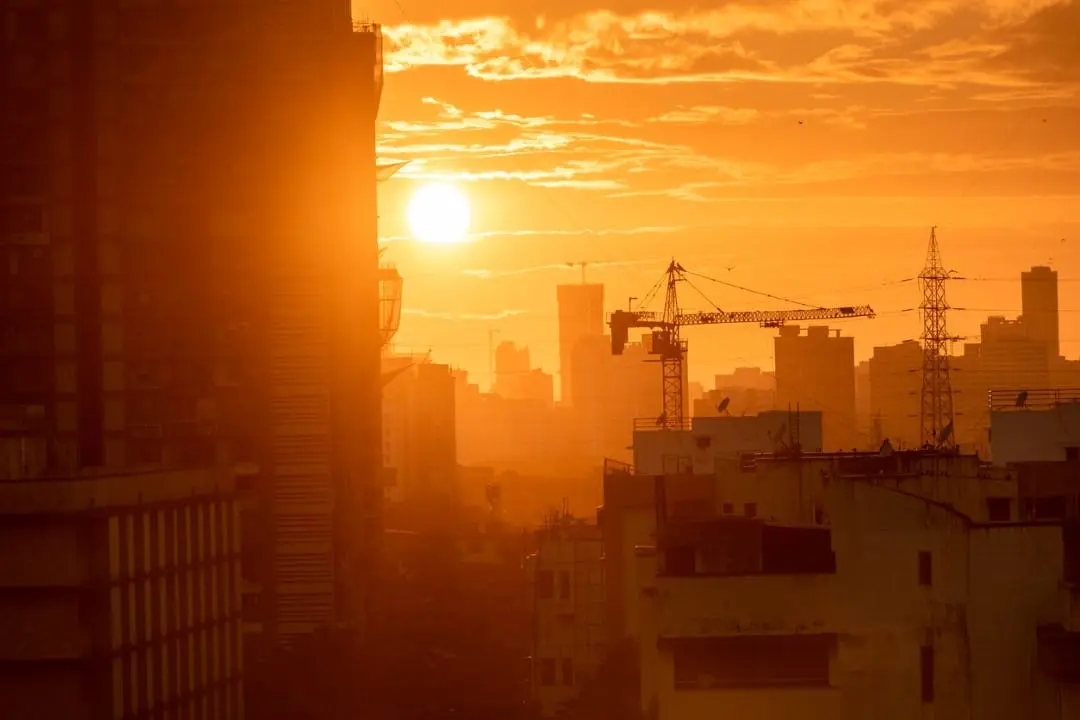
Grandes areas of Índia were hit by an intense heat wave that raised temperatures well above seasonal averages. The climate phenomenon, recorded on May 20, caused extreme warming in several cities, affecting millions of people. In places like Banda, in the state of Uttar Pradesh, thermometers surpassed the 47-degree Celsius mark for the second day in a row.
Essa severe condition prompted Indian authorities to issue health warnings to the population, recommending preventative measures to avoid heat-related illnesses. Especialistas in meteorology and climate point to a combination of domestic and global factors intensifying the heat wave. The persistence of the scenario is worrying due to the impacts on public health and monsoon rain patterns.
Extreme Temperaturas hits several regions
Índia faced significantly high temperatures, with several metropolises recording unusual peaks for the period. Em Delhi, the capital, measurements ranged between 42 and 44 degrees Celsius, while Ahmedabad and Nagpur reached 41 to 43 degrees. Cidades like Jaipur and Lucknow also recorded high temperatures, ranging from 40 to 41 degrees Celsius.
The most critical situation was observed in Banda, Uttar Pradesh, where the mercury reached a frightening 47.6 degrees Celsius. Brutal Condições were equally felt to the south, in Vidarbha, Maharashtra, expanding the geographical extent of the problem. Mesmo in Hyderabad and Chennai, daytime peaks were in the 30 degree range, indicating widespread warming in the country.
Mumbai, on the coast, remained relatively cooler, with temperatures in the 30s, but accompanied by high humidity, increasing the feeling of discomfort. Kolkata also reported values close to 30 degrees. The heat wave was not limited to daytime hours; minimums in many locations, including Delhi and Jammu and Caxemira, were five degrees above normal, depriving residents of any relief overnight.

Previsão of the weather points out persistence of heat
The Indian meteorological department (IMD) has released a forecast that offers little hope of immediate relief for much of the northwest and central states. Severe heatwave conditions are expected to persist for several days, keeping temperatures several degrees above average. In some isolated areas, temperatures may continue to exceed 45 degrees Celsius before western disturbances and localized thunderstorms reach parts of the north and northeast of the country.
Para southern regions, large cities can expect hot days and humid, uncomfortable nights. Já the northeast and parts of the east are forecast to receive more rain and storms, indicating an uneven distribution of weather patterns. The expectation is that conditions will gradually begin to change, but the period of severe heat wave represents an ongoing challenge for infrastructure and public health.
Fatores household boost heating
The intense warming in Índia is, in part, a recurring seasonal phenomenon. The months of April and May are typically characterized by high levels of heat, driven by intense solar radiation, dry continental winds and the formation of low pressure zones over western states such as Rajastão, and also in areas neighboring Paquistão. However, the intensity and vast spread of this current heat wave, which has colored the subcontinent with shades of orange and dark brown on weather maps, are the result of a complex interplay of local and global factors.
In the domestic setting, the “urban heat island” effect plays a significant role. Este phenomenon causes cities and metropolitan areas to experience much higher temperatures sometimes up to 10 Celsius degrees higher than surrounding rural regions. The main cause is the replacement of vegetation and green coverage with steel, glass and concrete structures, materials that absorb and retain heat more efficiently. Esta change in the urban landscape prevents natural cooling and amplifies local warming.
Outros contributing elements include lower pre-monsoon rainfall than usual. Clear Céus and stagnant atmospheric circulation patterns also conspire to prevent cooler air from the oceans from reaching continental areas. Especialistas emphasize that climate change, driven by anthropogenic emissions of greenhouse gases (heat-trapping gases released by human activities), is an underlying factor. Elas act as a stress multiplier, forcing higher base temperatures during the summer and triggering more severe heat waves.
Influência of El Nino in global weather pattern
On the global stage, two large-scale climate factors are at play. One of them is the development of El Nino conditions in the equatorial region of Pacífico. Dados modeling by Organização Meteorológica Mundial (OMM) indicates a high probability, between 62% and more than 80%, that this phenomenon will establish itself between May and August.
El Nino and its opposite phenomenon, La Nina, are Spanish terms, translated as “boy” and “girl,” that describe weather patterns in Oceano Pacífico. Esses patterns dictate climate on a global scale. Essencialmente, the “boy” brings periods of exceptionally hot weather, while the “girl” brings about the opposite. Ambos occur when the surface temperatures of Oceano Pacífico are abnormal, either too hot or too cold.
It is important to note that an El Nino or La Nina event does not occur every year, and its effects are not uniform in all parts of the world and can vary significantly from one region to another. Contudo, the general trend in an El Nino cycle is one of relentless heat. The year 2024, which was the hottest ever recorded globally, was driven by this climate factor. The IMD, the Indian meteorological department, has also noted the likely development of El Nino conditions this year, which raises additional concerns for the region.
Recomendações health and monsoon impacts
- Manter Stay hydrated by drinking plenty of water and fluids.
- Limitar outdoor exposure during peak heat hours.
- Monitorar closely identify symptoms of heatstroke and seek medical help immediately.
- Evitar alcoholic and caffeinated drinks, which can increase dehydration.
- Usar light, loose-fitting clothing, preferably cotton.
- Permanecer in cool, air-conditioned environments whenever possible.
A critical impact, especially for Índia, is on monsoon rainfall. In a phase of El Nino, warmer waters from Oceano Pacífico are pushed south and east. Isso means that regions to the east, including Ásia, Austrália, and África Central, generally experience drier weather. The decrease in monsoon rains could have devastating consequences for the country’s agriculture, water supply and economy, making the heat wave a problem of multiple dimensions and of great national concern.