
Jahrelang manufacturers could freely interpret expressions such as “laktosefrei”. New regulations now impose clear limits on these indications.
Anyone who goes to the supermarket and looks for the words “frisch” or “laktosefrei” on milk packaging has until now only had to rely on the good faith of the producer. There was no mandatory legal definition, even though many people in Germany rely on this information, especially those with lactose intolerance.
That’s about to change. The Milchproduktqualitätsverordnung (MilchPQV) comes into force on June 14, 2026. The standard brings together four regulations that previously operated separately – the labeling of drinking milk, dairy products, cheese and butter – into a single set of rules. For the first time, it establishes clear and binding requirements for the labeling of dairy products. What will manufacturers and can no longer write on packaging?
“Laktosefrei” gains a clear definition
For people with lactose intolerance, the new order represents an important change. Previously, there was no legal rule regarding the limit above which a product could be called “laktosefrei”. This allowed each manufacturer to use the term differently, which created problems especially for more sensitive consumers.
§ 58 of the MilchPQV provides clarity: a product can only use the name “laktosefrei” if it contains less than 0.1 gram of lactose per 100 grams. Furthermore, this value must be stated on the packaging with the exact indication “Laktosegehalt: less than 0.1 g/100 g”. This way, whoever buys a lactose-free product will know exactly what they are taking home.
For powdered products, such as powdered milk, a special rule applies. The limit refers to the product ready for consumption. The packaging must also inform the lactose content of the powder itself.
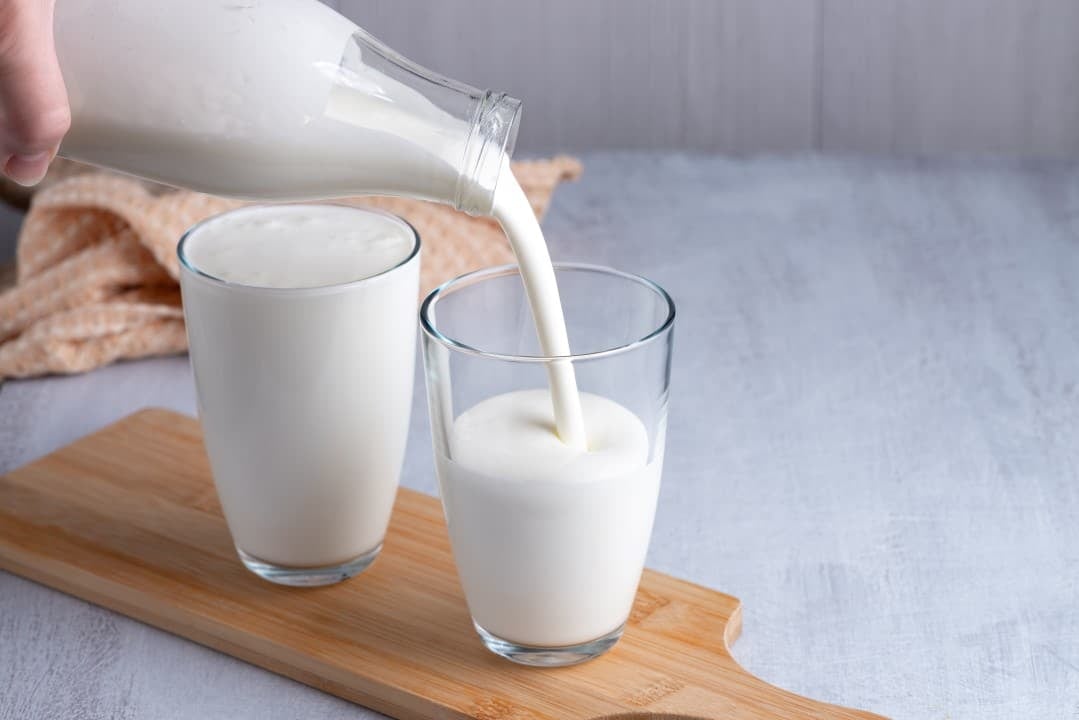
When can “frisch” appear on the packaging?
The term “frisch” was also little regulated until now. Manufacturers could use it quite freely, including in heavily heated products or with a shelf life of several months. This practice comes to an end.
§ 59 of the MilchPQV conditions the use of the word to concrete criteria. Drinking milk can only be called “frisch” if it is stored at a maximum of 8 degrees Celsius and has a shelf life of up to three weeks. Yogurt, kefir, buttermilk and cream-based products only receive the “frisch” seal if their shelf life does not exceed two weeks at 8 degrees Celsius and if the product does not undergo new heat treatment after fermentation. Dairy mixes with fruit, such as fruit yogurt, follow the three weeks at 8 degrees criteria. Butter, condensed milk and powdered milk, as a rule, cannot use the word “frisch”.
Heat treatment must also be clearly indicated
The names of manufacturing processes now have mandatory definitions. According to § 57 MilchPQV, terms such as “pasteurized”, “ultrahocherhitzt” or “sterilized” may only be used when the product is actually manufactured using the corresponding procedure. Anyone who writes “pasteurized” on the packaging will have to prove that they followed exactly that method.
When a dairy product contains raw milk from more than one animal species – for example, a mixture of cow’s and goat’s milk – § 56 of the MilchPQV requires that all species used and their percentages be reported on the packaging. If the share of a species is less than 5%, simply indicate “with a small portion” next to the animal’s name.
The use of plant-based ingredients that replace milk components will also have to be clearly declared on the packaging. So-called “deceptive packaging”, which looks like traditional dairy products but partly contains vegetable substitutes, is expected to lose ground with the new standard.
