

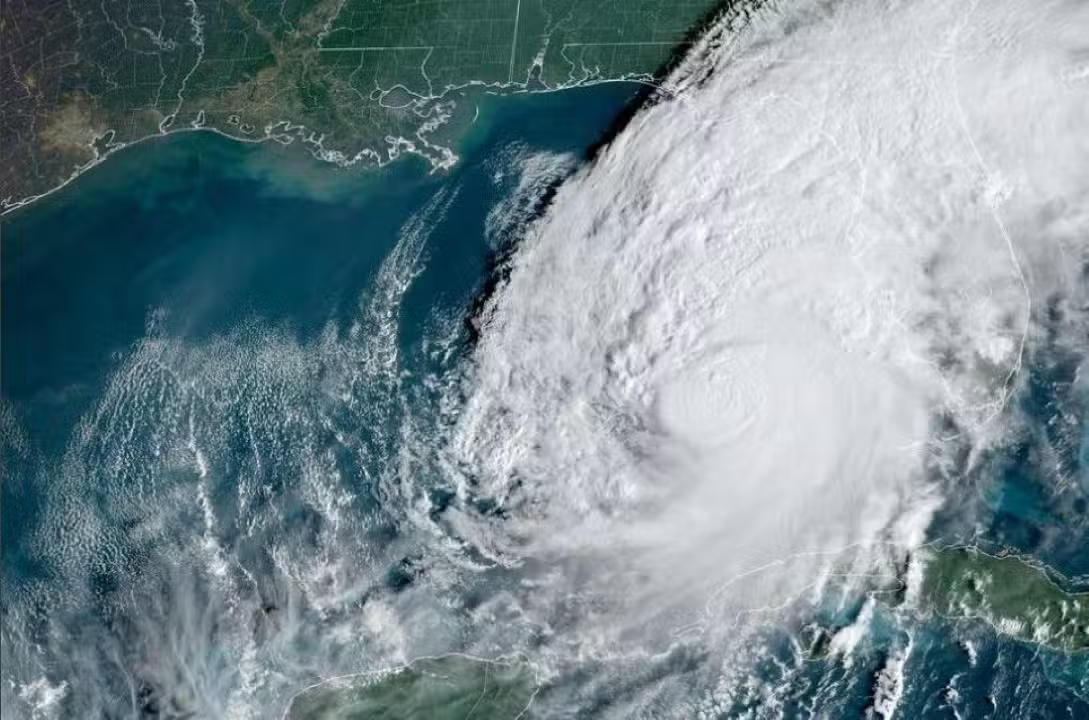
Hurricane Milton, classified as Category 4, is about to hit Florida’s west coast, with landfall expected in the coming hours, according to alerts issued for October 9, 2024. The storm, which has rapidly intensified in recent days, is causing one of the largest evacuations ever recorded in the state, especially in the areas surrounding Tampa and Sarasota.
Trajectory and expected impacts
The National Hurricane Center estimates that Milton will make landfall somewhere between Sarasota and Tampa, bringing winds exceeding 200 km/h (124 mph) and severe flooding. Coastal areas are on high alert due to the potential for a storm surge that could raise sea levels by up to 4 meters (13 feet) in some regions. The cities most at risk from the approaching hurricane include Tampa, Sarasota, and St. Petersburg, where residents have been urged to evacuate immediately.
So far, over 2 million people have been forced to leave their homes, particularly in the most vulnerable coastal areas. Shelters are being opened in various counties, and the National Guard has been mobilized to assist with evacuation and safety efforts. Local authorities have warned that this could be the most destructive hurricane to hit the state in years, and the urgency to evacuate is critical, as weather conditions are expected to worsen in the coming hours.
Preparations and emergency responses
Authorities responded swiftly to the crisis. More than 4,000 members of the National Guard, along with other emergency teams, have been deployed to ensure the safety of the population and minimize damage from the storm. All airports in the Tampa area have suspended flights, and highways are congested as residents flee the affected areas. Schools and non-essential services have been closed across the region, while stores have quickly run out of emergency supplies such as water, food, and fuel.
The storm is expected to maintain its strength as it moves across the state before weakening as it progresses inland. However, Milton is still forecasted to cause significant destruction in populous areas like Tampa, which is still recovering from previous storms.
Potential economic and social consequences
The predicted economic impact of Hurricane Milton is alarming. Damages are estimated to exceed billions of dollars, with widespread destruction to local infrastructure, including roads and power grids. Authorities are working to ensure that hospitals, emergency services, and other critical infrastructure can continue to operate even as the storm makes landfall.
In addition, the hurricane threatens the livelihoods of thousands of families who depend on fishing and tourism along Florida’s west coast—industries already struggling due to previous disasters. The social implications are also profound, as many low-income residents without insurance may face long recovery periods after the storm.
Government preparations and warnings
Both state and federal governments have issued a series of executive orders to expedite the release of emergency funds and ensure that cities and counties have access to all necessary resources to address the crisis. Relief distribution centers have been set up to provide food, water, and shelter to those who couldn’t evacuate or have lost their homes.
Authorities are also stressing the importance of following mandatory evacuation orders. However, there are still reports of people choosing to stay in their homes, disregarding the warnings and trusting that their buildings will withstand the storm. This behavior is particularly concerning given the devastating potential of Hurricane Milton.
Timeline of events and mass evacuations
- October 5, 2024: Hurricane Milton forms from a tropical depression in the Atlantic.
- October 6, 2024: Milton reaches Category 2 status with winds exceeding 150 km/h (93 mph).
- October 7, 2024: The storm intensifies to Category 4, quickly heading towards Florida’s west coast.
- October 8, 2024: The first mandatory evacuations are issued for at-risk areas, including Tampa Bay and St. Petersburg.
- October 9, 2024: Landfall is expected between Sarasota and Tampa, with winds of up to 200 km/h (124 mph).
The importance of evacuations
Large-scale evacuation is essential to save lives, and authorities continue to urge residents not to underestimate the strength of the storm. While some residents are hesitant to leave their properties, it is critical to follow evacuation orders to avoid tragedy.
Preventive measures and safety
In addition to evacuations, preventive measures are being taken to minimize damage, such as reinforcing flood barriers and shutting down power grids in a controlled manner to prevent fires and explosions caused by damaged wiring.
Across the state, rescue teams are on standby, and local authorities are assuring the public that after the storm, all efforts will be made to restore essential services and rehabilitate affected areas. However, full recovery could take weeks, or even months, depending on the extent of the damage.
Expectations for the coming hours
As Hurricane Milton approaches the coast, there is a growing sense of urgency among residents and local authorities. The next few hours will be critical, with heavy rains and devastating winds expected throughout the region. Authorities continue to monitor the storm’s trajectory and adjust response plans as necessary.
For those still in risk areas, time to evacuate is running out, and the imminent danger requires immediate action. Local radio and TV stations are providing constant updates, reinforcing the message that safety must be the top priority.
Hurricane Milton, with its destructive force, may leave a lasting mark on Florida’s history, both in terms of material devastation and social impact. The focus now is on protecting lives and post-disaster recovery. As the storm advances, it will be crucial for affected communities to receive the necessary support to face and overcome this difficult time.