
Broken justice: the saga of Richard Phillips, wrongly imprisoned for 46 years
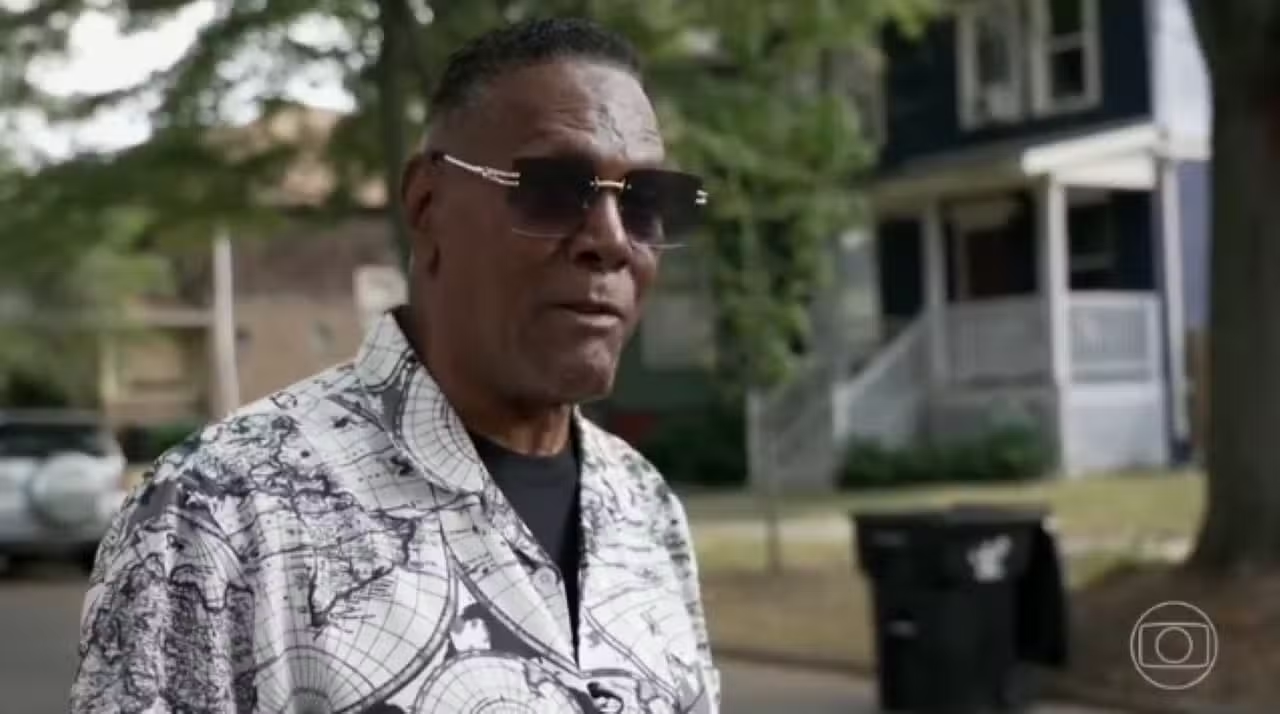
Richard Phillips was convicted in 1971 for a crime he didn’t commit, spending 46 years incarcerated in one of the longest wrongful imprisonment cases in U.S. history. His story reveals the deep flaws within the judicial system and illustrates the resilience of someone who fought tirelessly for the truth.
The beginning of a judicial nightmare
In 1971, Richard Phillips was convicted for the murder of Gregory Harris in Detroit, Michigan. He was accused of committing the crime alongside another man, Richard Johnson, based on the testimony of Richard Palombo, who claimed both men were involved. This sentence was founded solely on that testimony, without any physical evidence, eyewitnesses, or any other proof linking Phillips to the murder.
This decision led to Phillips’ sentence of life in prison without parole. Despite the lack of any evidence directly connecting him to the crime, he was deemed guilty and put behind bars, where he would remain for nearly five decades. Phillips consistently maintained his innocence, refusing to confess, which made it difficult for him to achieve early release. His integrity remained intact, even though many around him encouraged him to admit guilt as a way to shorten his sentence.
The resistance of an innocent man: decades-long fight for freedom
Despite being imprisoned, Phillips did not accept his sentence as a final end. For decades, he sought help from various organizations that review wrongful convictions, hoping to prove his innocence. He continued to assert that he had no involvement in the crime, rejecting any plea deal requiring a confession.
However, the struggle seemed futile. Many lawyers and organizations reviewed his case, but without new evidence, reopening the case proved challenging. Over the years, Richard Phillips’ story became an example of perseverance. Even faced with a seemingly relentless system, he refused to lose hope, steadfast in his belief that his innocence would eventually be proven.
The unexpected revelation: truth surfaces after decades
In 2010, four decades after the conviction, the key testimony supporting the prosecution was challenged. Richard Palombo, whose testimony was the cornerstone of Phillips’ conviction, admitted that he had lied. Palombo confessed that his account had been fabricated in exchange for benefits in his own criminal case. This revelation became a turning point for Phillips’ case, allowing for a renewed analysis.
With this confession, Phillips’ defense gained traction with the Michigan Innocence Clinic, an organization dedicated to reviewing wrongful convictions. The Clinic took on his case, presenting new evidence proving Phillips’ innocence. With the help of this team of lawyers, the case was finally reopened, exposing the monumental error that had led to Phillips’ original conviction.
Freedom after 46 years of wrongful imprisonment
In March 2017, after 46 years in prison, Richard Phillips was finally freed. This milestone marked the longest period of wrongful incarceration in U.S. history at the time. Phillips’ release, however, was not a simple act of freedom; it was a loud cry for overdue justice. His full exoneration came in 2018, when all charges were officially cleared, confirming he had no connection to the crime he was accused of.
Phillips’ release was a mix of relief and shock. After nearly half a century behind bars, he faced a world completely transformed. Technology had advanced dramatically, society had changed, and he was forced to rebuild his life from scratch.
Overcoming and rebuilding a lost life
Upon leaving prison, Phillips did not have access to a support system that might have helped him reintegrate. He had no financial resources or immediate support structure. Although he was exonerated, the trauma from 46 years of wrongful imprisonment left deep scars. Phillips lost countless significant moments, including his mother’s passing, whom he was unable to say goodbye to.
Despite these challenges, he found in art a means of expression and livelihood. Phillips took up painting, using his creativity to convey his emotions and experiences. His art quickly gained attention, and he began selling his work, providing him with both an income and public recognition. Phillips’ paintings capture not only his personal experiences but also the depth of his pain and resilience.

Costco registra demanda recorde em postos de gasolina nos EUA com preços mais baixos

Passageiro tenta entrar na cabine de comando e força desvio de voo da United Airlines para Madison

Pesquisa no Texas aponta republicanos à frente para governador e procurador-geral, democratas em vantagem mínima no Senado
The fight for compensation: financial justice remains elusive
While Phillips was exonerated, his battle was far from over. He faced significant hurdles in obtaining financial compensation for his wrongful imprisonment. Initially, Michigan laws did not permit him to receive compensation due to existing guidelines. However, after public pressure and legislative review, he eventually received compensation, although many argued that no amount could ever make up for nearly 50 lost years.
This fight for financial justice reveals a harsh reality faced by many like Phillips, who were wrongfully convicted. Bureaucracy and legal limitations present barriers to rebuilding their lives, even after they have been declared innocent.
Psychological impact and reintegration into society
The scars left by years of imprisonment are evident in Phillips’ life. He spent nearly half a century in an intensely restrictive environment, deprived of freedom and detached from everyday life. Readjusting to modern society was not easy, with significant technological, cultural, and social changes to confront.
During his time in prison, Phillips honed his painting skills, which became both a coping mechanism and a form of survival. Art became his primary expression, and through it, he shares his experiences and perspective. His works reflect the agony of confinement while exhibiting the strength and hope of someone who never gave up.
Advocacy for justice and the fight for reform
Since his release, Richard Phillips has dedicated himself to advocating for change within the criminal justice system. By sharing his story, he aims to raise awareness about systemic flaws that often punish the innocent instead of protecting them. Phillips collaborates with organizations that work to prevent wrongful convictions and supports the creation of measures to prevent future judicial errors.
Phillips has become a symbol in the fight for justice, standing as a living example of the consequences of a flawed system. His story serves as a reminder of the importance of continual judicial review and the need for vigilance to ensure that errors like the one he faced are prevented.
Lessons from Richard Phillips’ case for modern justice
The case of Richard Phillips raises profound questions about the judicial system. His story underscores the importance of a vigilant pursuit of justice to prevent public trust from being misused to convict the innocent. Phillips stands as a symbol of the justice system’s fallibility and an advocate for changes that may prevent others from suffering a similar fate.
The impact of his journey reaches far beyond himself. His experience highlights the necessity for structural reforms to promote transparency, integrity, and accountability in the trial and conviction processes. Cases like his indicate a need to reassess how evidence is gathered, verified, and presented in court.
A life marked by injustice and the hope for a fairer future
Richard Phillips’ saga is a powerful reminder of human endurance in the face of unimaginable adversity. He survived decades of suffering, isolation, and loss, yet he never lost his dignity or his will to fight for the truth. His story offers a lesson in perseverance and serves as a call to action, urging that justice be applied with caution and equity.
Veja Tambem em EUA

EUA atacam radares iranianos; Irã responde com mísseis a base americana no Kuwait, em nova escalada

Homem morre sete dias após ser baleado por proprietário em imóvel invadido em Oklahoma City, EUA

Incêndio devasta The Tiny Turtle e afeta dois negócios na Minutemen Causeway em Cocoa Beach

Diferença no benefício médio do Social Security entre 62, 67 e 70 anos chega a 60% em 2026

Pesquisa aponta que 69% dos trabalhadores nos EUA temem não economizar o suficiente para a aposentadoria

Gerenciamento de US$ 2 milhões a US$ 5 milhões em aposentadoria: milionários enfrentam desafios inesperados, revela análise

Agente do ICE, Christian Castro, é detido no Texas por tiroteio e falso testemunho em Minneapolis

Justiça federal condena ex-superintendente de Des Moines a 2 anos de prisão por falsa cidadania americana

M&M’s anuncia parceria com Love Island USA e lança pacotes interativos temáticos da série

Aumento da gasolina nos EUA: americanos ajustam rotinas, diminuem viagens e buscam alternativas para economizar

Bret Michaels cancela participação em ‘Freedom 250’ devido a ameaças; é o quinto artista a desistir