Dire wolf reborn: Colossal uses Crispr to resurrect species lost for millennia
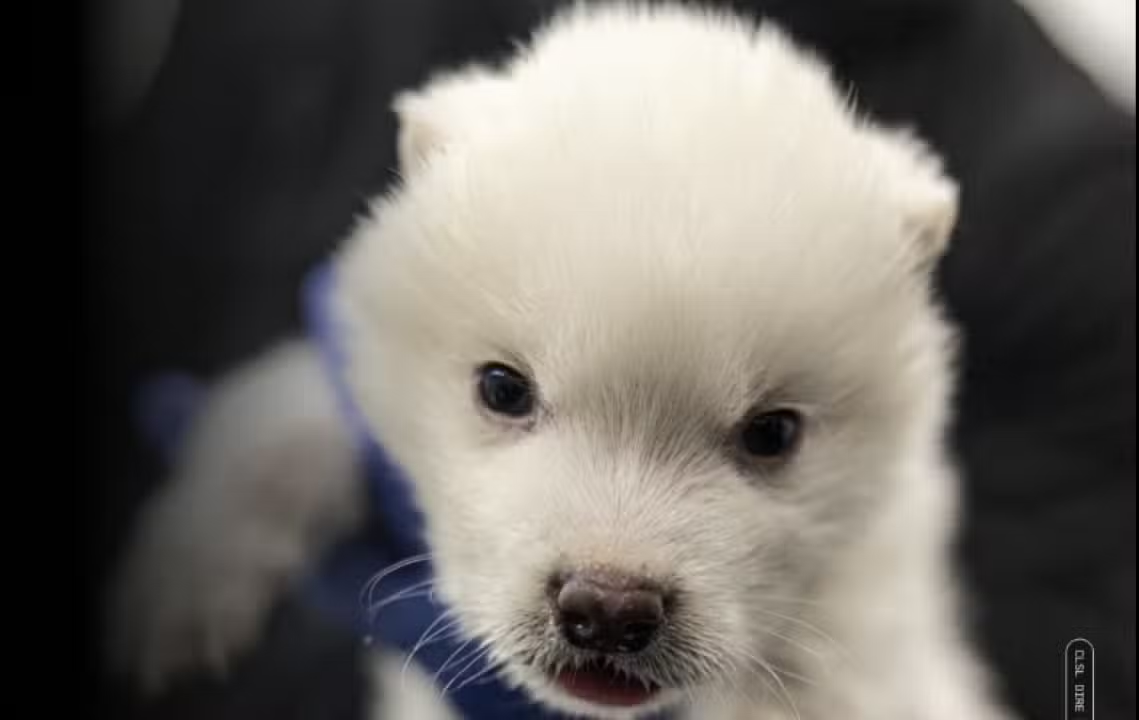
Colossal Biosciences has taken a bold leap into the past, claiming to have brought the dire wolf, a species extinct for over 10,000 years, back to life. On Monday (7), the company announced the birth of three pups—Rómulo, Remo, and Khaleesi—using advanced gene-editing techniques and DNA extracted from ancient fossils. Native to North America, the dire wolf, known for its robust frame and powerful jaws, now roams again, according to Colossal, in a breakthrough blending biotechnology with ecological ambition. The pups, currently housed in a U.S. wildlife preservation center, have sparked global fascination and debate about the feasibility of resurrecting lost species.
Rómulo and Remo, born on October 1, 2024, are five months old and mark the initial success of this endeavor. Khaleesi, the third pup, arrived on January 31, 2025, further solidifying Colossal’s claims. The company, already working on recreating mammoths and recently showcasing mice with mammoth-like fur in March this year, relies on Crispr technology to achieve its goals. However, skepticism surrounds the project, with experts noting that these pups are not exact replicas of the original dire wolf but rather genetically modified hybrids derived from modern wolves.
The process involved editing 20 genomic regions of gray wolves to mimic dire wolf traits like size, musculature, and vocalization. Fossils dating between 11,500 and 72,000 years old provided the genetic blueprint, though the lack of peer-reviewed scientific publication keeps the academic community cautious. As Colossal hails this as a scientific milestone, the world watches with a mix of awe and scrutiny.
Technology behind de-extinction
Colossal Biosciences spared no effort to turn science fiction into reality. Using Crispr, a gene-editing tool dubbed a “genetic scissors,” the company modified gray wolf cells to recreate dire wolf features. The process began with collecting endothelial progenitor cells from a modern wolf’s blood. Then, 14 key genes were edited to match ancient dire wolf DNA extracted from fossils. These altered nuclei were implanted into enucleated eggs, which were gestated by healthy, large-breed mixed-breed dogs.
Unlike traditional cloning, which would use intact ancient tissue, Colossal’s method took a less invasive route. Fossilized DNA, fragmented by millennia, served as a reference for edits rather than being directly inserted into embryos. The result: pups with dire wolf traits like broad shoulders, larger teeth, and muscular legs, yet still rooted in modern wolf genetics. This hybrid approach raises questions about the authenticity of the outcome.
At five months, Rómulo and Remo show rapid growth, while Khaleesi, over two months old, follows suit. Housed in a U.S. preservation center, they are closely monitored. Colossal aims to study their development to understand how edited genes perform in a modern setting.
Dire wolf: an ancient predator
The dire wolf, or Aenocyon dirus, roamed North America for about 250,000 years before vanishing at the end of the last Ice Age. Though visually similar to gray wolves and jackals, its genetic lineage was distinct, making it a unique predator. Fossils from sites like California’s Rancho La Brea reveal a formidable creature with bone-crushing jaws and a body built to hunt large prey like bison and prehistoric horses.
Studies suggest the species thrived in a rich ecosystem, but climate shifts and competition with humans and other predators drove it to extinction around 10,000 years ago. Its remains, preserved in tar pits, provided the DNA Colossal used to rebuild its genome. The company argues that reviving the dire wolf could shed light on lost biodiversity and the ecological roles of ancient species.
Currently, the reborn pups live in a controlled environment, but Colossal envisions reintroducing future versions into the wild. Ecologists, however, warn of potential unforeseen impacts on modern ecosystems.
Project milestones
Colossal’s dire wolf announcement builds on a series of achievements:
- 2021: Company founded to resurrect extinct species.
- March 2024: Creation of mice with mammoth-like fur.
- October 2024: Birth of Rómulo and Remo, first dire wolf pups.
- January 2025: Arrival of Khaleesi, third pup.
These steps highlight Colossal’s progression toward tackling more complex species, like the mammoth, slated for revival by decade’s end.
Colossal’s ecological goals
Established in 2021, Colossal Biosciences aims to use de-extinction to restore environmental balance. Global warming has raised temperatures in the Siberian and North American tundra, releasing vast amounts of carbon dioxide from thawing permafrost. During the mammoth era, these regions were grasslands maintained by the giants, who cleared moss and enriched soil. Colossal believes reviving species like mammoths and dire wolves could recreate such ecosystems.
For the dire wolf, ecological benefits remain theoretical. As apex predators, they once regulated herbivore populations in prehistoric North America, shaping vegetation and food chains. Colossal posits their return could yield similar effects, though evidence is lacking. The project has drawn billions in funding, with the company valued at roughly 10 billion dollars.
Beyond science, Colossal sees de-extinction as a conservation tool, hoping to reignite public interest in biodiversity. The dire wolf’s return is a test of this vision.
Scientific community reactions
Not everyone shares Colossal’s excitement. Geneticists and evolutionary biologists question the project’s legitimacy. The pups being hybrids, not pure dire wolves, is a frequent critique. Editing just 20 genomic regions, rather than fully reconstructing the ancient genome, suggests they are closer to modern gray wolves than their extinct kin.



Transparency is another issue. Without peer-reviewed publication, the method lacks scrutiny, leading some scientists to call the announcement overhyped. Still, Crispr’s application earns praise as a potential game-changer for conservation and medicine.
Ecologists raise concerns about reintroducing predators into modern ecosystems. Without natural prey like Ice Age herbivores, dire wolves could disrupt food chains. These debates underscore the ethical and practical hurdles ahead.
How Crispr powers the project
Crispr drives Colossal’s work. This tool cuts and edits specific DNA segments, altering traits by modifying protein production. For the dire wolf, scientists targeted genes tied to head size, jaw strength, and leg musculature. These were adjusted in gray wolf cells to align with fossil-derived dire wolf DNA.
The process analyzed ancient DNA from bones preserved for millennia. Though degraded, it offered a partial genetic map, compared to modern wolf genomes. Precise edits followed, producing viable embryos. The pups embody the dire wolf’s “spirit,” albeit with genetic compromises.
Crispr has transformed fields like agriculture and medicine, but its use in de-extinction is groundbreaking. Colossal plans to refine it for future projects like the mammoth.
The future of de-extinction
The dire wolf’s revival is just the start. Colossal is advancing on the woolly mammoth, targeting completion by decade’s end, with the dodo and Tasmanian tiger also in sight. Each step opens new possibilities and fuels ethical debates.
Rómulo, Remo, and Khaleesi symbolize this era. At five months, the first two display robustness beyond typical gray wolves, while Khaleesi follows. Colossal will track their growth for years, gathering data for potential wild releases.
Investors see commercial potential, from conservation to eco-tourism. With billions raised, Colossal’s valuation reflects confidence in its vision. Whether science or spectacle, it’s reshaping views of life’s past and future.
Dire wolf curiosities
The dire wolf is more than a lab creation; it’s a window to history:
- Larger than modern wolves, reaching 1.7 meters and 70 kilograms.
- Teeth designed to crush bones, perfect for big prey.
- Coexisted with humans in North America before extinction.
- Inspired “Game of Thrones” dire wolves.
These traits explain its selection as Colossal’s flagship species.
George R.R. Martin holds the first new dire wolf born in 10,000 years pic.twitter.com/yU3NG1DGCE
— Massimo (@Rainmaker1973) April 9, 2025
Challenges and promises
Reviving the dire wolf is a first step in a complex journey. Technical hurdles, like sourcing intact ancient DNA, and ethical concerns, like ecosystem impacts, loom large. Yet Colossal remains optimistic, promising breakthroughs that could redefine conservation.
The current pups are captive, but plans for larger populations are underway. Success hinges on their adaptation to a vastly changed world. For now, the project captivates globally, backed by billions and watched by millions.
De-extinction, once a dream, is now tangible. Whether a triumph or a risk, the dire wolf’s return signals a new chapter in biotechnology.
Veja Tambem em Internacional

Cúpula de defesa asiática começa com China e dúvidas sobre prioridades dos EUA em destaque

Drone russo atinge edifício na Romênia e fere duas pessoas, país avalia Artigo 4 da Otan

CBS projeta lucro de US$ 15 milhões após acordo com Byron Allen e fim do ‘Late Show’
Diver australiano integra equipe internacional para resgatar vítimas presas em caverna inundada no Laos

Drones atingem 3 petroleiros no Mar Negro, ao largo da costa norte da Turquia, relata agência

Incêndio florestal perto de Varsóvia mobiliza 45 unidades de bombeiros e aeronaves especializadas contra chamas

Temu recebe multa de 200 milhões de euros da União Europeia por venda de brinquedos e carregadores inseguros

Descoberto túnel profundo sob cidade levanta questões sobre construção e propósito antigo

Terremoto de magnitude de 4,7 atinge Puerto Vallarta com epicentro no Oceano Pacífico

Prática de Alibi de Homologação em motos KTM Enduro vira alvo de investigação na Europa

Dubai gerencia fluxo recorde de passageiros no Eid com tecnologia moderna nos aeroportos